
Asahi Pours $85M Into AI Cyber Defense After Ransomware Hit
Japan's beverage giant is rebuilding its security stack around AI, and the $85 million price tag is a warning to every board still treating cyber risk as an IT line item.
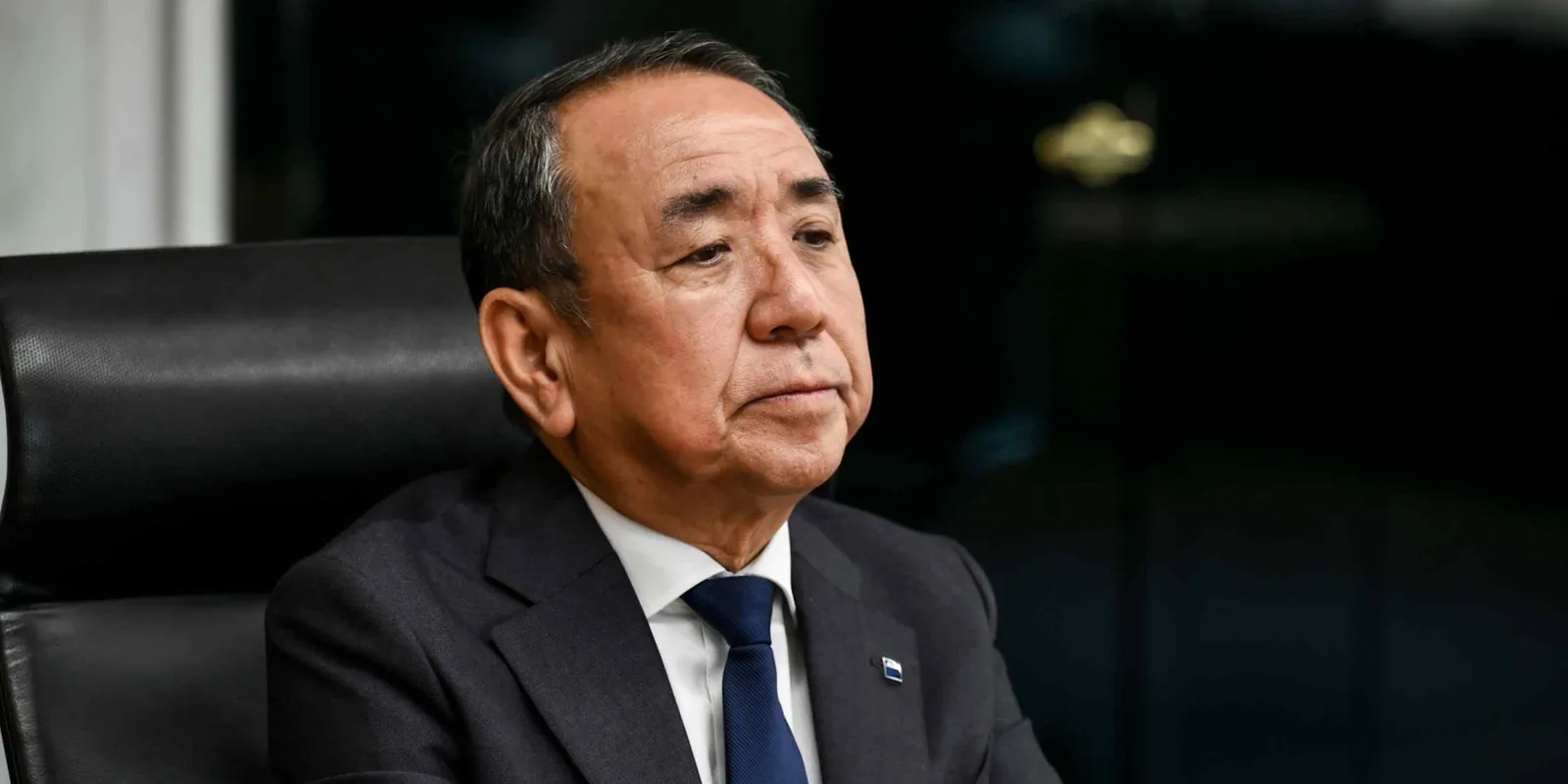
Asahi Group Holdings is spending $85 million on AI-driven cybersecurity upgrades following a ransomware attack, as reported by Nikkei Asia. The move signals that cyber resilience has shifted from IT overhead to a board-level capital allocation decision, with insurance, regulatory and supplier consequences rippling across the industry.
Asahi Group Holdings is pouring $85 million into AI-driven cybersecurity upgrades, and the trigger was a ransomware attack. Nikkei Asia reported the figure, and the number itself is the story: this is a beverage company, not a bank or a defense contractor, writing a check this large to rebuild its digital defenses. The message to every board is blunt. When attackers hit a business that makes and moves physical goods, the recovery bill lands in the same budget as new breweries and brand campaigns. Asahi's calculation appears to be straightforward: the cost of hardening its systems once is smaller than the cost of losing them again.
Why does a brewer need this? Asahi Group Holdings sits atop a sprawling estate: brewing and packaging plants, cold-chain logistics, distribution fleets, retail and point-of-sale systems, plus overseas operations built through years of acquisitions. Ransomware typically does not care about any of that nuance. It encrypts the systems it can reach, locks out the people who run them, and demands payment. For a manufacturer, the damage shows up fast and physically: production lines that cannot schedule, shipments that cannot leave the dock, invoices that cannot be issued. Food and beverage companies have historically been attractive targets for exactly that reason. Downtime is expensive, margins are thin, and the pressure to restore operations quickly is enormous.
What does AI cybersecurity actually mean here? In practice, the money usually goes to a few buckets: behavioral analytics that learn what normal network traffic looks like and flag the outlier, automated triage that sorts thousands of alerts so human analysts only see the ones that matter, and threat-hunting tools that move at machine speed because attackers do. The plain-English version is that security teams are outnumbered, and AI is how they try to close the gap. It is also an arms race. Attackers use the same class of tools for phishing, reconnaissance and social engineering, which means a defensive upgrade is a moving target rather than a finish line. Asahi is buying speed, not certainty.
For context, a breach is no longer just an IT event. Japan's Act on the Protection of Personal Information, amended in 2022, requires organizations to report certain breaches to the Personal Information Protection Commission and notify affected individuals. If a company has European operations, GDPR adds a 72-hour notification clock. Australia's Notifiable Data Breaches scheme imposes its own reporting duties. Asahi's footprint spans multiple jurisdictions, so a single incident can trigger several clocks at once, each with its own lawyers, disclosures and reputational exposure. That regulatory math is often what pushes a security budget from nice-to-have to approved.
Then there is the boardroom arithmetic. $85 million has to come from somewhere. Directors typically want to know whether it is capital expenditure or recurring operating cost, how many years it is spread across, and what it displaces. For a consumer brand, that means the security line competes directly with marketing. Cyber insurers have changed the conversation too: underwriters increasingly ask for evidence of multi-factor authentication, network segmentation and tested backups before they will write or renew a policy. That turns security spending into a condition of coverage, not just a risk preference. The CFO question shifts from why now to what happens to our premium if we do not.
A company of Asahi's scale does not defend itself alone. Suppliers, distributors, logistics partners and retail customers connect into the same systems, and attackers have learned to enter through the weakest link in that chain. Expect tighter security requirements written into supplier contracts, more due diligence before partnerships, and pressure on smaller vendors that cannot meet the bar. Rivals across Japanese food and beverage face the same exposure and will be watching how Asahi's spend is received. The broader signal is that cyber resilience is becoming a procurement standard, the way food safety and quality certification did before it.
The strategic stakes go beyond the headline number. The ransom, if paid, is rarely the largest line. The bigger bills are downtime, forensic investigation, legal fees, customer notification, lost sales and the slow erosion of trust. Asahi's decision to spend upfront on AI-driven defense is a bet that the second hit is the one that hurts most. For every operator and board reading this, the takeaway is uncomfortable but useful: the question is no longer whether cyber risk belongs in the capital allocation conversation. It is already there, and the price of arriving late keeps going up.
This story's Key Insights and Take-aways are locked.
Create a free account to unlock Executive Actions for one credit.
Register to UnlockAlways free for Executives Club members. Join the Club
More in Technology

Anthropic Mathematician Claims Claude Helped Prove Riemann Hypothesis in Six Weeks
Levent Alpöge says the AI tool helped him develop a solution to one of math's most important unsolved problems in about six weeks, a claim that, if verified, would reshape AI's role in research.
Signal kills mobile screenshots to fight the 'existential threat' of AI surveillance
The encrypted messaging app is closing the one hole encryption never covered, the screenshot button, as AI tools get better at reading everything on your screen.

Guadagnino's OpenAI Film 'Artificial' Lands at Neon as AI Doom Fears Peak
Neon is betting Luca Guadagnino's drama about Sam Altman, Ilya Sutskever and Elon Musk can do what Sony's The Social Reckoning could not: sell the tech era back to the people living inside it.