

AI data-center boom is minting temporary jobs while draining locals and paving automation
Big Tech’s billions bring quick employment wins but shift costs, resources, and long-term work risk to communities.
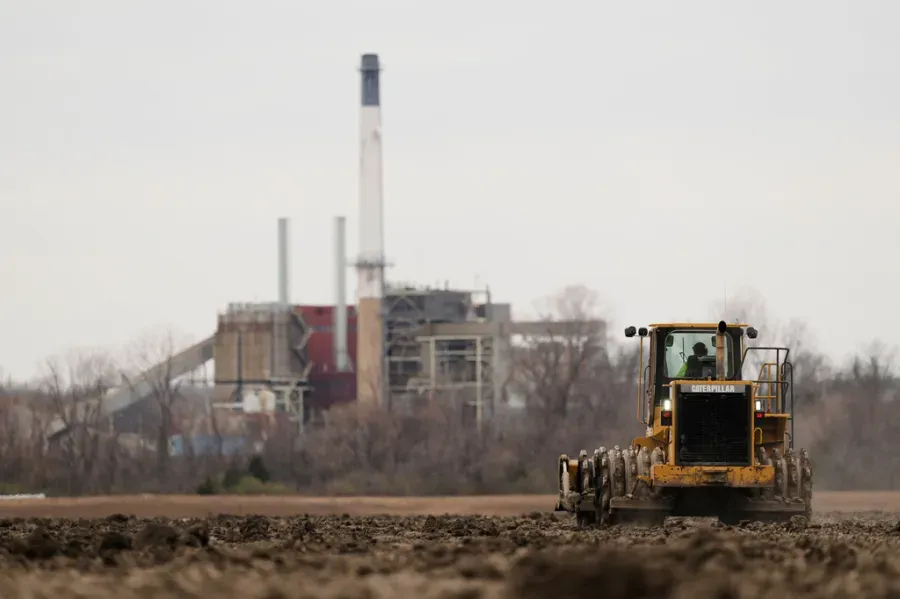
Big Tech companies are spending billions to build AI data centers across the country, creating temporary jobs for blue-collar workers. For decision-makers, the consequence is a governance and community-risk question: local resources get strained while automation could replace those jobs.
Big Tech is spending billions to build AI data centers across the country. The immediate headline is jobs: these projects create temporary work for blue-collar workers. The harder part is what that activity does to the local balance sheet and labor market, because the same buildout that looks like an economic boost can also drain local resources and set up automation that potentially replaces the very workers who fill the short-term demand.
In other words, the AI “revolution” is not just a tech story. It is a local industrial one, with predictable tensions between capital intensity and community capacity. When power, water, land use, and public infrastructure get pulled toward high-throughput data centers, the strain shows up quickly. Meanwhile, the jobs created during construction and ramp-up can be time-limited, which is where the risk gets sharper: if systems and processes become increasingly automated, those workers may not transition into stable, long-term roles at the same rate as the centers scale.
To understand why this pattern emerges, it helps to remember what data centers are in the AI era. They are not only servers running models. They are full physical infrastructures that support massive compute loads, cooling requirements, and uptime targets. That means a buildout is a large, fast capital project. It requires contractors, electricians, civil work, and logistics. So yes, it can produce visible, near-term employment. But the operating phase also tends to favor systems that minimize ongoing labor per unit of output. Automation is not a side quest. It is a way to protect margins, scale efficiently, and keep performance reliable.
That is the second-order implication for executives and boards: you can generate employment headlines without guaranteeing employment outcomes. A community can get “temporary jobs” while still feeling like the long-term deal is tilted elsewhere. If AI-driven automation reduces the need for human labor in the operations stack, then the employment benefits do not compound. Instead, the community experiences a cycle: build phase work, followed by a leaner operational footprint.
This story also fits into a broader incentive structure that is familiar across Big Tech. AI data centers require large investments up front. To justify them, companies need sustained demand and predictable conditions. That pushes them to expand geographically, build capacity, and lock in compute availability. But the expansion has to land somewhere. Local governments and utilities provide or enable the resources. That creates a governance dynamic where the economic benefits and the burdens do not always arrive in the same package, at the same time, or for the same groups.
Regulatory and policy pressure, even when not spelled out in a specific quote, is part of the backdrop. When major infrastructure changes strain local systems, public officials and regulators often face pressure to respond with permitting standards, environmental oversight, grid planning, and workforce transitions. The point is not that regulation is inherently anti-growth. The point is that if the benefits are short-lived while the burdens are long-lived, political scrutiny increases. And increased scrutiny can slow timelines, raise costs, or force redesigns that affect project economics.
There is also a strategic issue for peers. If the market rewards speed and capacity, companies may race to secure the resources they need. But the reputational risk can travel faster than the infrastructure itself. Communities are not abstract stakeholders. They are the neighbors, local contractors, and regional workforces who see cranes arrive, then ask what comes next. If automation follows quickly, decision-makers elsewhere may find themselves confronting the same criticism: that AI buildouts are extracting local capacity while benefiting a small set of tech leaders.
For executives reading this, the stakes are not just PR. They are about license-to-operate. A data center buildout that looks like a jobs program during construction, but functions like a labor-reducing automation platform during operations, will produce friction. The strategic question for boards and senior leaders is whether the company is managing the full lifecycle impact, not only the construction phase. In an era where AI investments are measured in billions, the “who benefits when” question is becoming as important as “how fast can we scale.”
This story's Key Insights and Take-aways are locked.
Create a free account to unlock Executive Actions for one credit.
Register to UnlockAlways free for Executives Club members. Join the Club
More in Politics

Glacial collapse, not rain, killed 180 in Nepal's Himalayan flood
The Himalaya's extreme geography hid the true cause of Nepal's catastrophic flood, a glacial collapse that turned a geological battleground into a mass-casualty zone.

Iran’s Esmail Baghaei says Oman talks start shipping via Hormuz, not US talks yet
Temporary route plans with Oman aim to restart commerce while Tehran says Washington dialogue is not on the table.

Standards watchdog opens probe into Reform UK deputy leader Richard Tice over interests
The parliamentary standards commissioner says it began an investigation on 28 July into a possible undeclared interest.