
AI Is Now a Huge Piece of the U.S. Economy. That Is the Risk.
Ben Casselman, the Times' chief economics correspondent, explains why AI became a load-bearing wall of American growth, and what breaks if it cracks.

Ben Casselman, chief economics correspondent at The New York Times, argues that artificial intelligence has become a huge piece of the U.S. economy and explains why that dependence carries risk. For decision-makers, the consequence is that AI is no longer a sector bet but a macro variable that shapes growth, hiring, and portfolio values.
Artificial intelligence is no longer a corner of the U.S. economy. It is a load-bearing wall. That is the argument Ben Casselman, chief economics correspondent at The New York Times, makes in a piece titled "How the U.S. Economy Is Tied to A.I." His framing is blunt: AI has become a huge piece of the American economy, and that scale is precisely what makes it risky. The risk is not that AI fails. It is that the economy has quietly become dependent on it continuing to work.
The shift matters because of what AI stopped being. For most of the past decade, AI was a technology story: first a research agenda, then a product category, then a stock market theme. Casselman's point is that it has crossed into macro territory. When a single technology becomes a large enough share of investment, output, or market value, it stops being a sector you can opt out of and becomes a variable that shows up in everyone's numbers, whether or not they touch AI directly.
Broadly, AI's economic weight is visible in a handful of places. Capital spending on data centers, chips, and the power infrastructure needed to run them. The concentration of the largest U.S. companies, and therefore of index funds and retirement accounts, in a small group of firms whose fortunes are tied to AI. Electricity demand, historically flat for years, now re-rated by the buildout. And hiring, where AI-adjacent roles command premiums while other categories cool. None of these channels is exotic on its own. Together they mean AI has become a transmission belt into the broader economy, carrying both the upside and the volatility.
Historically, economies have absorbed general-purpose technologies before: railroads, electrification, the automobile, the internet. Each reshaped growth, and each arrived with a boom-and-bust rhythm. The pattern typically runs like this: investment races ahead of revenue, capacity overshoots, and the correction is sharper than the trendline suggested. If AI is now a huge piece of the U.S. economy, then the U.S. economy inherits AI's cycle. A slowdown in AI spending would not stay inside the tech sector. It would surface in GDP, in industrial production, in state tax receipts, and in 401(k) balances.
One reason economists watch this closely is that AI money tends to move through a small number of very large players who are simultaneously customers, suppliers, and sometimes investors in one another. That structure is not unusual for a young industry, but it makes the demand signal harder to read. If a meaningful share of AI revenue is funded by the same companies booking it, then the headline growth number is partly a measure of internal conviction rather than external demand. The caution in Casselman's framing sits here: the concern is about the economy's exposure and how hard that exposure is to size, not about whether the technology itself works.
Standard economic statistics were not built for this. GDP counts investment when it is spent, but the productivity payoff from a general-purpose technology typically arrives years later, unevenly, and often in places the data does not label "AI." That lag creates a trap for decision-makers. The economy can look AI-fueled on the way up and AI-exposed on the way down, with little warning in between. By the time the revision shows up in the data, the capital has already been committed and the hiring has already happened.
A few signals would tell you whether the tie is strengthening or fraying. Whether AI capital spending keeps growing or plateaus. Whether power and grid constraints start capping buildouts. Whether revenue at the application layer begins to justify the infrastructure spend beneath it. And whether the market's concentration in AI-linked names widens or narrows. None of these is a prediction. They are the dials, and they are readable in public filings and earnings calls long before they show up in a macro release.
For executives and boards, the practical implication is that AI exposure is now a macro risk factor, not just a technology bet. A CFO modeling next year's demand should ask what happens to the plan if AI capital spending simply stops accelerating. A board should know how much of its own valuation, supply chain, and customer base leans on the same handful of AI-driven buyers. The uncomfortable part, and the part Casselman is pointing at, is that the answer is usually larger than the org chart suggests. The U.S. economy is now tied to AI. The question every leadership team should be able to answer is how tightly they are tied to it too.
This story's Key Insights and Take-aways are locked.
Create a free account to unlock Executive Actions for one credit.
Register to UnlockAlways free for Executives Club members. Join the Club
More in Business

Anthropic's record IPO lands a day before Nvidia's longest losing streak since 2008
Anthropic's record Nasdaq debut and Nvidia's longest weekly losing streak since 2008 landed within 24 hours of each other, and the contrast shows how fast the market is re-pricing the AI trade.

New World's HK$24.9B rights issue triggers 41% plunge as HK$50B debt target looms
New World Development has three levers left to erase up to HK$50 billion in borrowings by 2031, and shareholders just told the market what they think of the first one.
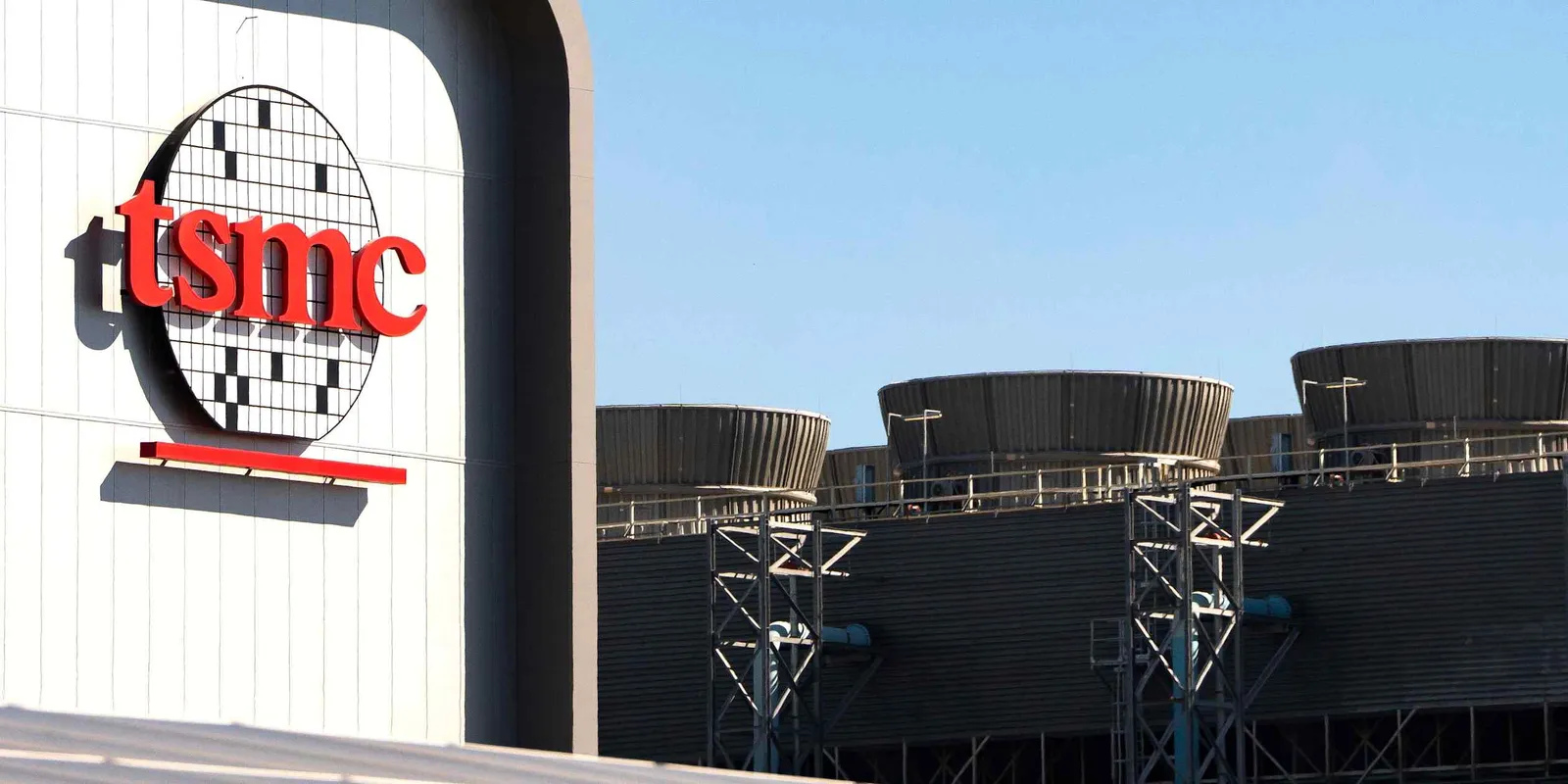
Chip supply chain warns new US export controls will spread beyond the target list
Suppliers, distributors and equipment makers say the latest US restrictions will not stay contained to the firms named on paper, putting orders, inventory and delivery timelines at risk across the global chip chain.