
AlphaFold gets a gene-editing safety upgrade by reshaping proteins off-target risks
Researchers modified Google’s AlphaFold to spot which parts of editing proteins cause wrong edits, then redesigned them.
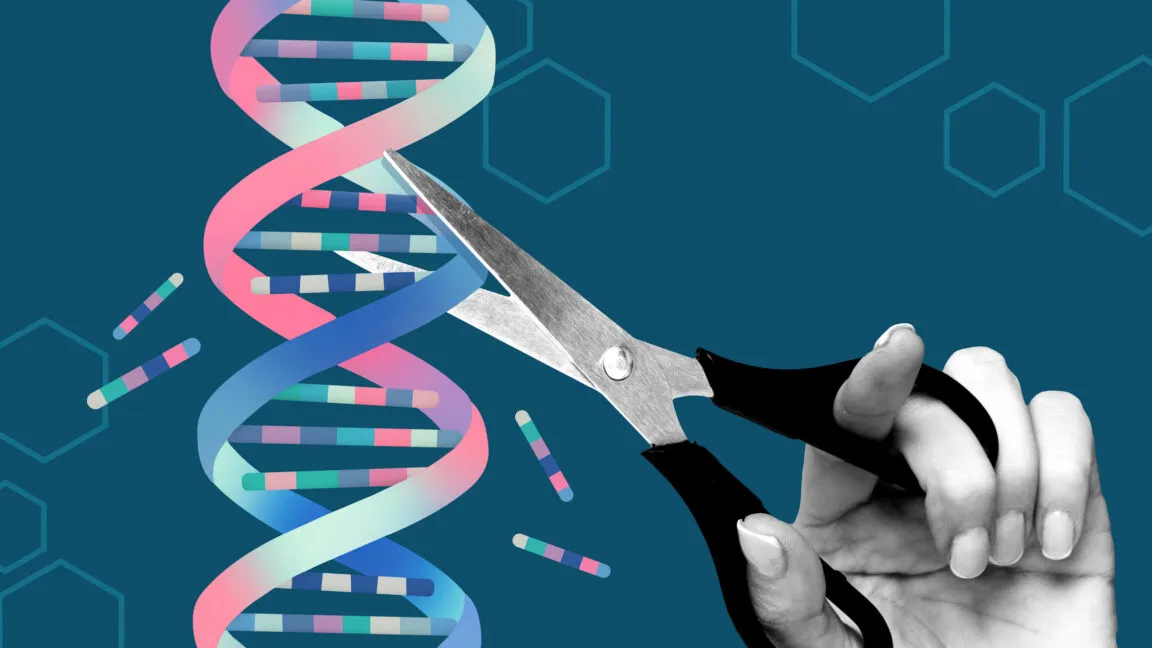
A team in a recent Nature study modified Google’s AlphaFold, adapting the AI protein-folding tool to identify regions of gene-editing proteins linked to off-target effects. They then modified those regions to reduce the risk of the therapy editing the wrong DNA sequence.
Gene editing is finally moving from lab promise to first therapies. But safety remains the bottleneck: even if a gene-editing system is designed to be “specific,” the human genome is huge, and rare DNA sequences can show up by chance. That is why early gene-editing platforms always came with known off-target effects, meaning the machinery can edit the wrong sequence.
The Nature paper described a clever way to attack that problem directly. Researchers modified AlphaFold, Google’s AI protein-folding software, so it could help identify which parts of a gene-editing protein enable off-target mistakes. Then they redesigned those key areas of the proteins with the goal of reducing the problems. In other words: instead of only measuring wrong edits after the fact, they tried to forecast which protein regions would cause them, and fix the architecture upstream.
To understand why this matters to decision-makers, you have to connect the biology to the reality of manufacturing and clinical development. Off-target editing is often described as a low-probability event. Low probability does not mean low concern, because therapies generally have to edit many cells. When you scale the number of edited cells, rare mistakes become inevitable in aggregate. This is the same logic risk teams use in finance: a 0.01% event is “unlikely” once, but it becomes statistically impossible to ignore when volume gets big. Regulators know this, too. They want evidence that the system will not create unacceptable harm across the kinds of genomic “search paths” it will encounter inside the body.
Historically, the field has leaned on two main strategies to minimize off-target effects. One is engineering the targeting components to improve discrimination, so the protein prefers the intended DNA sequence. The other is iterative screening, where developers test different variants and map where off-target edits occur. The Nature approach fits into the same safety race, but it changes the workflow. By adapting AlphaFold to flag the key areas tied to off-target behavior, it adds a mechanistic layer. That can shrink the trial-and-error cycle, because redesigning the protein is not just a random walk. It becomes targeted: modify the parts the AI indicates are responsible.
This is also a software-to-biology story, and those are the stories that tend to reshape entire pipelines. AlphaFold was built for predicting protein structure, but proteins are not just static shapes. Their structures influence how they bind, how they position critical chemistry, and how they respond to slightly mismatched targets. When the researchers repurposed AlphaFold to identify regions responsible for off-target effects, they were effectively using the protein folding and interaction logic as a guide for safety-related redesign. That matters because off-target effects are not merely “bad luck.” They are often encoded in the protein’s geometry and binding behavior. Finding the responsible regions is a pathway to reducing those behaviors.
From a regulatory framing standpoint, this could strengthen how teams tell their safety story. Regulators do not want only an empirical “trust us, the off-target rate is low.” They want a rationale and evidence that risk has been engineered down, not simply hoped away. If an AI-informed redesign produces a cleaner safety profile, it gives companies more arguments for why the therapy should behave as intended. It also supports consistency across variants: if the same off-target-associated regions are being adjusted, the safety engineering might generalize better than a one-off improvement.
For boards and investors, the second-order implication is that the safety engineering loop gets faster and potentially cheaper, which can change timelines and capital efficiency. Gene editing is expensive, and safety characterization can eat massive resources. Anything that reduces rework, limits “blind” variant testing, or improves the ability to predict which edits are likely to be problematic can improve burn-rate management. It can also affect how risk is staged: earlier go/no-go decisions might become more informed if the protein redesign process can anticipate off-target behavior.
Finally, there is a competitive angle that is hard to ignore. AlphaFold is widely known, but what the Nature paper shows is not just that the technology exists. It shows that teams are learning how to bend it toward high-stakes biomedical constraints, specifically safety. If this approach becomes a repeatable method, it could become part of the default toolkit for next-generation gene-editing programs. For executives watching from the sidelines, the takeaway is simple: safety in gene editing is increasingly an engineering problem, and AI-assisted protein redesign is starting to look like a lever that can move the needle.
This story's Key Insights and Take-aways are locked.
Create a free account to unlock Executive Actions for one credit.
Register to UnlockAlways free for Executives Club members. Join the Club
More in Technology

Google quietly links your phone number to every Android account on your SIM
Adding a SIM now ties your phone number to all Google accounts - and future accounts inherit it. Here's the security and privacy stakes.

Hijacker AI 'Skynet mode' runs 100,000 attack steps against exposed models
Symantec caught a criminal AI agent that borrows other models, steals data, and mines crypto; the only relief is no confirmed victims yet.

Nvidia's AI-financier shift faces its first big test as neoclouds stumble
A rout in neocloud stocks is forcing investors to weigh Nvidia's hidden exposure as both supplier and lender to the AI buildout.