
Andy Burnham cuts VAT on electricity bills in first cabinet meeting as PM
His new government starts cost-of-living relief, while EU leaders push for closer UK cooperation on energy and security.
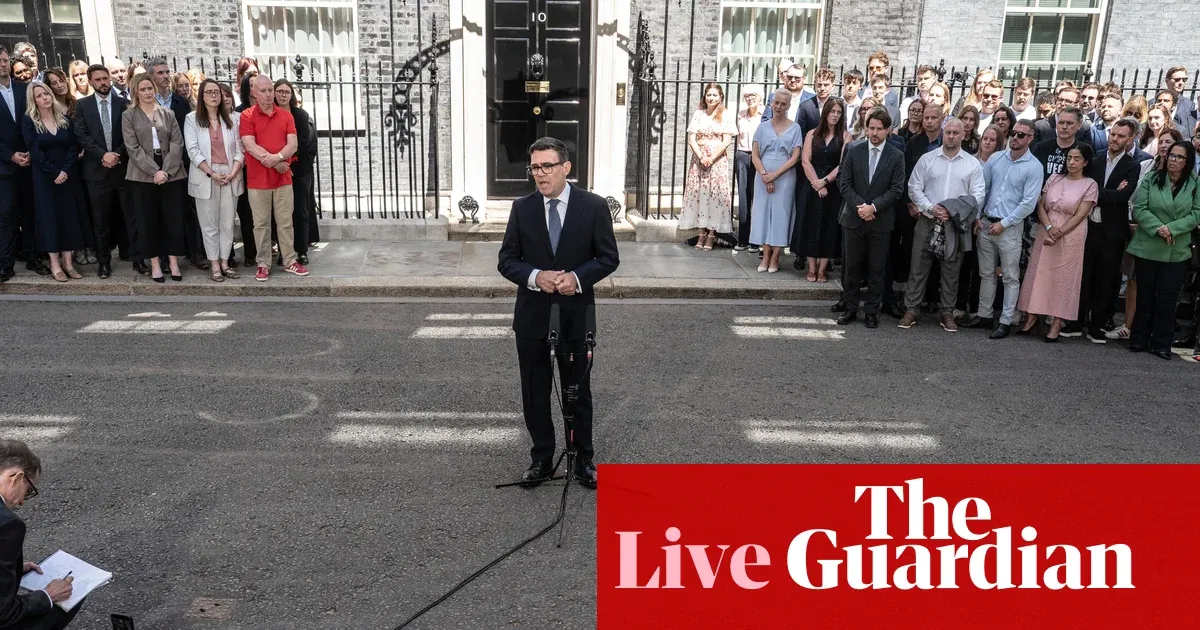
Andy Burnham arrived at Downing Street for his new government’s first cabinet meeting as prime minister, launching a cost-of-living move to cut VAT on electricity bills. Decision-makers should treat the package as both consumer relief and a signal that the UK’s energy and foreign policy are being reshaped in tandem.
Andy Burnham’s first cabinet meeting as prime minister is already anchored in one practical, politically loaded target: a cut to VAT on electricity bills. That is the opening move in the new government’s cost-of-living playbook, and it matters because energy costs are not just another household expense. They are a forcing function for inflation expectations, business input costs, and public trust in government competence.
In other words, this is not a “wait-and-see” policy. By choosing VAT on electricity bills for his first act, Burnham is placing immediate pressure on the tax-and-prices machinery that sits between wholesale energy markets and what households pay on the meter. The cabinet meeting at Downing Street is where the administrative reality lands, the part that turns campaign messaging into legislation, timelines, and the funding question that always follows.
The policy also sits inside a broader energy and security context hinted at by the European angle of the story. António Costa, president of the European council, said in a post on X that he held a “good” phone call with Andy Burnham last night. Costa said they agreed to “further strengthen” EU-UK relations. That phrase matters because it frames the relationship as more than trade and paperwork. It is about coordinated action, especially when energy prices and geopolitical risk start moving at the same time.
Costa also said there was discussion about “common geopolitical challenges facing Europe.” The source does not specify which challenges, but it points to plausible buckets that executives who track risk will recognize immediately. One is energy prices soaring amid the US-Israel war on Iran. Another is the future of Europe’s trading and security relationship with Washington. A third is Nato and the continent’s exposure to hybrid warfare, driven by Russia. And then there is the political temperature itself, including a wave of national populism and backlash against immigration.
Put together, those themes explain why a VAT cut is more than consumer relief. Energy price spikes tend to do double duty. They hit households directly, and they also widen the economic gap between countries that can cushion prices and those that cannot. When markets feel uncertain, governments often respond with tax measures, subsidies, or price controls. Those moves can stabilize demand in the short term, but they can also distort incentives and complicate longer-term decarbonization and grid investment. From a boardroom perspective, think of it as fiscal breathing room plus a risk shield, with the tradeoff being the longer-term budget strain.
There is also a strategic communication layer. A first cabinet decision signals priorities to ministers, markets, and European counterparts. Burning attention on electricity bills suggests the government wants to show speed, not just direction. At the same time, the EU-UK phone call points toward alignment on energy and security challenges. For decision-makers in the UK and across Europe, that combination can change how investors interpret policy risk. When the energy price shock is treated as both a domestic cost-of-living problem and a geopolitical issue, the set of policy tools governments are willing to use expands. That affects energy retailers, grid operators, utilities, and even adjacent sectors sensitive to consumer spending and inflation.
Finally, consider the leadership dynamics and the timing. Costa’s comments were posted on X right after a call held “last night,” and Burnham is meeting his cabinet now, at the start of his premiership. That sequencing suggests an intentional push to get economic relief underway while simultaneously locking in external coordination on shared threats. In the current environment, with multiple crosswinds at once, governments often need EU alignment as much for credibility as for logistics. If policy messaging diverges across Europe, market participants price in friction, and that can keep financing costs higher.
For peers navigating similar transitions, the strategic stakes are straightforward. Burnham’s VAT cut decision is a first-round attempt to reduce pressure on households immediately. But the real executive lesson is how the policy is being placed next to the EU-UK “strengthen relations” agenda and “common geopolitical challenges.” Energy, tax policy, and foreign policy are not separate games anymore. They are increasingly the same game, played on different boards, with the same volatility driving the moves.
This story's Key Insights and Take-aways are locked.
Create a free account to unlock Executive Actions for one credit.
Register to UnlockAlways free for Executives Club members. Join the Club
More in Politics

LA County: DOJ's 20,000 'noncitizen' voter list is 'unreliable,' includes U.S.-born
Preliminary review by Los Angeles County election officials finds errors in the federal list, raising the stakes for voter roll integrity ahead of November.

Trump's $1.5B Pentagon chip investment lands in North Carolina
A $1.5 billion defense infusion for North Carolina chipmaking signals a new era of Pentagon-backed reshoring - here's what it means for the industry.

Nigeria confirms first Ebola case in Abuja, a woman just off a Uganda flight
Health Minister Muhammad Ali Pate says the patient flew in from Uganda, putting Africa's latest outbreak on Nigeria's doorstep.