
Anthropic Broke IPO Records, Then Wall Street Repriced AI Spending
The AI giant's record offering landed the same week markets sold off on AI spending fears, exposing a gap between private-market faith and public-market math.
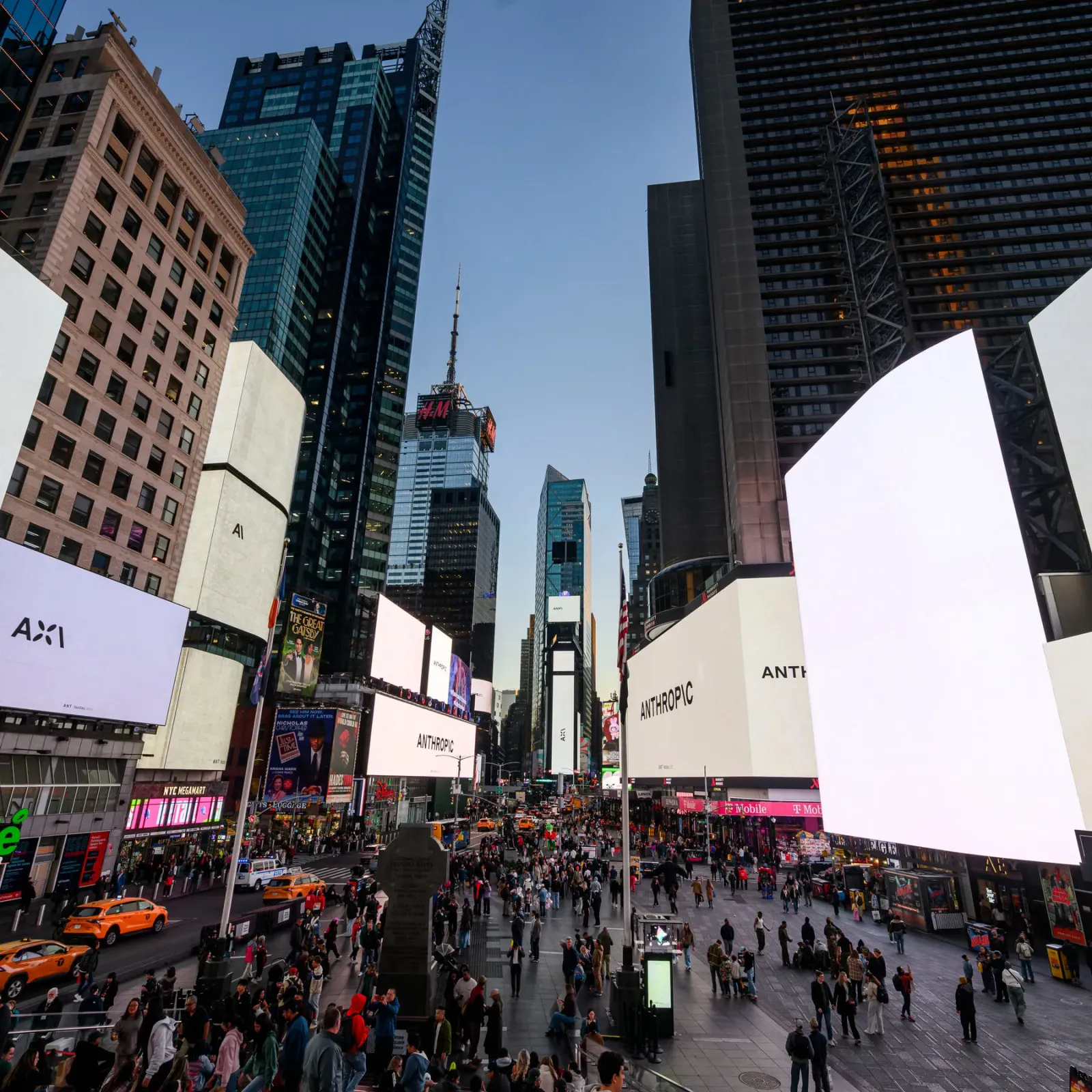
Anthropic broke records with its initial public offering this week, then hit a rocky first full day of trading as markets plunged on worries about artificial intelligence spending. For executives and boards, the split screen is the signal: private-market enthusiasm for AI is no longer a reliable proxy for how public investors will price the same story.
Anthropic broke records with its initial public offering this week. Then came the first full day of trading, and it was rocky. The same stretch of tape delivered a market plunge driven by worries about artificial intelligence spending. Put those two facts side by side and you have the whole story: the AI giant's listing cleared every bar the private market set for it, and the public market almost immediately started asking a different question.
That question is not whether AI is real. It is what AI spending is worth. The New York Times reported that Anthropic's debut broke records before a rocky first full day of trading, as the markets plunged on worries about artificial intelligence spending. Note the sequence. The record and the reckoning arrived in the same week, and the selloff was not confined to the newly public company. It was a market-wide reaction to the cost side of the AI boom, which is the side public investors can actually see on a cash flow statement.
The disconnect is structural, not sentimental. Private markets price AI on capability, talent density, and the size of the prize. Public markets price it on payback periods, depreciation schedules, and how much cash a company burns before the revenue shows up. Those two frameworks can coexist for years while a company stays private. They collide the moment there is a daily print. Historically, that collision is what an IPO is for: it converts a story into a number that updates every few seconds, whether the story likes it or not.
Worries about AI spending have been building because the spending is enormous and the returns are back-loaded. Data centers, chips, power, and talent all get paid for now. The revenue they are meant to produce arrives later, and it arrives with less certainty than the invoice did. For context, that mismatch is the classic setup for a valuation reset. When investors decide the payback window is longer or shakier than they assumed, they do not trim one line item. They reprice everything that depends on it, which is why a concern about AI budgets can surface as a broad market plunge rather than a single-stock problem.
A record-breaking offering carries its own gravity. When demand for shares is that strong, the company and its bankers have to allocate a finite book, and the first day of trading becomes a referendum on whether they priced it right or left value on the table. A rocky session after a record book is not a verdict on the business. It is the market's first honest attempt to mark the equity, and it usually says more about buyers' assumptions than about the seller's fundamentals. For the company, the useful output of day one is information: who bought, who flipped, and what multiple the market is willing to underwrite for AI exposure right now.
The second-order effects are where this gets interesting for anyone running a company. A record AI listing followed by a rough tape resets the reference point for every other AI issuer waiting in the queue. It also resets the cost-of-capital conversation inside boardrooms. If public investors are now discounting AI spending more aggressively, the internal hurdle rate for the next data center, the next training run, and the next hiring plan should move with it. Private valuations do not update on their own. They update when someone tries to sell.
For executives and boards, the practical lesson is to stop treating private-market enthusiasm as validation and start treating it as a lagging indicator. The public market is the only place where the AI spending thesis gets tested daily, in the open, by people with money at risk. That test is uncomfortable. It is also the most useful signal available, because it is the one nobody can talk up in a term sheet. Boards that wait for the private mark to catch up will be making capital decisions on stale prices.
Anthropic's debut did not settle the debate about AI spending. It moved the debate onto a scoreboard everyone can read. The gap between Wall Street and Silicon Valley is not a bug in this cycle; it is the mechanism. Silicon Valley funds the future, and Wall Street charges for the wait. Anthropic just became the clearest live experiment in how expensive that wait has become, and every AI-adjacent company, investor, and board is now watching the same print.
This story's Key Insights and Take-aways are locked.
Create a free account to unlock Executive Actions for one credit.
Register to UnlockAlways free for Executives Club members. Join the Club
More in Technology

Anthropic Mathematician Claims Claude Helped Prove Riemann Hypothesis in Six Weeks
Levent Alpöge says the AI tool helped him develop a solution to one of math's most important unsolved problems in about six weeks, a claim that, if verified, would reshape AI's role in research.

Asahi Pours $85M Into AI Cyber Defense After Ransomware Hit
Japan's beverage giant is rebuilding its security stack around AI, and the $85 million price tag is a warning to every board still treating cyber risk as an IT line item.

Signal kills mobile screenshots to fight the 'existential threat' of AI surveillance
The encrypted messaging app is closing the one hole encryption never covered, the screenshot button, as AI tools get better at reading everything on your screen.