
Anthropic pledges $150M for 1,000 nonprofit AI fellows, paying $85,000 without a degree
Claude Corps is funding year-long placements across the U.S., with apps open Wednesday through July 17.
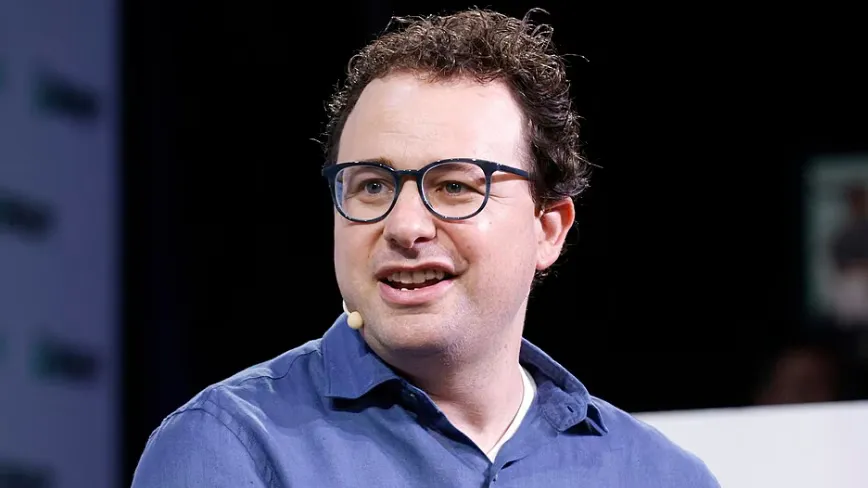
Anthropic is donating $150 million through a program called Claude Corps to embed 1,000 early-career “AI fellows” inside nonprofits across the United States. Fellows earn $85,000 plus benefits for a year and no college degree is required, with applications open Wednesday and closing July 17.
Anthropic is putting real money behind the idea that AI adoption should not be reserved for well-funded teams. Through Claude Corps, the company is donating $150 million to place 1,000 AI fellows inside nonprofit organizations across the United States. Each fellow is set to earn $85,000 plus benefits for a year-long placement, and applications opened Wednesday and close on July 17.
The degree requirement is the quiet part that matters. No college degree is required to apply, which directly widens the funnel of candidates nonprofits can hire to help them use Claude more effectively. The program is designed for early-career workers who will work during that year-long stint to help nonprofits get more effective with Claude, rather than treat AI as a side project.
On paper, Claude Corps looks like a workforce program. In practice, it is also a distribution strategy for Anthropic and a capability-building play for the nonprofit sector. AI models are only useful if someone can translate model outputs into workflows a real organization can run: intake, documentation, decision support, communications, or whatever problem the nonprofit is actually trying to solve. Embedding fellows for a full year tackles the hardest part of adoption, the unglamorous middle where pilots either turn into repeatable use or die in a folder.
For executives and boards at nonprofits, the incentive math is straightforward. $85,000 plus benefits for a year gives organizations a structured way to bring in people who are paid to focus on AI integration. It also reduces one of the biggest barriers nonprofits face when evaluating new tools: internal time. Many organizations cannot afford to pull scarce staff away from core delivery, and they often lack the hands-on technical capacity to move beyond demonstrations. A cohort of 1,000 fellows across the United States means that the program is not just offering “education,” it is offering manpower, in a format that can become operational.
For Anthropic, the move is a bet on two things the market is already wrestling with. First, adoption is uneven. Even when AI is widely available, the ability to get consistent value depends on local skills and local process. Second, trust and legitimacy matter. Nonprofit use is politically sensitive and reputationally important, and a program that emphasizes practical placement can help normalize AI assistance as a responsible, service-oriented capability rather than a novelty.
This is also where regulatory context quietly enters the room. In the United States, nonprofits operate under a web of state and federal rules that vary by mission and structure. Even if the source does not detail specific regulations for Claude Corps, AI adoption typically raises questions about privacy, data handling, and oversight. Programs that place trained workers inside organizations for a defined term can support governance in a way that one-off training sessions often cannot. If a fellow is embedded for a year, there is time to build internal processes, document usage patterns, and create a feedback loop that improves how Claude is used over time.
Now zoom out. The second-order effect of Claude Corps is that it pressures other AI providers, and it pressures internal teams at nonprofits, to stop treating AI as a “tool purchase” and start treating it as an operating capability. When a well-known model provider funds year-long placements and removes the degree barrier, the benchmark shifts from “Can we demo this?” to “Can we run it safely and consistently?” That shift tends to create board-level conversations about staffing, vendor relationships, and measurable outcomes.
It also has an execution implication for any organization selecting where to apply those fellows. If the program is truly meant to help nonprofits use Claude more effectively, then the difference between getting value and missing the opportunity will likely come down to readiness: who owns the use case, who sets guardrails, and how the org will measure “more effectively” during the year. Applications opened Wednesday and close on July 17, so timing matters for organizations that want to plan staffing and project priorities now rather than scramble later.
For executives in adjacent sectors, Claude Corps is a reminder that distribution can be social infrastructure. Funding fellows inside organizations does not just expand adoption; it builds a talent pipeline, creates early success stories, and reduces uncertainty during implementation. In a market where model performance is constantly improving, the companies that win often are the ones that invest in the people and processes that turn capability into outcomes. Claude Corps is exactly that kind of investment, and it comes with a clear deadline and a clear number: $150 million, 1,000 fellows, $85,000 plus benefits, and no degree required.
This story's Key Insights and Take-aways are locked.
Create a free account to unlock Executive Actions for one credit.
Register to UnlockAlways free for Executives Club members. Join the Club
More in Technology

OpenAI says 10,000 agents cracked a 90-year math problem in 88 hours
The company's claim is audacious, but one mathematician is pushing back. Here's what it means for AI-driven discovery.

Meta still serves child sexual abuse ads on Instagram in India - BBC report
A new report following the BBC Eye investigation says the ads are still there - what it signals for every platform with a self-serve ad engine.

White House yanks 'Build the Wall' game after Tetris Company copyright warning
The administration's arcade game vanished in hours - and the takedown playbook every brand can learn from.