
Anthropic's $1.76 trillion debut fell 8.5% as AI sell-off erased 2026 gains
Anthropic's record listing could not stop the Nasdaq 100 from hitting its lowest level since 2020, and bitcoin and gold fell alongside it.
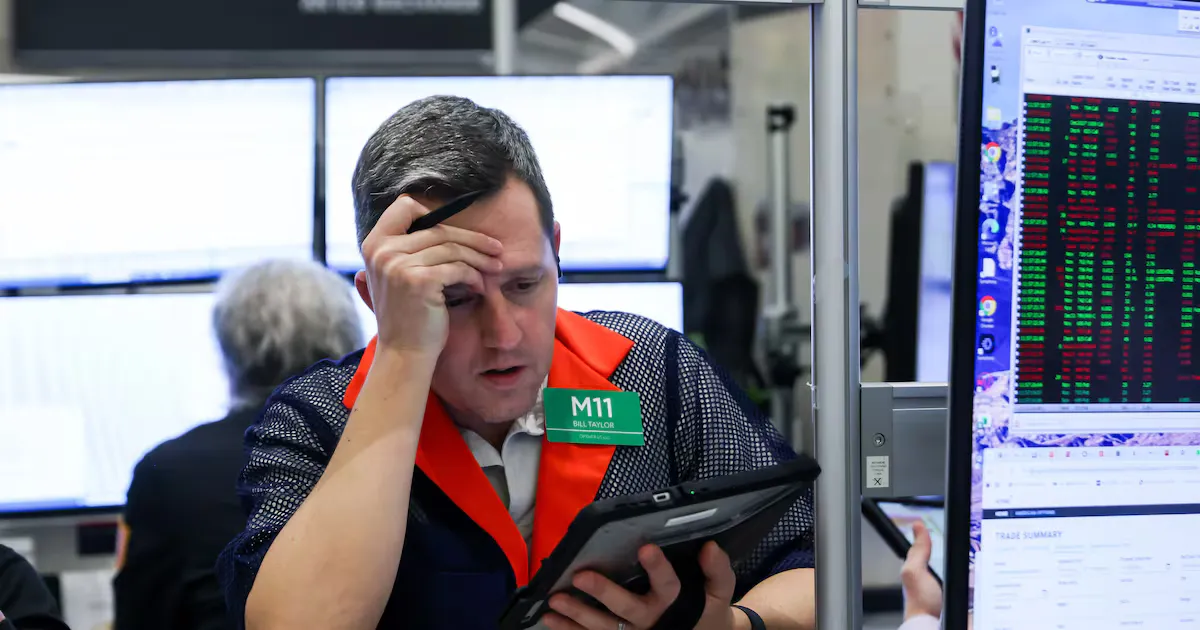
Anthropic, the San Francisco AI company, began Nasdaq trading at $83 a share, spiked to about $100, closed at $97 for a valuation near $1.76 trillion, then slid 8.5 per cent to $88.19 on Friday. The reversal dragged the S&P 500 and Dow into technical correction, pushed the Nasdaq 100 to its lowest level since 2020, and sent bitcoin and gold to multiyear lows, leaving every AI-adjacent board to defend its valuation and capex plans.
Anthropic's record-breaking debut lasted exactly one day of glory. The San Francisco-based AI company began trading on the Nasdaq on Thursday at $83 a share, spiked to about $100, and closed its first session at $97, a price that valued it at roughly $1.76 trillion. By Friday the story had flipped: the stock retreated 8.5 per cent to $88.19, wiping out the opening-day premium and handing a quick loss to anyone who chased the pop. That is the uncomfortable headline for every founder and CFO watching. The largest IPO in history could not hold its own tape for 48 hours, and the reason was not Anthropic. It was the sector around it.
The damage spread well past one ticker. The broad AI sell-off dragged the S&P 500 and the Dow Jones Industrial Average into technical correction territory, meaning each index has now fallen more than 10 per cent from its recent high. The tech-heavy Nasdaq Composite dropped 5.28 per cent, erasing all of its gains for 2026. The Nasdaq 100, which tracks the index's 100 biggest companies by weight, slid to its lowest level since the pandemic year of 2020, putting it near bear market territory, the 20 per cent drawdown threshold. In plain English: the market did not merely shrug at Anthropic's listing. It treated the listing as a reason to sell everything AI-adjacent.
"The trouble in the tech sector, particularly areas linked to AI, such as semiconductors and memory, has been brewing for a while now," said Neil Wilson, an investor content strategist at Denmark's Saxo Bank. He framed Anthropic's outcome as a referendum on the entire ecosystem, noting that its "success or failure will have huge ramifications for the wider AI ecosystem and in particular the timing for OpenAI's own delayed public listing." Then he posed the question investors are now asking out loud: "is it worth it? Can Anthropic justify at $1.5 trillion valuation, or $2 trillion for that matter?" That gap between the price paid and the case that justifies it is the whole story of this week.
The clearest casualty was Nvidia. The chipmaker is the Nasdaq 100's third biggest component by weight, and this week it forecast a strong outlook even as its chief executive, Jensen Huang, was engulfed in scandal following revelations of an affair with an alleged Chinese spy. The stock still sank more than 14 per cent after reports that US authorities were investigating the company over its accounting practices. That combination, a strong forward guide plus a governance crisis plus a regulatory probe, is the nightmare version of a mega-cap earnings event. Guidance did not save it. Nothing did. And when the index's third-largest weight trades like that, it drags the entire Nasdaq 100 with it.
Mathieu Racheter, head of equity strategy research at Swiss bank Julius Baer, said the Nvidia results and Anthropic's IPO simply failed to deliver the relief investors had hoped for, with listing-day enthusiasm giving way to renewed selling across AI names and the broader market. He pointed to a funding problem sitting underneath the sentiment problem: "The moves are further amplified by a liquidity squeeze that strong company results alone cannot resolve." Resilient nominal growth, elevated energy costs and rising public and private investment needs are absorbing capital, he said, while a more hawkish US Federal Reserve is keeping financing expensive. The consequence, in his words: "This limits the multiples that investors are willing to pay, even when earnings remain strong, and intensifies scrutiny of the returns on AI infrastructure spending."
Risk came out of everything. Bitcoin slid to its lowest level in more than two years, an intraday low of about $55,659 on Saturday, matching levels last seen in September 2024, according to CoinMarketCap data. The world's largest cryptocurrency had been trending upward in mid-August but has been on a downward slope, declining consistently after sentiment was hit in the aftermath of the $6.3 billion breach of Binance in late October. The pattern matters. When bitcoin trades like a high-beta tech stock rather than digital gold, it tells you investors are cutting exposure, not rotating it.
Even the traditional hiding places failed. Gold fell 4.33 per cent to $3,524.80 an ounce, its lowest level in more than a year, after nearly falling below $3,500 earlier in the session, as investors digested signals that the Fed might raise interest rates again in December. Silver fared worse, shedding nearly 8 per cent to $40.99 an ounce. A safe-haven asset selling off alongside equities is not a normal risk-off day. It is a liquidity day, when investors sell what they can rather than what they want.
The winners are narrower than the losers. Abu Dhabi's MGX emerged as a major winner from the Anthropic IPO, a reminder that in a repricing cycle the advantage goes to the balance sheet that got in early and cheap. For every other executive, the lesson from Friday is about sequencing. Anthropic now has to justify a valuation Wilson sized at $1.5 trillion, or $2 trillion, in a market that is explicitly questioning AI infrastructure returns. That scrutiny lands on OpenAI's delayed listing, on every private AI company pricing its next round off public comparables, and on every board that approved a capex plan assuming cheap financing. The AI trade did not die this week. But it lost its benefit of the doubt, and that is a far harder thing to win back.
This story's Key Insights and Take-aways are locked.
Create a free account to unlock Executive Actions for one credit.
Register to UnlockAlways free for Executives Club members. Join the Club
More in Business

GTA VI hauls $3.79bn in one day, out-earning every film ever made
Rockstar's own estimate covers a single Thursday plus a record 32.5m prerelease units, and it lands on every board weighing IP concentration, pricing power and launch risk.

FBI's crime database breached again, the second hack in months
CNN reports hackers hit the National Crime Information Center, the shared backbone of US policing, and the repeat timing is the part every security team should study.

S&P 500 Enters Correction, Down 10% From Its High on AI Worries
The index's slide past the 10 percent line is a symbolic verdict on investor mood, and the AI trade that powered the rally is now the thing testing it.