
Apple's Vision Pro Won the Hype. Meta's Cheap Headsets Won the Users.
Apple's megabucks mixed-reality bet is still hunting for a payoff while Meta's cheaper headsets own the category, and the pricing gap is the lesson every platform builder should study.
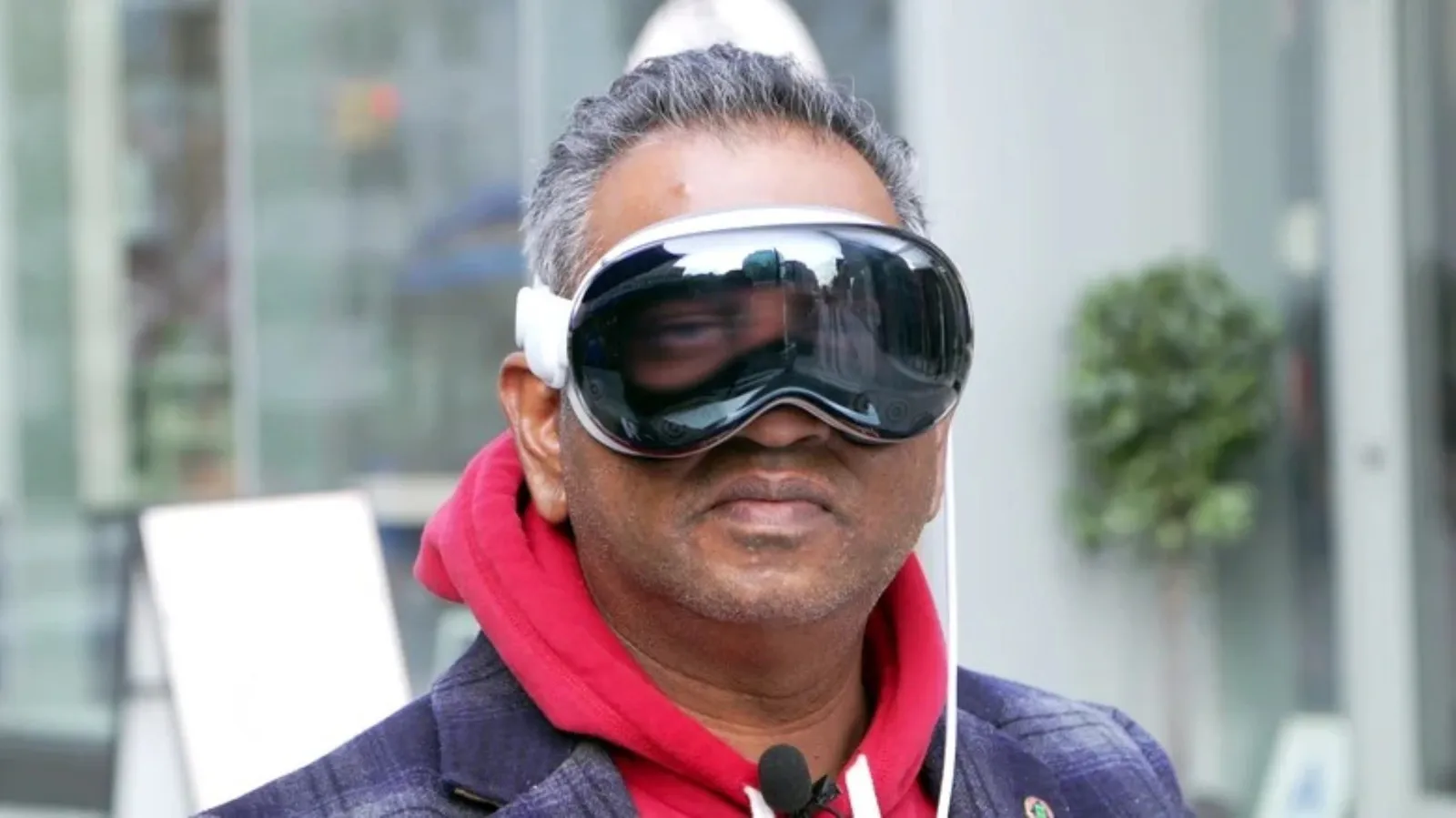
Apple's Vision Pro debuted in 2024 to massive hype, but the years since have not been kind to Apple's megabucks mixed-reality headset, while Meta's VR headsets took off. For executives, the split is a pricing and ecosystem lesson: premium hardware without a mass-market job to do does not build a platform.
Apple's Vision Pro walked on stage in 2024 with the kind of hype only Apple can generate. The years since have not been kind. That is the short version of a story that has become the defining case study in mixed reality: Apple built the most expensive, most polished headset in the category, and Meta's VR headsets took off in a way Apple's never did. The contrast is not a footnote. It is the whole story.
The gap is not about engineering. It is about who showed up. Meta's strategy has historically been to sell headsets cheaply, sometimes at or near a loss, and make the money back on software, subscriptions, and the long game of owning the platform. Apple did the opposite. It priced the Vision Pro like a professional workstation, north of $3,000 at launch, and positioned it as a new computing paradigm rather than a toy. That framing won applause at launch and then ran straight into the oldest problem in hardware: a premium price with no must-have app is a museum piece, not a platform. By the account of the years since, the Vision Pro has struggled to convert admiration into adoption.
The math of platform adoption is unforgiving. Historically, developers follow install base. Every studio that has to choose where to spend its engineering budget asks one question: where are the users? Meta's cheaper headsets answered that question with volume, with entry points typically in the hundreds of dollars rather than the thousands. Apple's answered it with a smaller, wealthier, more curious audience that was not obviously going to buy a second unit or a third. That is not a rounding error. It is a different product category wearing the same noun, and the market treated it that way.
Apple's counterargument is patience, and it is not a bad one. The company has been late before and won anyway. The iPod was not the first MP3 player. The iPhone was not the first smartphone. The Watch was not the first smartwatch. In each case, Apple waited, watched competitors make the expensive mistakes, and then shipped something that made the category legible to normal people. The Vision Pro was supposed to be that moment for spatial computing. The difference is that the iPod, the iPhone, and the Watch all had an obvious job to do for a mass audience on day one. Music in your pocket. A phone that was also the internet. A watch that tracked your health. The Vision Pro's job has been harder to say out loud, and that is a marketing problem no amount of titanium and glass can solve.
There is also the developer flywheel problem, and it is the one that kills platforms quietly. Platforms die without apps, and apps do not get built without users. Meta has spent years and enormous sums subsidizing that loop, funding ports and accepting thin hardware margins to keep the wheel spinning. Apple, which typically runs the most profitable hardware business in consumer tech, had little appetite for that kind of subsidy. The result is a headset that generated admiration while the cheaper competitor kept compounding. In platform wars, the compounding is the point.
The second-order effects are already visible. Attention in the category has been drifting toward lighter form factors, including camera-equipped smart glasses, because the industry has learned that people will not wear a heavy, expensive device on their face for an hour to check email. That shift matters well beyond headsets. If the next computing platform is something you wear all day, the winner will be whoever solves comfort, price, and battery life, not whoever has the best displays. Apple's strengths, industrial design and silicon, are real advantages there. Its reluctance to compete on price is a real liability too, and it travels with the company into every new category it enters.
For executives watching this, the lesson is not that Apple failed. It is that being right about a category early is not the same as winning it. Pricing a new platform like a mature one compresses your addressable market down to enthusiasts and enterprises, and enthusiasts do not build ecosystems. Meta's approach, ugly margins and all, bought something Apple's did not: a population of people who actually use the thing, which is the only asset that compounds in a platform fight.
The strategic stakes for anyone launching a platform are blunt. Your first job is not to be the best product in the category. It is to be the one people can afford to try. Apple still has the balance sheet, the silicon, and the brand to make a second act work, and the company has rewritten its own history more than once. But the years since 2024 have made one thing clear. Hype gets you the launch. Price and users get you the decade.
This story's Key Insights and Take-aways are locked.
Create a free account to unlock Executive Actions for one credit.
Register to UnlockAlways free for Executives Club members. Join the Club
More in Technology

Anthropic Mathematician Claims Claude Helped Prove Riemann Hypothesis in Six Weeks
Levent Alpöge says the AI tool helped him develop a solution to one of math's most important unsolved problems in about six weeks, a claim that, if verified, would reshape AI's role in research.

Asahi Pours $85M Into AI Cyber Defense After Ransomware Hit
Japan's beverage giant is rebuilding its security stack around AI, and the $85 million price tag is a warning to every board still treating cyber risk as an IT line item.
Signal kills mobile screenshots to fight the 'existential threat' of AI surveillance
The encrypted messaging app is closing the one hole encryption never covered, the screenshot button, as AI tools get better at reading everything on your screen.