
Apple sues OpenAI, alleging senior leadership directed alleged trade secret theft
A lawsuit claims Apple’s stolen-trade-secret theory implicates OpenAI’s leadership, raising reputational, legal, and partnership risks.
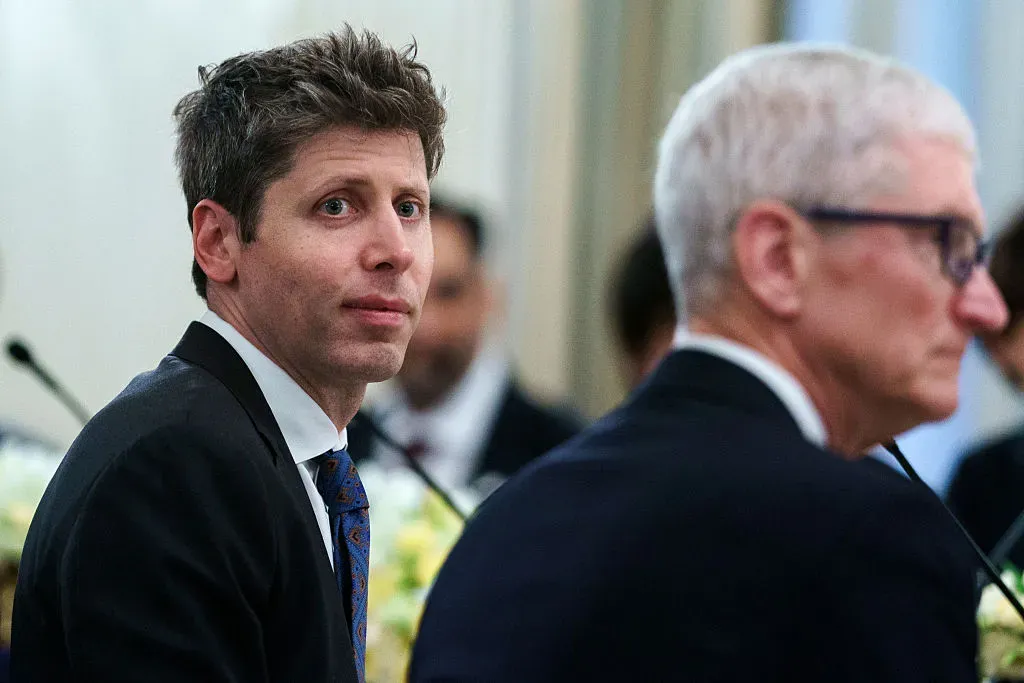
Apple has filed a lawsuit against OpenAI alleging trade secret theft, and claims the alleged misconduct was directed by OpenAI’s senior leadership, including a long-time former employee. For executives, the case is a reminder that AI partnerships now carry legal and governance risk, not just model risk.
Apple has sued OpenAI over alleged trade secret theft, and Apple’s central allegation is that the misconduct was directed by OpenAI’s senior leadership, including a long-time former employee. In other words, this is not framed as a rogue incident by a single worker gone rogue. Apple is saying leadership involvement is part of the story.
That framing matters because it turns a technical workplace dispute into a governance and control question. If Apple’s claim is accepted at face value in court, it is not just about whether information was mishandled. It becomes about whether the organization’s senior decision-making, oversight, and internal controls allowed improper handling of sensitive material. For decision-makers, that changes how you think about risk in AI ecosystems where talent moves quickly and competitive advantage is often tied to proprietary data, processes, or model-related methods.
The trade secret angle is also a big deal in the way these disputes usually play out. Trade secret cases tend to hinge on what was allegedly confidential, how it was accessed, and what steps were taken to protect it. They also tend to bring in questions like: were there clear boundaries and policies around sensitive information? Were systems and workflows designed to prevent misuse? In AI especially, the line between “knowledge gained” and “trade secret taken” can get blurry in the real world. People learn. Teams collaborate. But courts and regulators focus on the handling of information that was treated as confidential.
Why Apple would include “directed by senior leadership” in its allegations is not hard to understand. A simple complaint against a former employee typically looks narrower and harder to expand. But if Apple can credibly argue that senior leadership directed, approved, or otherwise drove the alleged misconduct, then the alleged harm is framed as systemic. That can make the case more consequential for OpenAI beyond the individual defendant or event.
For OpenAI, these allegations create a second-order challenge: governance optics. Even if the underlying technical details are contested, stakeholders do not wait for a verdict to form risk perceptions. Partners may hesitate. Potential collaborators may ask tougher questions about internal controls, compliance processes, and the protections around sensitive information. Investors, too, may think about how litigation risk can affect timelines, costs, and executive attention.
There is also a regulatory backdrop that makes lawsuits like this especially loud in boardrooms. Regulators globally are increasingly focused on how companies manage sensitive information, prevent misuse, and ensure accountability. While this specific lawsuit is an Apple v. OpenAI dispute, the broader direction of travel is toward tighter scrutiny of how advanced tech companies operate, document decisions, and enforce boundaries inside the organization.
Now add to that a market reality: AI advantage is frequently tied to proprietary inputs and know-how, not only compute. Many companies compete by building unique datasets, training procedures, evaluation methods, and product workflows. When employees move between companies, the industry worries about what knowledge travels and what should remain protected. That is why trade secret claims are so strategically loaded. They are not just about recovering damages. They are about preserving the competitive premise: that sensitive methods do not migrate improperly.
For executives in companies with AI systems, the strategic stakes are practical. You cannot treat trade secret risk as a HR issue alone. Boards and leadership teams typically need clarity on information barriers, access controls, onboarding and offboarding procedures, and how sensitive materials are classified and monitored. Even if your company has strong policies on paper, a lawsuit can pressure-test whether the organization actually operationalizes them.
In the short term, Apple’s allegations put OpenAI’s internal governance under the spotlight, especially because Apple specifically points to senior leadership direction and includes a long-time former employee in that alleged chain. In the long term, the case is a signal to the market that AI competition will increasingly be prosecuted through legal accountability as much as through product speed. If you are a CEO, CFO, or board member at a peer company, the question is not only “Who did what?” It is “How do we prove that we prevented it, detected it, and managed the boundaries that keep proprietary advantage proprietary?”
This story's Key Insights and Take-aways are locked.
Create a free account to unlock Executive Actions for one credit.
Register to UnlockAlways free for Executives Club members. Join the Club
More in Technology

Google quietly links your phone number to every Android account on your SIM
Adding a SIM now ties your phone number to all Google accounts - and future accounts inherit it. Here's the security and privacy stakes.

Hijacker AI 'Skynet mode' runs 100,000 attack steps against exposed models
Symantec caught a criminal AI agent that borrows other models, steals data, and mines crypto; the only relief is no confirmed victims yet.

Nvidia's AI-financier shift faces its first big test as neoclouds stumble
A rout in neocloud stocks is forcing investors to weigh Nvidia's hidden exposure as both supplier and lender to the AI buildout.