
Volkswagen halves its model lineup as it targets nine million vehicles yearly
The cuts are the easy part. The harder question for boards is what happens to platforms, jobs, and cash.
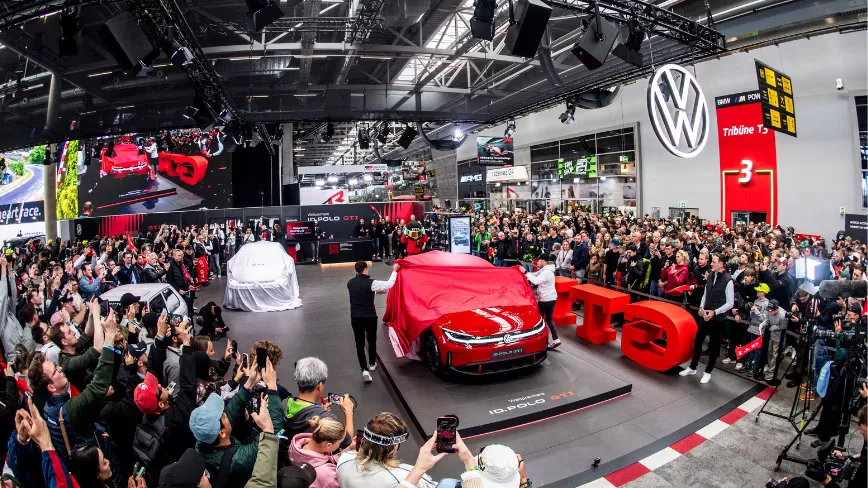
Volkswagen says it will cut its model lineup by up to half over the coming years while shrinking annual production capacity to nine million vehicles, CNBC reports. For decision-makers, the plan raises immediate questions about product strategy, industrial footprint, and how quickly automakers can rebalance costs under crisis conditions.
Volkswagen is planning to gut a major chunk of its product lineup. CNBC reports the carmaker will cut its model lineup by up to half over the coming years, as it tries to survive what it describes as the worst crisis in its history.
It is not just trimming what cars show up on dealer lots. Volkswagen also plans to shrink production capacity to nine million vehicles a year, CNBC reports. That figure matters because it sits well below the 12 million vehicles implied as a higher baseline before the cuts, underscoring the scale of the reset.
On paper, halving a model range sounds like a simple “do less, sell more” move. In practice, it is a messy industrial and brand decision. A sprawling lineup often means a sprawling set of platforms, factories optimized for different volumes, and teams that have been staffed and funded to support many overlapping variants. When demand softens or margins get squeezed, those layers start acting like debt. The models that were once “strategic” can turn into cost centers if they cannot hit volume targets consistently.
This is also where executives should zoom out to the regulatory and compliance side of the car business. Automakers typically live under a tight mix of emissions rules, safety requirements, and product approval processes, and each new model or derivative can require significant engineering, testing, and certification work. When the lineup shrinks, the compliance burden does not vanish instantly. But the payoff arrives later: fewer variants to update, fewer production lines that need to be retooled, and fewer engineering programs competing for scarce capital. In a crisis, capital allocation becomes the real chessboard, not just product strategy.
Volkswagen’s plan is also a signal to the rest of the industry about how painful the “right-sizing” debate has become. If a group with Volkswagen’s scale is moving to cut product breadth and reduce production capacity to nine million vehicles annually, peers should assume the market is not just temporarily tight. It points toward structural pressure: either demand is resetting, competition is intensifying, or pricing power is deteriorating enough that maintaining older production assumptions no longer pencils out.
One more layer: industrial capacity decisions have long shadows. Production capacity is not like adjusting a marketing budget. Car plants are built, staffed, and integrated into supply chains with contracts and schedules that can be difficult to unwind quickly. Shrinking to nine million vehicles a year, especially when that is well below 12 million, implies Volkswagen is betting it can operate with leaner throughput and a different product mix. That choice can pressure suppliers too, because upstream companies often design capacity around downstream volume commitments.
And then there is the human and governance side, even though the provided reporting focuses on the model cuts and production reduction. The original headline notes Volkswagen stays silent on 100,000 job cuts, but the source text you provided centers on the product and production changes. Still, boards should connect the dots. When management reduces production and collapses a model range, workforce planning typically follows. Silence does not make labor restructuring go away. It can simply shift the conversation into other channels, potentially increasing uncertainty for employees, works councils, and governments involved in industrial policy.
Strategically, the stakes for decision-makers are straightforward but uncomfortable. A smaller lineup can improve focus and help concentrate engineering spend, but it also reduces optionality. If the market shifts again faster than expected, fewer models can mean slower recovery or higher risk if one product fails to perform. Meanwhile, shrinking capacity to nine million vehicles a year can support healthier utilization rates if the volume outlook improves, but it can also lock the company into a lower ceiling if the downturn lasts longer than planned.
For executives at other automakers, the message is not “copy Volkswagen.” It is “watch the direction of travel.” Volkswagen is responding to crisis conditions by reducing both the number of models it offers and the amount it plans to build. In a business where fixed costs can crush flexibility, that kind of simultaneous product and capacity reset is often the clearest indication that leadership believes the status quo cannot be defended.
This story's Key Insights and Take-aways are locked.
Create a free account to unlock Executive Actions for one credit.
Register to UnlockAlways free for Executives Club members. Join the Club
More in Technology

Google quietly links your phone number to every Android account on your SIM
Adding a SIM now ties your phone number to all Google accounts - and future accounts inherit it. Here's the security and privacy stakes.

Hijacker AI 'Skynet mode' runs 100,000 attack steps against exposed models
Symantec caught a criminal AI agent that borrows other models, steals data, and mines crypto; the only relief is no confirmed victims yet.

Nvidia's AI-financier shift faces its first big test as neoclouds stumble
A rout in neocloud stocks is forcing investors to weigh Nvidia's hidden exposure as both supplier and lender to the AI buildout.