
Arsenal's eight-point lead vanishes as Newcastle rally and Raya goes down
A 2-2 draw at Newcastle cost Arsenal an eight-point cushion and their goalkeeper, while handing under-fire boss Matthias Jaissle the result that resets the pressure.
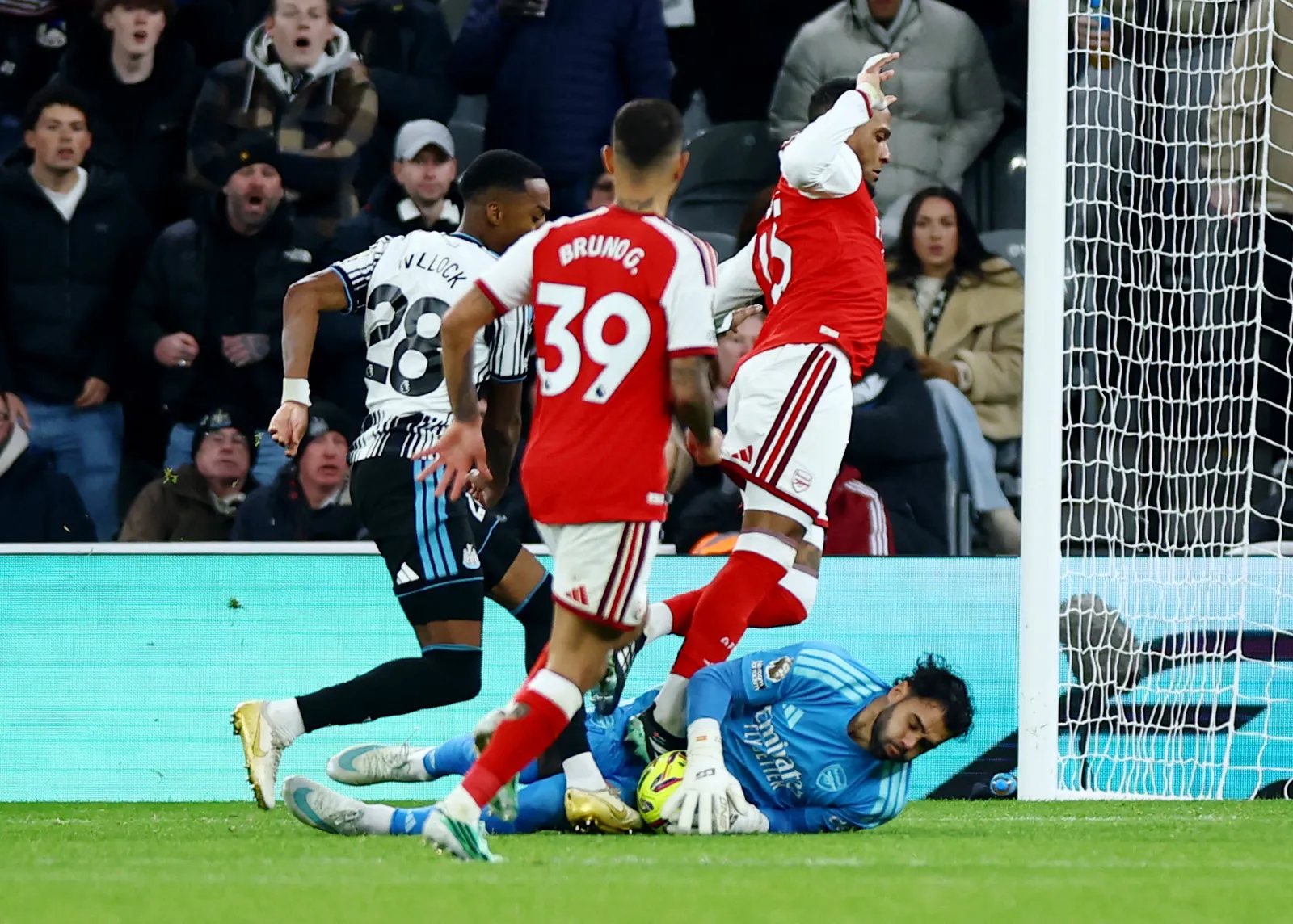
Arsenal missed the chance to open an eight-point lead at the top of the Premier League, drawing 2-2 at Newcastle after Harvey Barnes and Malick Thiaw overturned Eberechi Eze's opener, with Noni Madueke salvaging a point and Raya lost to injury. For decision-makers, the afternoon is a live case study in concentration risk, momentum pricing, and how one 90-minute result can stabilize or destabilize leadership.
Arsenal arrived at Newcastle with a chance to open an eight-point gap at the top of the Premier League. They left with a 2-2 draw, two points dropped, and Raya lost to injury. Eberechi Eze had put Mikel Arteta's side in front after a dominant first 45 minutes, and the eight-point cushion looked like a matter of routine. Then Harvey Barnes and Malick Thiaw scored, Newcastle flipped the match, and the defending champions were suddenly headed for defeat. Noni Madueke salvaged a point. The gap at the top stayed exactly where it was.
The shape of the afternoon is what will sting. Arsenal controlled the first half, scored through Eze, and looked like a team extending a title procession. Newcastle's response came from Barnes and Thiaw, two goals that turned a comfortable afternoon into a genuine crisis for Arteta's men and a much-needed boost for under-fire Newcastle boss Matthias Jaissle. Madueke's intervention rescued the draw, but a draw is not what a defending champion chasing an eight-point buffer comes for. The result is a reminder that dominance in one half is not the same as control of a match, and that the scoreboard, not the possession chart, is the only metric that compounds.
Two points is not a rounding error in a title race. Going eight clear in autumn forces rivals to chase, changes how opponents set up against you, and shifts the psychological load onto the pursuers. Staying five clear keeps the door ajar. Historically, the gap between finishing first and second in the Premier League is worth only a few million pounds in merit payments, but the real money sits further out: Champions League qualification, matchday revenue, sponsorship escalators, and the recruitment leverage that comes with being the club every agent and every prospect wants to call first. Dropped points in October do not decide titles. They do decide how much pressure a squad carries into November, and how much margin for error a manager has when the fixture list tightens.
The bigger operational worry is Raya. Losing a first-choice goalkeeper is not like losing an outfielder. The keeper organizes the defensive line, dictates build-up, and anchors the set-piece structure, and a mid-season change ripples through every phase of play. Arsenal now face the question every high-performing organization eventually faces: how much of your competitive advantage is concentrated in one person, and what happens the week that person is unavailable? Depth is not a luxury line item. It is risk management, and in football it is priced in points. Clubs that treat the backup keeper as an afterthought discover the cost in the exact weeks when the schedule offers no room to absorb it.
For Newcastle, the same 90 minutes read completely differently. Jaissle came into the match under pressure, and a second-half fightback against the defending champions is the kind of result that buys a manager time with the board, the dressing room, and the stands. Barnes and Thiaw did not just score goals; they produced the evidence a struggling project needs to argue that the plan is working. In football, as in any turnaround, one credible performance against a market leader can reset the narrative faster than any internal memo. Boards weigh visible proof against a strong opponent heavily, and they weigh it immediately.
Zoom out and this is a business story wearing a football shirt. Premier League clubs are media and entertainment companies with global fan bases, and their valuations track performance, visibility, and the certainty of European revenue. A title race that stays tight is good for the league's broadcast product and good for the clubs involved, because every week spent at the top of the table is free global marketing. A title race that breaks early is good for one club's brand and bad for everyone else's. Arsenal's failure to stretch the lead keeps the product compelling, which is precisely why neutrals and broadcasters were the quiet winners on Saturday.
The strategic read for executives outside sport is straightforward. Arsenal's afternoon is a case study in concentration risk, momentum, and the cost of one bad 45 minutes after a dominant start. Newcastle's is a case study in how a well-timed result can stabilize leadership under fire. Both clubs now return to a schedule that will test squad depth, medical staff, and decision-making under fatigue. The eight-point lead is gone for now. The questions it raised about roster depth, managerial pressure, and what a single Saturday actually costs are not.
This story's Key Insights and Take-aways are locked.
Create a free account to unlock Executive Actions for one credit.
Register to UnlockAlways free for Executives Club members. Join the Club
More in Business

Anthropic's record IPO lands a day before Nvidia's longest losing streak since 2008
Anthropic's record Nasdaq debut and Nvidia's longest weekly losing streak since 2008 landed within 24 hours of each other, and the contrast shows how fast the market is re-pricing the AI trade.
New World's HK$24.9B rights issue triggers 41% plunge as HK$50B debt target looms
New World Development has three levers left to erase up to HK$50 billion in borrowings by 2031, and shareholders just told the market what they think of the first one.

Chip supply chain warns new US export controls will spread beyond the target list
Suppliers, distributors and equipment makers say the latest US restrictions will not stay contained to the firms named on paper, putting orders, inventory and delivery timelines at risk across the global chip chain.