
Balogun’s FIFA reversal still sparks probes in Brussels, even after Belgium’s Washington rout
A suspended red-card drama fades in D.C. but resurfaces in the EU, with lawmakers asking if Trump ties mattered.
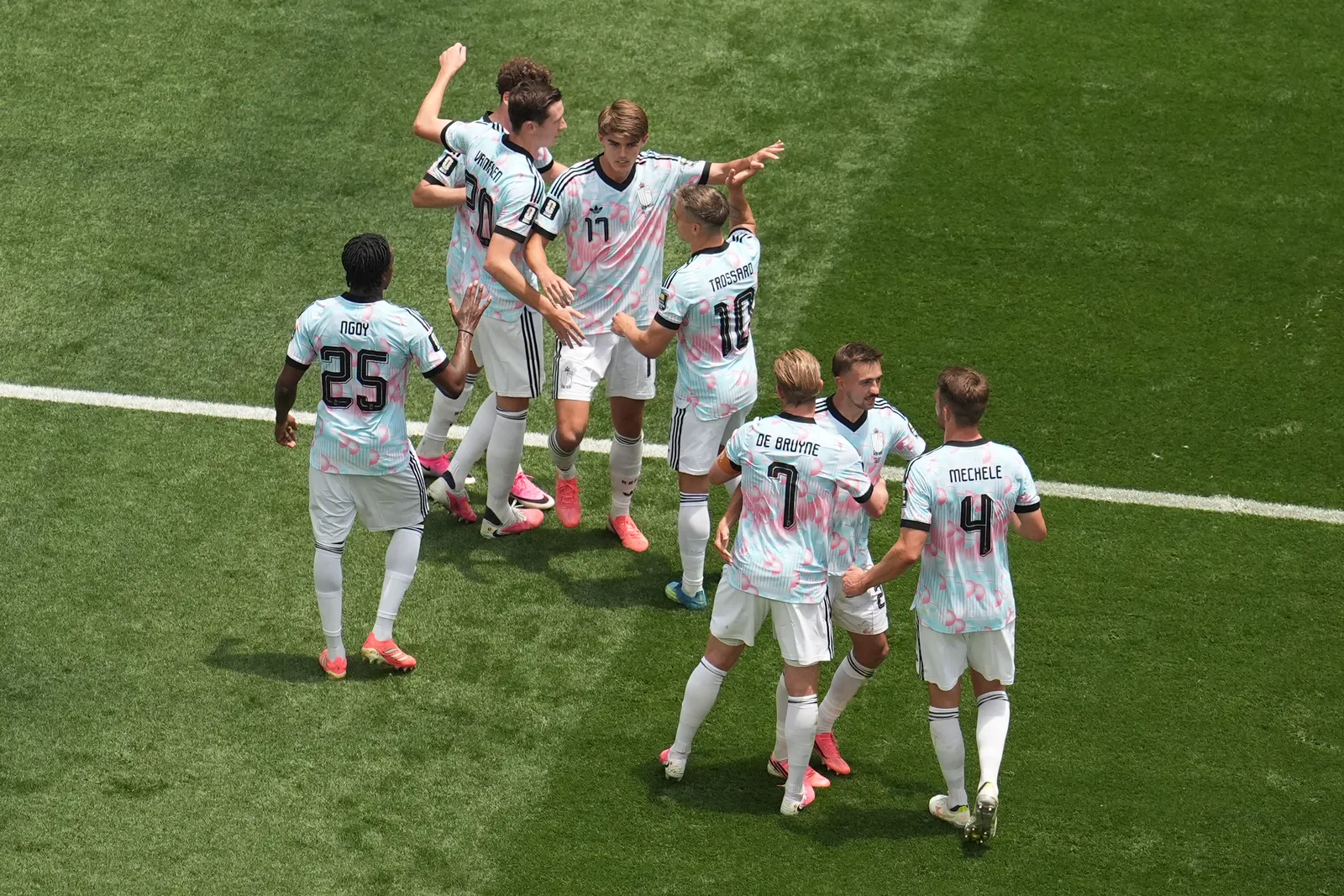
Folarin Balogun's suspended red-card punishment was lifted by FIFA just before Belgium’s Round of 16 matchup against the United States, after the White House lobbied for him to play. In Brussels, 72 European Parliament members have called for an investigation into FIFA President Gianni Infantino and whether his relationship with Donald Trump drove the reversal.
Folarin Balogun’s FIFA red-card suspension got lifted in time for Belgium’s Round of 16 against the United States. In Washington, that decision is basically old news. Belgian fans abroad point to results, not paperwork: Belgium made mincemeat of the U.S., never trailing, and they credit the outcome with putting the controversy to rest.
“I don’t think it had any impact on the game,” Michael McCusker, a Brussels native, said of FIFA’s reversal. “Did it give us the extra push? I don’t know. The USA were terrible.” For Belgian fans who watched the match in the capital, that’s the end of the story. “I woke up that morning feeling really good,” Margo Vandenbroucke, a Leuven native who works at the International Monetary Fund, said. “I walked into work that morning and everyone was clapping for me, for Belgium. I think that was the best way of showing that it didn’t matter.” The emotional accounting is simple: win, move on.
But the regulatory accounting in Brussels is not simple, and that matters if you care about how powerful institutions handle credibility when politics touches sport. According to Politico, Belgium’s sports authorities do not appear to have fully moved past the controversy that shrouded the matchup. The reason is that FIFA’s decision was not made in a vacuum. The source says the White House lobbied hard for Balogun to play against Belgium, and President Donald Trump took credit when FIFA lifted his suspension. That combination is combustible, because it turns an on-field disciplinary action into a test of whether the rules apply consistently.
The Royal Belgian Football Association formally challenged the decision. Fans blasted FIFA’s reversal as politically motivated, arguing the organization had bowed to Trump. To be clear, the source frames these reactions as allegations and public sentiment, not as a FIFA admission. Still, when you have a disciplinary reversal immediately linked to a high-profile political actor, the second-order effect is that people stop trusting the process and start scrutinizing incentives.
That scrutiny is now institutional, not just online. In a letter Wednesday, 72 members of the European Parliament called for an investigation into FIFA President Gianni Infantino and whether his relationship with Trump played a role in the decision to reverse an on-field disciplinary action. In other words: what Belgian supporters in Washington treated as “didn’t matter,” lawmakers in Brussels are treating as a potential governance failure.
For executives and boards, this is a familiar pattern. When outcomes look clean but the process looks questionable, reputational risk does not disappear just because the scoreboard does. It often spreads. Sports bodies, like corporations and regulators, rely on perceived neutrality to keep stakeholders from concluding that rulebooks are negotiable for the well-connected. Even a suspended punishment that later gets overturned can become a governance case study if stakeholders believe political pressure influenced the timing or the substance.
There’s also a market-structure lesson hiding inside the sports story. FIFA is a global regulator of sorts, setting disciplinary norms across jurisdictions. When decisions occur quickly and under intense attention, the ability to preserve procedural integrity becomes as important as the decision itself. In this case, the suspension was reversed just before the match, and Trump publicly claimed credit for FIFA’s lift. That makes it harder for FIFA to argue that the reversal was purely technical. It also creates a trail of political and reputational linkages that can be picked up by external oversight bodies like the European Parliament.
The stakes extend beyond the round of 16. If investigations follow, FIFA may face more scrutiny not only on this specific incident but also on the broader question of how it handles conflicts of interest, external influence, and disciplinary consistency. For peers in regulated industries, it is a reminder that credibility is not a one-time asset. It is a system. When stakeholders believe the system was bent, they seek audits, inquiries, and letters, not just apologies.
This story's Key Insights and Take-aways are locked.
Create a free account to unlock Executive Actions for one credit.
Register to UnlockAlways free for Executives Club members. Join the Club
More in Politics

Glacial collapse, not rain, killed 180 in Nepal's Himalayan flood
The Himalaya's extreme geography hid the true cause of Nepal's catastrophic flood, a glacial collapse that turned a geological battleground into a mass-casualty zone.
Iran’s Esmail Baghaei says Oman talks start shipping via Hormuz, not US talks yet
Temporary route plans with Oman aim to restart commerce while Tehran says Washington dialogue is not on the table.
Standards watchdog opens probe into Reform UK deputy leader Richard Tice over interests
The parliamentary standards commissioner says it began an investigation on 28 July into a possible undeclared interest.