
Bangkok bar fire kills 27, injures 63, officials say
Thailand officials say late Sunday’s blaze spread rapidly, and smoke may be why fatalities rose so fast.
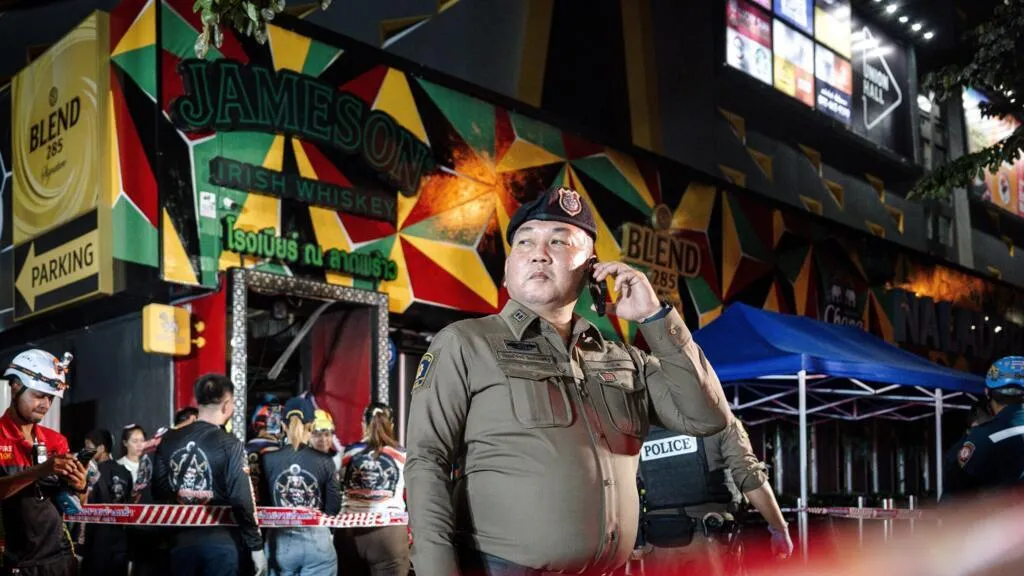
At least 27 people were killed and 63 injured after a fire tore through a Bangkok bar late on Sunday, Thai officials said. Bangkok Governor Chadchart Sittipunt said the blaze spread rapidly and smoke is believed to be the main cause of death, and authorities have launched an investigation.
At least 27 people were killed and 63 injured after a fire tore through a Bangkok bar late on Sunday, Thai officials said. Bangkok Governor Chadchart Sittipunt added that the blaze spread rapidly, and smoke is believed to be the main cause of death. Authorities have launched an investigation into the cause.
That combination, a fast-spreading fire plus smoke-driven fatalities, is exactly what makes this tragedy matter beyond the headline. In incidents like this, the speed of fire spread and the speed of smoke accumulation can turn what starts as a normal night out into a minutes-long emergency. When officials point to smoke as the primary cause, it signals that the lethal timeline may not be the flames themselves, but what happens in the air people are breathing while they try to escape.
For executives, boards, and operators in hospitality and entertainment, this is a hard reminder that safety is not just a compliance checklist. It is operational reality. Bars, clubs, and similar venues often pack people into enclosed spaces with high occupancy and complex layouts. In that kind of environment, evacuation plans, exit availability, and how quickly staff can move guests matter as much as the building materials do. When Thai authorities believe smoke played the central role, it raises the stakes on the full chain: detection, alerting, ventilation or smoke management, and how quickly people can find exits under stress.
There is also an organizational second-order effect that rarely shows up in initial reports: investigations and scrutiny tend to follow the chain of responsibility. When a governor publicly comments on what officials believe happened, it usually increases pressure on local and national authorities to show progress on enforcement, while the venue’s management faces a painful spotlight from insurers, regulators, and the public. Even before any official cause is announced, officials have already said authorities have launched an investigation into the cause. That wording matters because it implies responsibility will be assessed, not just mourned.
From a regulatory and governance perspective, fires are often where safety oversight either holds up or reveals gaps. Building and fire safety rules typically aim to ensure that venues can handle evacuation and that systems are in place to slow or control spread. The governor’s statement that the blaze spread rapidly points to the possibility that whatever defenses were present may not have been sufficient under the conditions of this incident. Executives in similar sectors should read that as a prompt to ask whether existing safeguards are effective in the real world, not just documented on paper.
The human cost here is immediate, but the business implications tend to arrive quickly too. In sectors like nightlife and hospitality, a major fire can lead to temporary closures, intensified inspections, and higher compliance costs. The longer the investigation takes, the more uncertainty can build around liabilities and remediation, and the more boards may face urgent questions about risk management. At the same time, there is a market incentive for proactive safety, because brand trust is fragile. People do not just evaluate price and vibe, they evaluate whether a venue feels safe, and whether that safety is visible in how it operates.
Strategically, executives and board members should treat this as a scenario stress test for their own properties. If smoke is believed to be the main cause of death in this Bangkok fire, then smoke behavior is the operational enemy. That means evaluating whether alarms are loud and clear, whether exits are unobstructed and intuitive in low-visibility conditions, and whether staff training is frequent enough to work under panic. It also means confirming that safety measures are maintained and not ignored when a venue is busy or understaffed.
This is not just a Bangkok story. It is a global one about what happens when a venue’s ability to protect occupants under extreme conditions is tested. The numbers from Sunday, 27 dead and 63 injured, are the outcome that boards and risk teams will not be able to forget. And because the investigation has begun, the cause and contributing factors will likely shape how regulators tighten enforcement and how industry leaders update their risk frameworks. In the weeks ahead, peers in similar roles should expect that safety, documentation, and on-the-ground preparedness will be judged more harshly than usual.
This story's Key Insights and Take-aways are locked.
Create a free account to unlock Executive Actions for one credit.
Register to UnlockAlways free for Executives Club members. Join the Club
More in Politics

Glacial collapse, not rain, killed 180 in Nepal's Himalayan flood
The Himalaya's extreme geography hid the true cause of Nepal's catastrophic flood, a glacial collapse that turned a geological battleground into a mass-casualty zone.
Iran’s Esmail Baghaei says Oman talks start shipping via Hormuz, not US talks yet
Temporary route plans with Oman aim to restart commerce while Tehran says Washington dialogue is not on the table.

Standards watchdog opens probe into Reform UK deputy leader Richard Tice over interests
The parliamentary standards commissioner says it began an investigation on 28 July into a possible undeclared interest.