

Beijing summons PH ambassador after South China Sea clash, Manila retaliates with its own call
The dispute over a shoal escalated into ambassador-level diplomacy, and decision-makers should read it as trade-risk signaling.

Beijing and Manila summoned each other's ambassadors Tuesday after a confrontation between Chinese and Philippine sailors at a disputed South China Sea shoal. The consequence is a fresh escalation risk along one of the world's most important shipping lanes.
Beijing and Manila both summoned each other's ambassadors Tuesday after a confrontation between Chinese and Philippine sailors at a disputed shoal in the South China Sea. China also continues to claim sovereignty over almost the entirety of the global trade route, keeping the diplomatic temperature high well beyond the incident itself.
Ambassador summons are not just formalities. They are a signal to the other side that the dispute is serious enough to elevate from frontline encounters to the diplomatic pipeline. In this case, the exchange happened on both sides, with Beijing summoning the Philippine ambassador and Manila summoning the Chinese ambassador, following the clash at the disputed shoal.
To understand why this matters beyond headlines, remember what the South China Sea represents for everyone with exposure to trade. It is a passage many supply chains rely on, not in theory but in daily operations: shipping routes, schedules, port throughput, and insurance costs all live and die by whether the waterway feels stable. The source underscores the core reason diplomacy escalates here: China continues to claim sovereignty over almost the entirety of the global trade route. Those claims do not stay on paper. They shape how countries interpret patrols, how they judge “incidents,” and how quickly incidents are treated as challenges to sovereignty.
This is also where boardrooms should pay attention, even if they do not track maritime law every day. When tensions rise, the second-order effects tend to land in places executives manage: risk frameworks, contract language, and operational planning. Companies that ship through the region or source inputs that depend on timely delivery can face disruptions even without physical damage, because heightened alert levels and uncertainty can change routing decisions and timing.
Diplomatic escalation can also influence regulators and standard-setters in softer ways. Governments and ministries typically increase scrutiny around compliance, documentation, and maritime coordination as disputes heat up. That can mean more administrative friction, more cautious behavior from intermediaries, and more demand for clarity on what is happening where and under whose authority. For logistics providers, it can translate into tighter procedures and higher perceived risk, even if a given shipment is not directly impacted.
There is another reason ambassador-level steps matter: they tend to compress time. A sailor-to-sailor confrontation can become a state-to-state issue quickly, and once it does, each side is constrained by domestic politics and diplomatic posture. That does not mean conflict is inevitable, but it does mean each government has an incentive to demonstrate that it is not backing down, which can reduce room for “quiet” resolution.
For executives in shipping, insurance, energy, and electronics supply chains, the practical takeaway is straightforward: disputes in the South China Sea are not isolated incidents, they are signals. Tuesday’s summonses followed a confrontation at a disputed shoal, and the underlying claim that China makes over almost the entire global trade route keeps the broader risk alive. In similar roles, peers should treat ambassador-level diplomatic escalation as a prompt to stress-test assumptions about route stability, documentation workflows, and contingency planning.
Ultimately, the headline fact is clean: Beijing and Manila summoned each other's ambassadors Tuesday after the clash. The bigger story is the environment around that act, shaped by competing sovereignty claims in a corridor that underpins global commerce. When that corridor feels contested, markets and operators do what they always do: they adjust expectations, cost of risk, and operational decisions in anticipation of what the next incident might trigger.
This story's Key Insights and Take-aways are locked.
Create a free account to unlock Executive Actions for one credit.
Register to UnlockAlways free for Executives Club members. Join the Club
More in Politics

LA County: DOJ's 20,000 'noncitizen' voter list is 'unreliable,' includes U.S.-born
Preliminary review by Los Angeles County election officials finds errors in the federal list, raising the stakes for voter roll integrity ahead of November.
Trump's $1.5B Pentagon chip investment lands in North Carolina
A $1.5 billion defense infusion for North Carolina chipmaking signals a new era of Pentagon-backed reshoring - here's what it means for the industry.
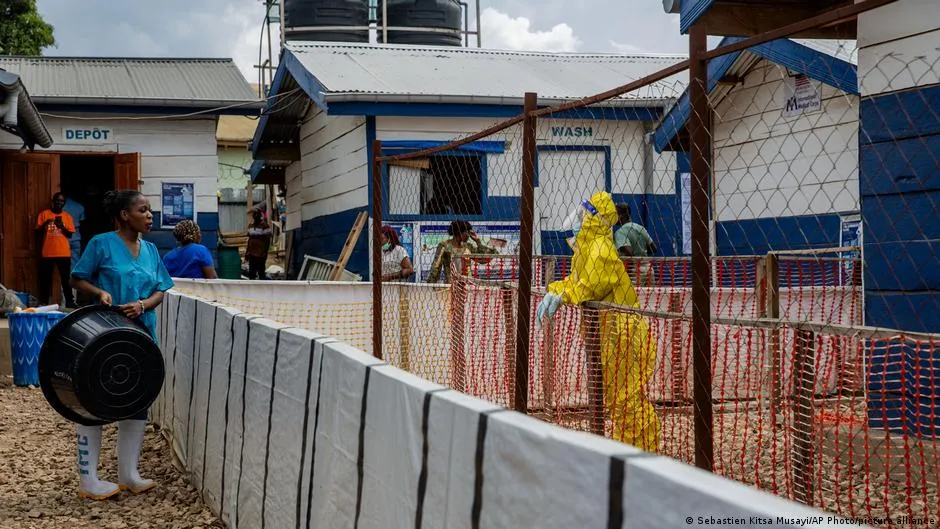
Nigeria confirms first Ebola case in Abuja, a woman just off a Uganda flight
Health Minister Muhammad Ali Pate says the patient flew in from Uganda, putting Africa's latest outbreak on Nigeria's doorstep.