
Ben Folds produces and music-directs Off-Broadway one-woman musical
The songwriter is taking the stage and calling the musical shots for We've Been Here Before, after Ben Folds Five’s 30-year shelved debut resurfaced.
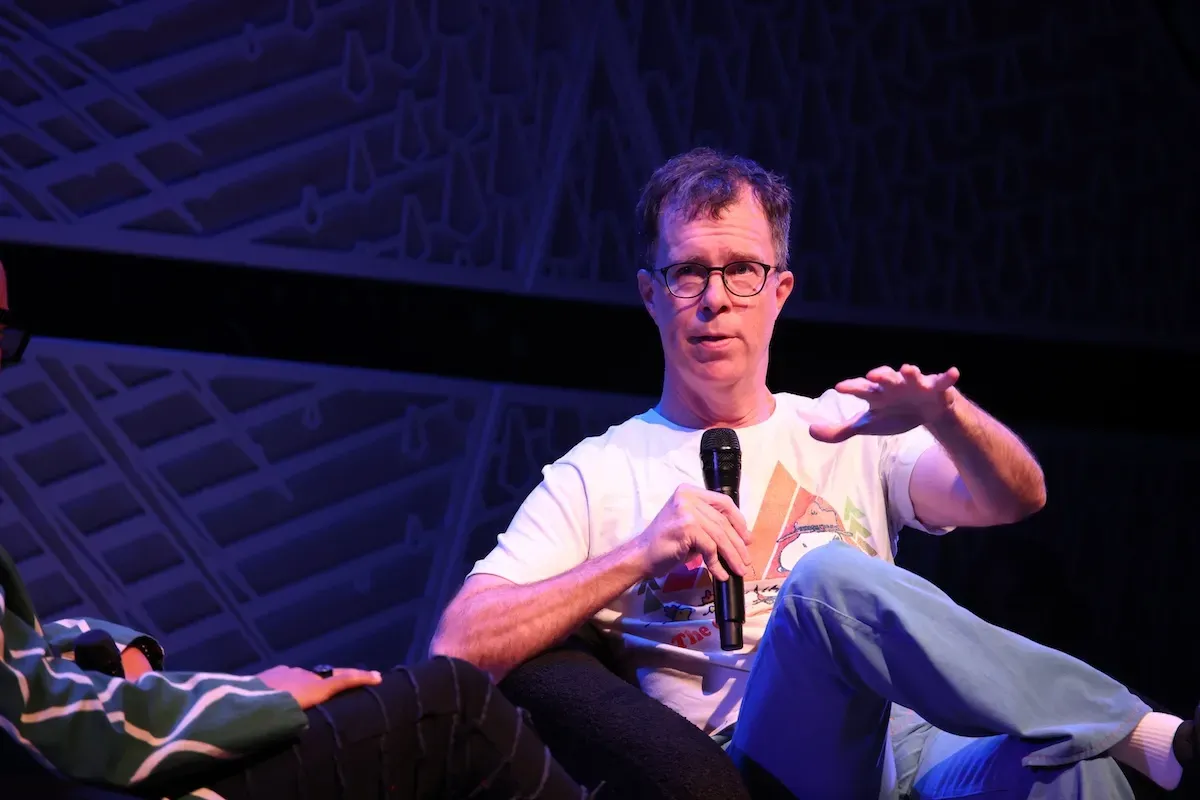
Ben Folds has been revealed as the producer and music director for the upcoming Off-Broadway one-woman musical We've Been Here Before, and he will also perform in it. The move puts a major contemporary act’s creative muscle into theatrical production, creating a new playbook for music-led stage ventures.
Earlier this week, Ben Folds Five announced they were releasing the shelved first attempt at their debut album for its 30th anniversary. That headline alone would have been a nostalgia bomb. But now the story has moved from the archive to the footlights: Ben Folds is also confirmed as the producer and music director for an upcoming Off-Broadway one-woman musical called We've Been Here Before, and he will be performing in it as well.
So this is not just a musician cameoing in theater. Folds is getting a hands-on creative role. He is producing, acting as music director, and performing in the production, which means he is shaping how the songs land moment to moment, not just supplying a soundtrack. For anyone used to treating music as content and theater as a separate industry, this is the interesting shift: the boundary is being actively negotiated by one of the most recognizable voices in modern alt-pop songwriting.
To understand why that matters, zoom out to how Off-Broadway shows typically get made. Theater is high-stakes and deadline-driven, with schedules and rehearsal cycles that pressure creative teams to converge quickly. Music-led projects face an extra coordination challenge. There is the songwriting or re-orchestration work, the rehearsal load for performers, the orchestration and arrangement decisions that affect both the sound in the room and the feasibility of touring or scaling the show. When the same person is simultaneously the producer, the music director, and a performer, the feedback loop compresses. That can help speed decisions and keep the creative intent coherent, but it also concentrates responsibility on one creative ecosystem.
Ben Folds Five’s 30th anniversary release angle is a helpful clue to why this particular pivot makes sense. The announcement earlier this week centers on a shelved first attempt at their debut album. That implies an archive of unfinished or withheld creative work waiting for the right moment. When that material finds a release window, it creates attention, momentum, and relevance. Then the attention does not have to stop at reissuing the past. It can funnel directly into new work in a different format. In other words, a catalog moment can become an engine for live, experiential projects.
There is also an incentive alignment story here that executives and board-level decision-makers will recognize immediately. In most productions, creative direction is shared across different roles and parties, each with their own constraints. A music director might optimize for performance and vocal arrangement; a producer might optimize for budgets, schedules, and risk management. Adding a performer can sometimes introduce friction, because staging and performance requirements can compete with creative experimentation. But when one person holds multiple roles, tradeoffs can be resolved faster. You reduce the number of handoffs where creative meaning can blur.
From a business perspective, Off-Broadway is a useful proving ground. It is where projects can be mounted with enough intimacy to feel event-level, while still being agile compared with larger venues. A one-woman musical is structurally even more concentrated. The star has to carry the narrative weight, and the musical moments must support that arc without relying on ensemble distribution. That raises the importance of music direction. If the story is being delivered through one performer’s voice, pacing, and presence, the music has to feel intentional at every beat.
Now layer in the broader “music meets theater” trend. When high-profile musicians take direct production control, they can attract an audience that might not otherwise cross into theater. But there is a second-order effect that matters for organizations with money on the line: expectations rise. A fanbase might show up wanting a specific emotional tone, musical identity, and authenticity. If the production delivers, it can convert casual attention into word-of-mouth. If it misses, the reputational hit can be sharper because the project is branded through a recognizable name.
So the strategic stakes are bigger than one show. Ben Folds is demonstrating a model where established music creators do not simply license songs or guest-write. They can step into producer and music director roles and then personally perform. For executives building cross-industry projects, that is a real operational template: compress decision-making loops, concentrate creative accountability, and use a recognizable musical identity to anchor theatrical risk. With we've Been Here Before, the industry gets a live test of whether that integrated approach can turn a music moment into a theater moment that sticks.
This story's Key Insights and Take-aways are locked.
Create a free account to unlock Executive Actions for one credit.
Register to UnlockAlways free for Executives Club members. Join the Club
More in Entertainment

12TB Steam 'teraleak' goes beyond Valve: GTA 3, Mafia 2 prototypes exposed
A 12-terabyte dump of Steam data reveals prototypes and builds of third-party classics like GTA 3 and Mafia 2, plus unreleased Valve content, rewriting game history.

LinkedIn's romance problem: 1 in 4 workers say dating on it is fair game
A new survey shows a quarter of U.S. employees treat the professional network as fair game for romance, even as LinkedIn bans it and removes hundreds of thousands of offending posts.

Enhypen's first No. 1 album breaks K-pop's Billboard 200 streak
The K-pop group's 98,000-unit debut tops the chart while Dolly Parton's catalog reentry shows how death reshapes streaming.