

Black Ops ports keep emblem editor, letting swastikas return, Activision says
PlayStation-only $40 ports preserve Black Ops and Black Ops 2 emblem tools, with no emblem-off option.
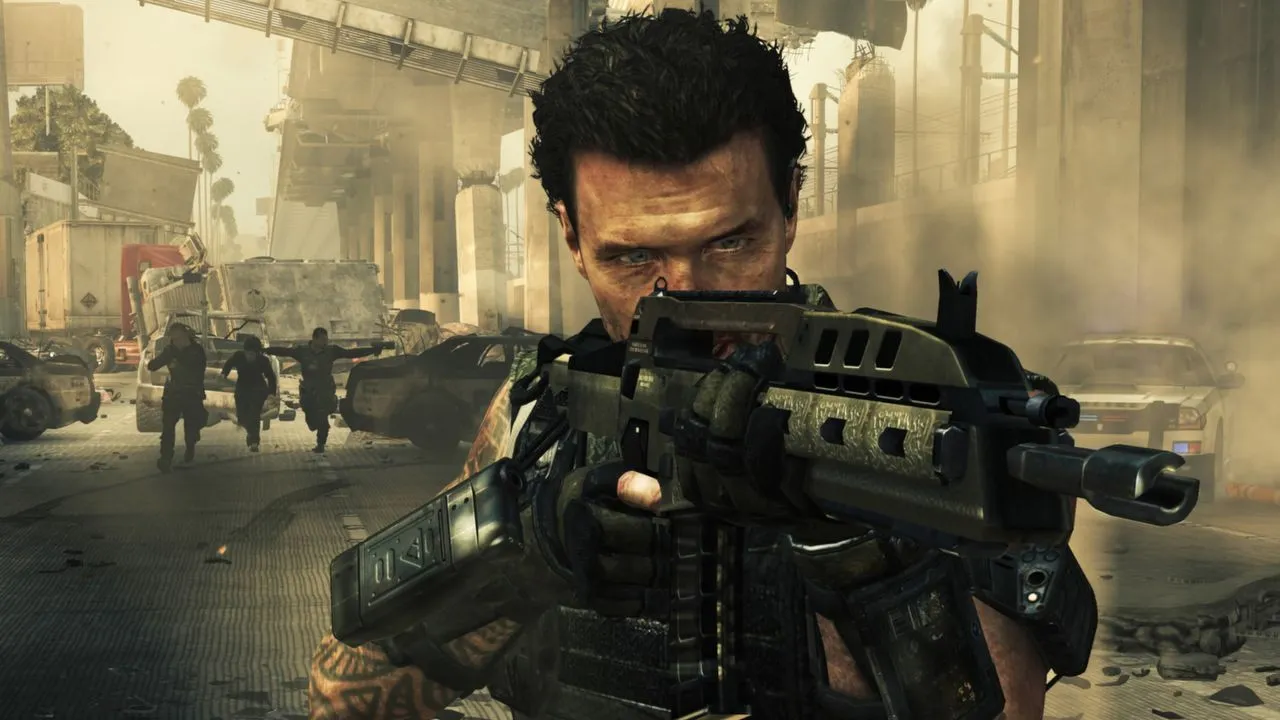
Activision released updated PlayStation ports of Call of Duty: Black Ops (2010) and Black Ops 2 (2012), and the emblem editor remains intact. For decision-makers, the consequence is a predictable moderation gap: the same high-expression tool still enables extremist imagery and other harassment.
Activision just shipped updated PlayStation ports of Call of Duty: Black Ops (2010) and Black Ops 2 (2012), and the biggest surprise is not the upscaling. It is that the ports preserve the emblem editor, a feature that players immediately associate with people making prohibited imagery, including swastikas and depictions of 9/11, using the editor’s in-game symbol toolkit.
Players were especially surprised because emblem editing is not a small feature you can ignore. It is a beloved and somewhat controversial Treyarch era tool that lets users combine primitive shapes, symbols, colors, and layers with enough precision to build convincing designs. According to the coverage, influencer JakeSucky highlighted that the editor is being used for a range of content, including swastikas, depictions of 9/11, Charlie Kirk's assassination, a KKK member, and more, all enabled by the preserved editor.
That is why this matters beyond the usual “old game gets re-released” noise. Emblem editors are basically user-generated content with a fast path to publication. There is moderation, but the key constraint described in the source is that there is no policing of “photoshop” style creative edits. So when a platform preserves a highly expressive tool, it also preserves the predictable failure mode: someone will use it to express hateful or violent themes. The ports do not appear to include the one obvious control that would reduce exposure at the source, namely letting players turn off custom emblems entirely. The article notes that there was no such option back in 2010, and there is no option now.
For executives watching this from the boardroom or the product side, the second-order implication is not that “people will misbehave.” That is already a known constant in games. The harder question is incentives and governance: why does the updated port prioritize keeping the editor instead of removing or constraining it? The source frames this as “surprisingly” preserved, even in the context of player moderation. In practice, preserving the full emblem editor can support engagement, customization, and nostalgia for the original community. But it also shifts the operational burden to moderation and to social friction, rather than preventing harmful creation from ever being possible inside the product.
The price and platform choices add another layer. These ports are PlayStation only, and the source calls out the $40 price point as the “Call of Duty tax.” That combination matters for who shows up in the user base and how fast problems surface. If PC players are cut off from the reinvigorated scene, the community that remains is more concentrated on the platform receiving updates. That can accelerate what moderation teams see, since fewer players means faster feedback loops and fewer “outside” communities diluting the signal. On the other hand, it also concentrates reputational and platform policy risk on a narrower ecosystem, where brand damage and regulator scrutiny are more likely to be noticed.
There is also the product scope story. Weirdly, the only major change described is omission of some modes. Wager matches are gone from Black Ops 1, but the ports otherwise look like “nearly complete updates,” now upscaled to 1080p. The source also notes the absence of modern quality-of-life features people expect in current PC and competitive environments, like FOV sliders or high refresh rate options. The takeaway is a classic port trade: the team updates the visuals and keeps the core experience mostly intact, including UGC-ish features. That “mostly intact” decision is precisely where extremist imagery can survive, because UGC tools tend to be the least easily sanitized part of a legacy title.
Contextually, the broader industry backdrop in the coverage is Microsoft-era turmoil at other corners of the megacompany, including layoffs and studio divestments. Even without tying this directly to the port decision, it reinforces a familiar pattern: when studios face pressure, they tend to protect what already works and is expensive to rebuild. The emblem editor is already built. The moderation framework around it is already part of the live ecosystem. Removing emblem editing entirely would require design, UX, community signaling, and likely some form of technical and policy rework. Preserving it is cheaper and faster. But it is also exactly the path that produces the same headline later: “ports preserve the controversial feature.”
So for decision-makers in gaming, adjacent platforms, and any company shipping user-generated content, this is a clean, low-spec case study. Keep the expressive tool, and you keep the misuse surface area. Remove optional controls, and you deny users a safety lever even if many would prefer one. The strategic stakes are simple: if your platform preserves legacy creation mechanics without sufficient user controls, you may spend the next cycle reacting instead of preventing. And in a world where extremist imagery travels fast and screenshots last forever, reacting is always more expensive than engineering a safer default.
This story's Key Insights and Take-aways are locked.
Create a free account to unlock Executive Actions for one credit.
Register to UnlockAlways free for Executives Club members. Join the Club
More in Entertainment

12TB Steam 'teraleak' goes beyond Valve: GTA 3, Mafia 2 prototypes exposed
A 12-terabyte dump of Steam data reveals prototypes and builds of third-party classics like GTA 3 and Mafia 2, plus unreleased Valve content, rewriting game history.

LinkedIn's romance problem: 1 in 4 workers say dating on it is fair game
A new survey shows a quarter of U.S. employees treat the professional network as fair game for romance, even as LinkedIn bans it and removes hundreds of thousands of offending posts.

Enhypen's first No. 1 album breaks K-pop's Billboard 200 streak
The K-pop group's 98,000-unit debut tops the chart while Dolly Parton's catalog reentry shows how death reshapes streaming.