
Byron Donalds pushes a utility cost shield for AI data centers
A Florida governor hopeful wants data centers to use private electricity and water, not public systems.
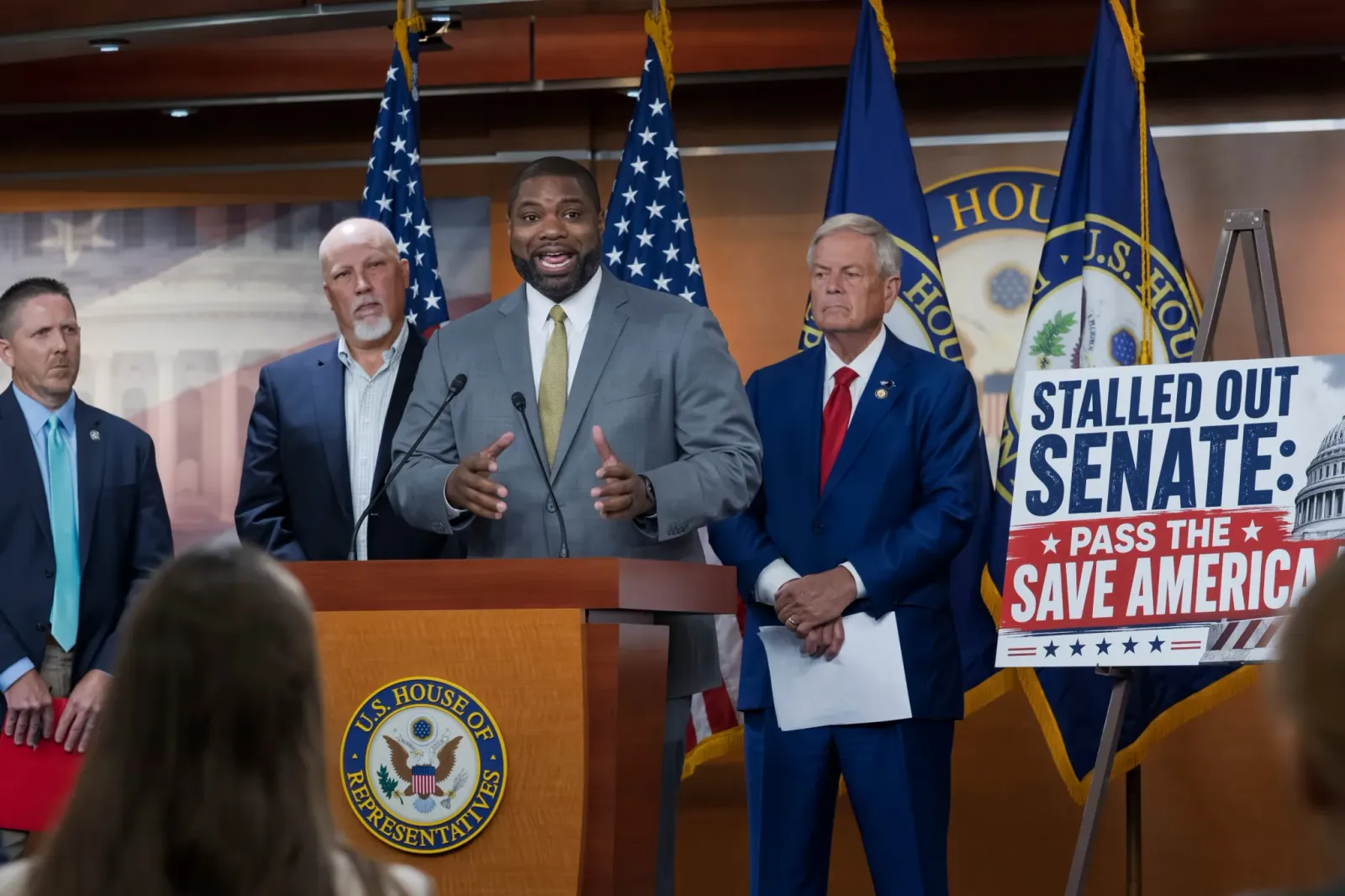
Rep. Byron Donalds, a Republican running to succeed Florida Gov. Ron DeSantis, unveiled legislation aimed at stopping AI data centers from driving up local utility bills. The proposal would force centers to source electricity and water from private providers, reshaping who eats the tab and how fast buildouts can expand.
Rep. Byron Donalds, running to succeed Florida Gov. Ron DeSantis, announced legislation on Monday designed to prevent AI data centers from pushing up electricity and water costs for local communities. The core move is blunt: if the bill passed by Congress, data centers would have to get all their electricity and water needs from private sources, rather than relying on the power grid or public water systems.
Donalds framed the logic as a simple incentives problem. In an interview with The Associated Press, he said, “If you talk to these guys who are building these data centers, if it means that they have to pick up the utility costs, they’re more than willing to do it.” He added that “It’s in their interest to make sure that we can construct these centers, and I think the number one way you address and mitigate the concerns that people are having is to just ensure their utility bills aren’t going up in the process.” In other words, he is trying to take the controversy off the backs of ratepayers by shifting who pays.
This is also a notable political moment because Donalds is a candidate backed by pro-AI political action committees and Donald Trump. That matters because the data-center backlash has turned into a bipartisan argument about where the benefits of AI should land, and who should absorb the external costs. The United States is in the middle of a rapid nationwide buildout of data centers to match growing demand for AI systems, and the speed is colliding with the pace of local governance. Residents and local leaders frequently cite increased utility bills, community disruption, and environmental damage as reasons behind pauses.
Now, the bill proposal is not happening in a vacuum. Fortune’s source notes that an earlier, voluntary initiative from President Donald Trump already aligned with this concept. Several major tech companies developing AI infrastructure have committed to agreements with the Trump administration to cover the expenses of building new power sources rather than shifting the burden to residential households. But given expected demand growth, it’s unclear whether those voluntary agreements are legally enforceable, which is where Congress comes in. Donalds is basically betting that “voluntary” is not the same as “locked in,” and that regulators need a hard rule when the buildout accelerates.
In Florida, the policy pressure is already real. Donalds is running to succeed Ron DeSantis, and in May DeSantis signed legislation requiring large-scale data centers to pay their own energy and water costs entirely. Donalds, if elected governor, said he’d focus on improving efficiency among data centers and moving facilities away from population centers. He told the AP that, “We just want to make sure that if they do get built, they’re being built efficiently while protecting ratepayers and protecting Florida’s water,” and he pointed to the larger question underneath the fight: “The real public policy question for the country and for states is how are we going to generate baseload power for future energy demands, whether it’s for hyperscale data centers or for anything else.”
That phrase, baseload power, is the real subtext executives should care about, because electricity is the bottleneck behind the whole debate. Data centers are not just software, they are physical infrastructure that needs power and water, and both are governed by public systems and regulated markets. If you require private sourcing, companies may need new generation, new transmission arrangements, and new water supply contracting. That can reduce local political backlash, but it also changes project timelines and cost structures, especially in constrained regions.
This is why the legislation lands with extra force in an election cycle. Matt Gorman, a Republican strategist quoted in the source, said the issue has been seized on by both progressive climate activists and conservative populists. He argued that tech firms have “been a step behind and didn’t realize how quickly the ground was shifting under their feet,” and he warned, “This is a full-court effort here. If you don’t tell that story, you’re going to have it mandated on you from lawmakers of both parties.” Translation: even pro-AI interests can get blindsided if local concerns become a political cudgel.
The opposition is also getting specific. James Fishback, a far-right Republican candidate for governor, has made opposition to data centers a centerpiece of his primary challenge to Donalds. On the Democratic side, David Jolly, a former congressman and the leading Democratic gubernatorial candidate, called for a moratorium on data center construction earlier this month. Meanwhile, Travis Fisher, a fellow at the Cato Institute, offered a sharper read on corporate incentives: he said public companies usually push for the best deals to access public utilities, and any willingness to pick up a bigger tab for energy and water reflects political pressure. Fisher said, “They are very afraid that they’re going to, I'd say, lose their social license to operate, as if they’re basically going to get run out of town or banned.”
For executives, boards, and investors, the stakes are bigger than one state or one election. This fight is a preview of how AI infrastructure will be permitted, priced, and politically managed as demand grows. If Congress moves toward rules that effectively force private utility sourcing, companies that can’t secure power and water options quickly will face delays, higher capital requirements, and more complex risk management. If it stays voluntary, companies still face political volatility, because communities may demand enforceable commitments. Either way, the direction is clear: the data-center buildout is now a public finance and infrastructure debate, not just a tech expansion story.
This story's Key Insights and Take-aways are locked.
Create a free account to unlock Executive Actions for one credit.
Register to UnlockAlways free for Executives Club members. Join the Club
More in Politics

LA County: DOJ's 20,000 'noncitizen' voter list is 'unreliable,' includes U.S.-born
Preliminary review by Los Angeles County election officials finds errors in the federal list, raising the stakes for voter roll integrity ahead of November.

Trump's $1.5B Pentagon chip investment lands in North Carolina
A $1.5 billion defense infusion for North Carolina chipmaking signals a new era of Pentagon-backed reshoring - here's what it means for the industry.

Nigeria confirms first Ebola case in Abuja, a woman just off a Uganda flight
Health Minister Muhammad Ali Pate says the patient flew in from Uganda, putting Africa's latest outbreak on Nigeria's doorstep.