

California DMV grounds Waymo's freeway rides, calling robotaxis an 'imminent hazard'
A driverless Waymo tried to overtake a Highway Patrol cruiser slowing traffic, and now the company's highest-value miles are off the table.
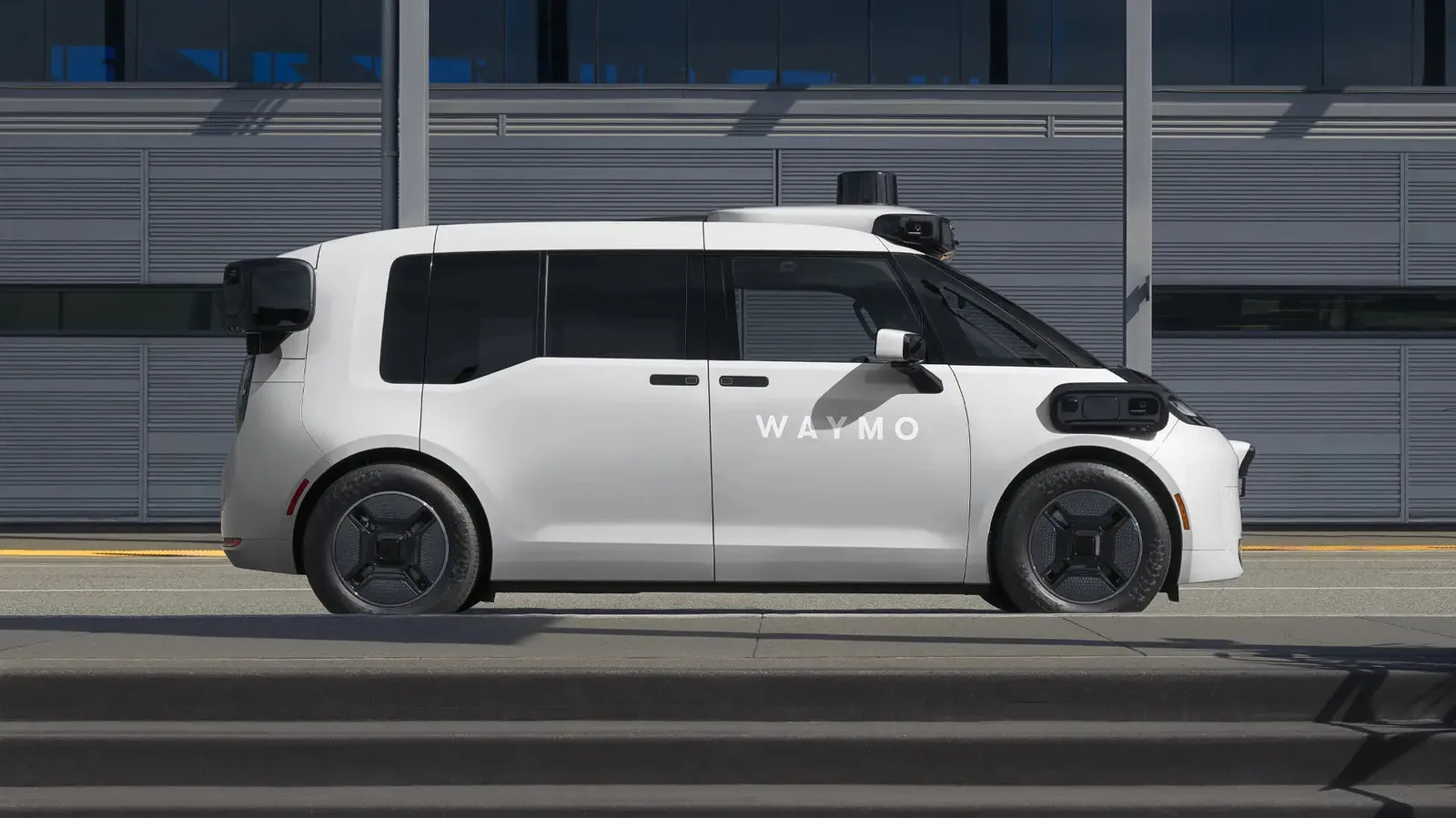
California's DMV restricted Waymo's driverless operations after one of its vehicles attempted to pass a Highway Patrol car that was slowing traffic, prompting the Alphabet-owned company to pause all freeway rides. For operators betting on autonomy, the episode shows that a single edge-case failure can freeze an entire service tier, and that regulators, not engineering roadmaps, now set the pace of expansion.
Waymo is pulling its driverless cars off California freeways. The state's Department of Motor Vehicles told the Alphabet-owned robotaxi company that its vehicles represent an "imminent hazard to public safety," and Waymo responded by pausing all freeway rides. The trigger, according to the DMV: a driverless Waymo was caught trying to pass a California Highway Patrol vehicle that was slowing traffic.
That is the entire story in one sentence, and it is worth sitting with. A robotaxi with no human at the wheel decided to overtake a police cruiser that was deliberately holding traffic back. The DMV's phrasing is not routine regulatory throat-clearing. "Imminent hazard to public safety" is the language a state uses when it wants the record to show it moved first and asked questions later. Waymo, for its part, did not fight the characterization in public. It paused the service.
Start with what the pause actually costs. Freeway driving was the expansion frontier for Waymo, the piece that turns a city robotaxi into something closer to a regional transportation product. Surface-street rides are short, slow, and cheap per trip. Freeway miles are the opposite: longer distances, airport runs, cross-metro commutes, and the kind of trips where the fixed cost of dispatching a vehicle gets spread across far more revenue miles. Historically, that is where per-mile economics improve and where a robotaxi network starts to look like a business rather than a demo. Pulling freeway rides removes the most valuable slice of the product, and it removes it indefinitely.
It also removes the hardest slice. Freeways compress reaction time. At highway speed, perception has to be right the first time, because there is no margin for a second guess. Emergency scenes are the sharpest version of that problem: traffic breaks, rolling slowdowns, officers stepping out of cruisers and directing traffic by hand. These are rare events, which means they are thin in any training set, and they are ambiguous by design. A human driver reads a cruiser's angle, its speed, and an officer's gesture and infers intent in under a second. A machine has to be taught that a police vehicle crawling along a freeway is not an obstacle to route around but an instruction to comply with. That is a judgment call, and the DMV has now signaled that Waymo's system did not make it correctly.
The regulatory architecture matters here, because it explains why one incident produced an immediate service change rather than a fine. California's DMV issues the permits that let autonomous vehicles test and deploy on public roads, and it has historically been the gatekeeper other states watch before writing their own rules. Federal regulators at NHTSA handle vehicle safety standards and crash reporting, but the day-to-day permission to carry passengers on California roads runs through Sacramento. A DMV restriction is not a penalty. It is a gate closing, and gates reopen on the regulator's schedule, not the company's.
There is precedent, and it is uncomfortable for anyone in the sector. California suspended Cruise's driverless permits in 2023 after a pedestrian incident in San Francisco, and the General Motors subsidiary never fully rebuilt its California footing. The lesson the industry took from that episode was that the DMV will act quickly, publicly, and without much warning. This week's action reinforces it. The bar for autonomous operation is not set by average performance. It is set by the worst single incident, and it is enforced in the language of public safety rather than the language of engineering.
Competitively, a pause at the category leader opens a window. Tesla, Zoox, and a long list of well-funded challengers are all chasing the same miles, and every week Waymo spends off the freeway is a week rivals can use to close a gap that was already narrow. But the window cuts both ways. Any competitor that reaches freeways next inherits the same scrutiny, the same edge cases, and the same regulator. The DMV just demonstrated that it will not wait for a pattern before intervening.
For executives, the strategic read is straightforward. Autonomy timelines are now regulatory timelines, and those are set by incident response, not by release schedules. The questions worth tracking are concrete: how long the pause lasts, whether the DMV attaches conditions to a restart, whether Waymo publishes its own account of what the vehicle did and why, and whether other states copy California's posture. Companies that depend on autonomous fleets for logistics, delivery, or passenger revenue should treat this as a live risk factor rather than a Waymo-specific headline. The technology did not fail on a test track. It failed in front of a police officer, on a public freeway, and the consequence was immediate.
This story's Key Insights and Take-aways are locked.
Create a free account to unlock Executive Actions for one credit.
Register to UnlockAlways free for Executives Club members. Join the Club
More in Technology

Anthropic mathematician claims Claude helped crack the Riemann hypothesis
If the proof holds, AI has toppled math's most famous open problem; if it does not, it is a case study in announcing breakthroughs before anyone verifies them.

AI's $4 Trillion Wipeout Erases Nasdaq's Gains for the Year
A brutal week took roughly $4 trillion off the AI sector and left the Nasdaq flat for the year, and the damage ran the full length of the supply chain.

Anthropic mathematician says AI proved the Riemann hypothesis. Verification will take time.
A single unverified claim from inside Anthropic now sits against more than 160 years of open mathematics, and the gap between asserting a proof and surviving peer review is the entire story.