
Cassandra Yang launches RJOY, a TikTok Minis microdrama service with 20 originals
RisingJoy’s new direct-to-consumer vertical series play in the US and Japan tests whether microdramas can scale on TikTok.

Cassandra Yang, CEO and co-founder of Singapore-based RisingJoy, announced the launch of RJOY at APOS in Bali. The direct-to-consumer microdrama streaming service starts in the US and Japan via TikTok Minis, with 20 originals.
RisingJoy just moved microdrama from niche novelty to a direct-to-consumer product, and it chose an unusual launch runway: TikTok Minis. At the APOS conference in Bali, Cassandra Yang, the company’s CEO and co-founder, revealed RJOY, a new microdrama streaming service initially available to audiences in the U.S. and Japan through TikTok Minis, the in-app feature designed for access to vertical content. The service also debuts with 20 originals, turning what is usually a casual scrolling format into a catalog-based viewing experience.
The key strategic question for executives is immediate: can a streaming product built for “micro” narratives drive sustained consumer behavior inside a platform that is optimized for short-form discovery? RJOY’s answer, at least for the first wave, is to meet viewers where their attention already lives. By launching through TikTok Minis, RisingJoy is not just distributing content, it is piggybacking on TikTok’s discovery machinery and in-app convenience, then asking audiences to cross a threshold from watching to subscribing or otherwise engaging like a streaming service. If that threshold works, it reframes the economics of vertical entertainment, because it implies a bridge between impulse consumption and repeat viewing.
For context, TikTok has already trained audiences to understand vertical video as the default. TikTok Minis extends that habit into a more structured “mini” experience inside the app, which matters for service design. Traditional streaming services compete on app usability, content libraries, and retention features. But if your distribution is embedded inside a social video feed ecosystem, the product has to win on immediacy first. RJOY’s microdrama format is tailored to that reality, offering series-style storytelling without demanding the same time commitment as conventional drama seasons. That can reduce friction for first-time viewers, while still letting RisingJoy build a viewing arc across episodes.
RisingJoy’s choice to start with the U.S. and Japan is also not just a distribution footnote. Those markets represent two different cultural and consumption dynamics for serialized entertainment, and both have demonstrated appetite for mobile-first media. For decision-makers, the implication is that the company is stress-testing whether a single product concept, delivered through a TikTok Minis surface, can translate across audiences without needing a completely different content strategy for every geography. If it works, that creates a scalable blueprint. If it does not, the company will learn quickly, which is arguably more valuable than waiting for a global rollout.
The “20 originals” detail is more than a launch inventory number. It signals that RisingJoy is taking a direct-to-consumer posture seriously, because original programming is typically what justifies ongoing engagement and loyalty. In many social-first content businesses, the library can be less central because the platform continues to provide discovery and churn is normal. But a streaming service needs a reason to return, and originals are the asset that can support that return. If RJOY keeps users coming back for more episodes or seasons, the 20-title initial slate becomes a starting point for building habitual viewing rather than one-off discovery.
There is also a boardroom-level incentive embedded in the launch setting. By announcing RJOY publicly at APOS in Bali, RisingJoy is telling partners, industry observers, and potential investors that it is moving from content distribution into productization. A new service with an initial catalog, tied to a specific in-app feature, implies operational focus: packaging episodes, managing rights and releases, and aligning release cadence with TikTok Minis usage patterns. For executives evaluating media strategy, that is a reminder that the fastest route to consumer behavior is often integration, not just marketing.
Finally, this is a signal event for anyone building entertainment products in the vertical-video era. RisingJoy is betting that microdrama can function like a true streaming proposition when it is delivered via a social platform feature built for vertical content. If RJOY gains traction in the U.S. and Japan, it may push other creators, networks, and D2C platforms to treat TikTok Minis not as a promotional channel, but as a distribution layer for recurring viewing. The second-order effect could be a shift in how entertainment services measure success, from raw reach to repeat engagement inside a social interface.
For decision-makers, the stakes are clear. If microdrama services can convert in-app attention into sustained consumer subscriptions or equivalent repeat engagement, it opens a new lane for content businesses to compete with incumbents on product experience rather than only on licensing scale. RisingJoy’s launch gives the market its first real test of that thesis, starting with 20 originals and two key geographies.
This story's Key Insights and Take-aways are locked.
Create a free account to unlock Executive Actions for one credit.
Register to UnlockAlways free for Executives Club members. Join the Club
More in Business

Gina Rinehart backs SpaceX with a $1B+ stake after its $2.5T debut valuation
The Aussie mining billionaire just put Hancock Prospecting behind Musk's rocket-and-satellite combo, and markets noticed.
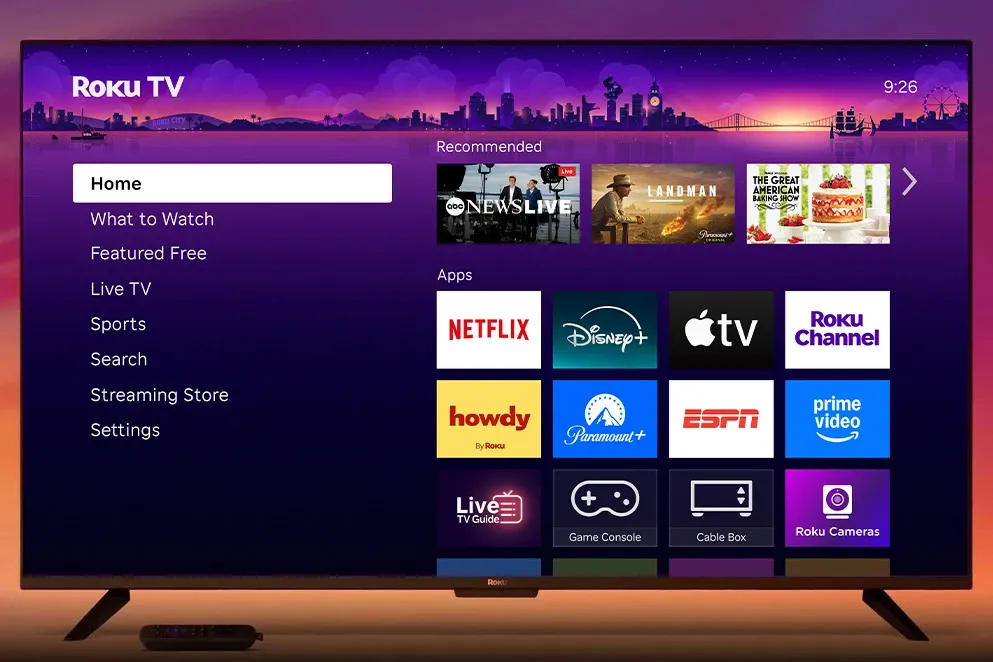
Fox agrees to buy Roku for $22B, paying $160.00 per share
What looks like a simple streaming bet is actually a $22 billion corporate reshuffle with board and regulatory gravity.

SpaceX jumps 6% in premarket, valuing the company at $2 trillion+ after its debut
The stock’s first-day surge pushes SpaceX past $2 trillion, reshaping how investors and regulators think about private space risk.