

Ceuta hit: up to 60,000 Morocco arrivals expose Schengen’s “solidarity” failure fast
Spain vows turnbacks, while Italy, Austria, and France restart border checks, threatening Schengen's politically fragile promise.
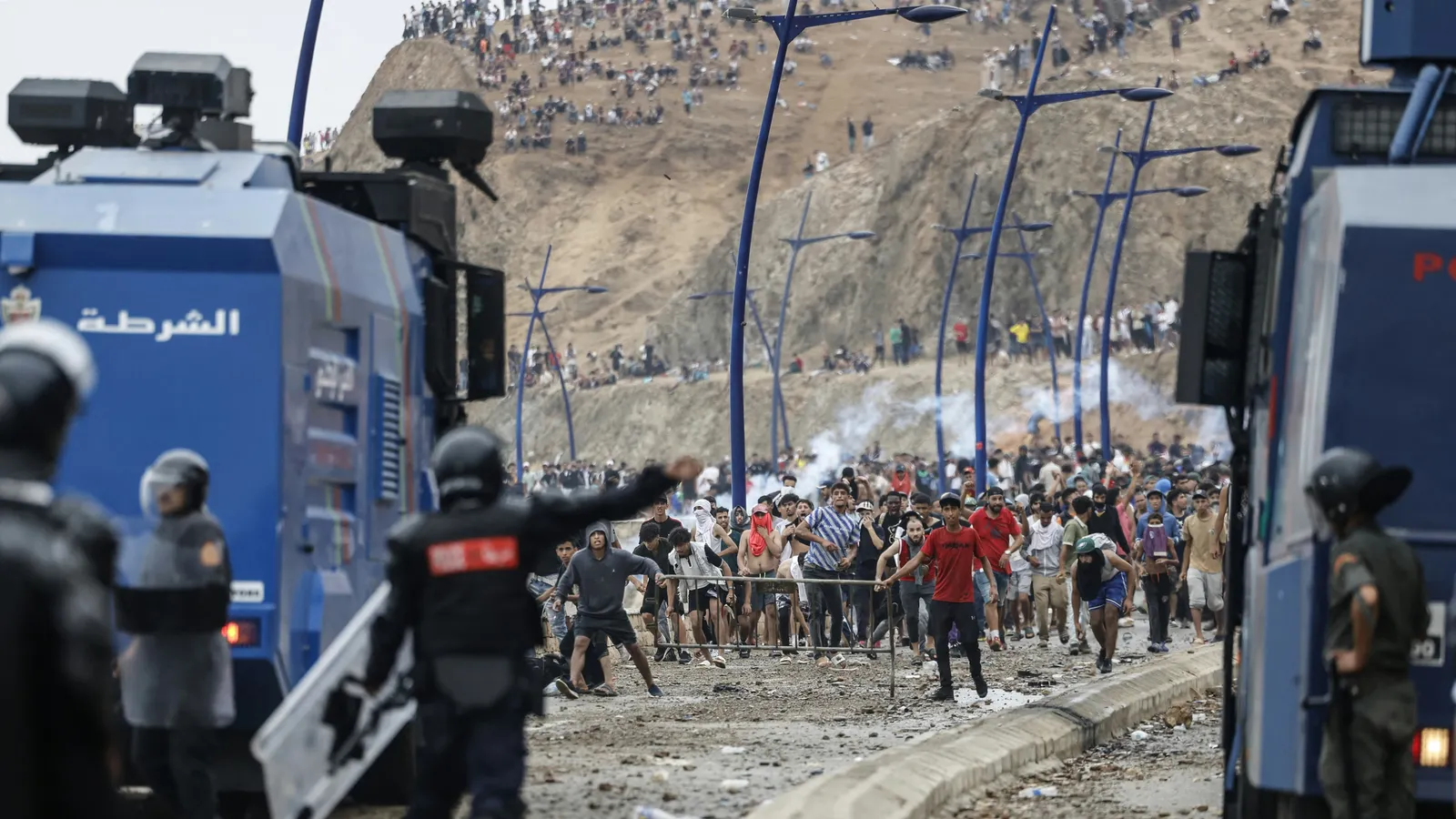
In the Ceuta crisis, as many as 60,000 migrants from Morocco crossed into Spain’s North African exclave, prompting Pedro Sánchez to call it an “attack.” The second-order effect: European leaders are using Schengen’s built-in border-control loopholes, turning a “borderless” deal into a patchwork of national fences.
On a thin, fenced slice of Spanish territory in North Africa, up to 60,000 migrants from Morocco crossed into the Spanish exclave of Ceuta. The shock is simple, and it matters because it reaches directly into one of Europe’s biggest political promises: the Schengen Agreement was meant to create “solidarity between their peoples by removing obstacles to free movement.” What happened in Ceuta is what that design was never built to handle, and this week’s numbers have forced European governments to admit the uncomfortable truth, loudly and in public.
Ceuta has a population of only 83,000 and is not even on the European continent. But because it is part of Spain, entering Ceuta, in theory, can provide access to 29 countries in the Schengen Area. The migrants swam or climbed over fences to reach the tiny territory, and several dozen have died. Spain’s prime minister, Pedro Sánchez, decried the situation as an “attack” and a violation of Spain’s territorial integrity, vowing the migrants would be turned back; according to Spain’s interior ministry, more than half of them already have been. The political battle lines are now drawn not around geography, but around interpretation: are these crossings a security emergency managed at the borders, or a humanitarian and political test of whether the “solidarity” principle survives real-world pressure?
And the pressure is not abstract. Sánchez, described in the source as a leftist whose pro-immigrant position has distinguished him in an era of resurgent nationalism, is getting predictable blowback from multiple directions: domestic opposition in Madrid and international pressure from Washington. In the United States, President Trump saw a chance to argue Europe is lax on immigration, and he tied it to timing, telling Fox News, “That’s going to be us in three years if the wrong side gets in.” Even if you ignore the election-year rhetoric, the underlying dynamic is about leverage. Immigration crises compress domestic politics, and leaders then look for external validation or blame, both of which can harden policy.
Meanwhile, other European capitals are reacting in ways that, for executives and investors watching regulation, matter for one reason: Schengen’s structure has always allowed a kind of emergency bargaining, not a true shared enforcement. There is no legal mechanism to suspend a country’s Schengen membership, especially not unilaterally. What other countries can do is reintroduce controls at their borders, a power written into an implementing convention approved by the signatory states in 1990. And Europe has used it. The source notes that Italy had already reimposed checks at its land border with France because of anticipated presence of “radical activists” at a festival in Piedmont, and that earlier today Meloni’s government halted passport-free travel at air and sea borders with Spain. Austria had already reintroduced controls at borders with four of its neighbors, citing irregular migration through the Balkans, the burden of migrants on its asylum system, and the wars in Ukraine and the Middle East.
This is why Ceuta can spill over far beyond Ceuta. When border controls return, even temporarily, they disrupt the frictionless movement that underpins cross-border labor markets, logistics, and day-to-day commerce. Schengen has succeeded spectacularly in many metrics: it has grown to include 29 countries and more than 450 million people, and it is one of Europe’s most popular policies among those who benefit from being able to work, study, shop, date, and live across borders without repeatedly stopping their car. But as a mechanism to build European solidarity, the source’s thesis is that Schengen has been a failure when tested by migration surges. That’s a critical distinction for decision-makers: a system can be operationally efficient and politically unstable at the same time.
The other incentive shift is party politics and signaling. Giorgia Meloni, right-wing prime minister of Italy, called for the suspension of Spain’s Schengen membership, despite the source’s point that there is no formal process to do so. Her foreign minister blamed the Spanish government for the chaos and labeled plans to grant legal status to more than half a million migrants “profoundly wrong.” Madrid, in response, summoned the Italian ambassador, accusing foreign leaders of “partisan demagoguery.” Other countries backed Meloni. Finland’s interior minister argued Spain had “completely failed to protect the Schengen Area’s external border from infiltration,” adding, “This cannot continue.” France increased checks at its border with Spain. Austria’s chancellor, about 1,000 miles from the Iberian Peninsula, said his country was weighing whether to close its borders.
Beyond those formal steps, the source also highlights how quickly the argument becomes a coalition sport. Meloni cannot be outdone by coalition partner Matteo Salvini, who urged, “Suspend Schengen,” repeatedly on social media. Marine Le Pen, a far-right firebrand in France and a candidate for next year’s elections, vowed to restrict the agreement if she came to power. Le Pen’s National Rally has “expertly channeled anger about Schengen,” using symbolism and spectacle: during the 2015 refugee crisis, when more than 1 million people crossed into Europe mostly fleeing the Syrian civil war, party representatives performed death rites near where the agreement was signed 30 years earlier, laid a funereal wreath, and marked a policy as if it were a system in mourning.
For context, this tension was present from the start. In 1985, representatives from five Western European countries met aboard a riverboat in Schengen, a wine-making village in Luxembourg, to celebrate removing border checkpoints. According to the treaty they approved, the signatory countries sought “solidarity between their peoples by removing obstacles to free movement.” But in the 1990 implementing convention, “solidarity” language disappeared. Instead, more than half of the convention’s 142 articles dealt with security and the exchange of data to crack down on unwanted immigration. The mid-level diplomats who created Schengen allegedly “did our job as junior ministers,” with the French representative, Catherine Lalumière, telling the author of the source that they thought borderless travel would fulfill promises made by the Treaty of Rome and help develop a common market and cultivate solidarity. They did not anticipate incendiary debates over immigration.
The source’s final warning is blunt: the Ceuta crisis is likely to be contained quickly, but if Europe’s response to immigration is to isolate individual states instead of using the tools it created to protect freedom and manage displacement, Schengen is at risk. For executives and board-level leaders across Europe, the strategic stake is not just politics. It is predictability. Schengen’s promise is market integration plus mobility. When the political center fractures, the regulatory “emergency brake” becomes the operating model, and border friction returns in ways that can reshape costs, routing, talent movement, and public legitimacy of cross-border systems.
This story's Key Insights and Take-aways are locked.
Create a free account to unlock Executive Actions for one credit.
Register to UnlockAlways free for Executives Club members. Join the Club
More in Politics

Trump and Netanyahu risk another Gaza clash after Trump’s new announcement
The move lands amid a shaky Trump-Netanyahu relationship shaped by the war against Iran, raising fresh diplomatic and strategic volatility.

DOJ drops Reflecting Pool case, calling contractor damage from a rushed, botched installation
The prosecution against a former Olympian collapses in court filings as DOJ points blame at installation failures and overspray.

Trump orders US to hit Iran “as soon as this weekend,” WSJ reports
A reported shift toward harder strikes and possible energy targets raises escalation, munitions, and war-crime risk in one move.