
China's 'enemy within': economists agree home prices wreck the economy, split on the bottom
Falling home prices are hammering consumer spending, jobs, investment and confidence in the world's second-largest economy, but economists cannot agree on when the slump ends, and local government budgets hinge on the answer.
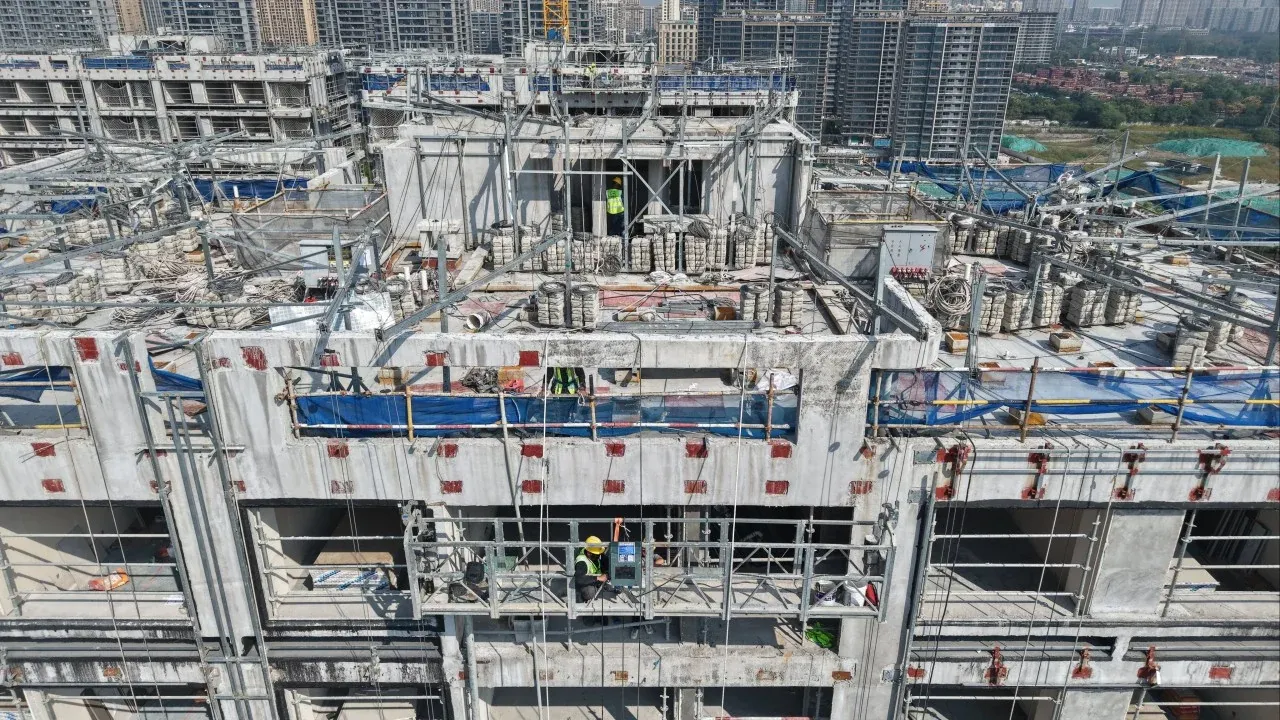
Economists are openly divided on when China's property slump finally bottoms, even as they agree falling home prices are wreaking havoc on consumer spending, employment, fixed-asset investment and business confidence. The disagreement matters because local government fiscal revenue largely hinges on land sales, making the housing bottom a budget question for Beijing and a demand question for every company selling into China.
China's property slump has produced a rare thing in economics: broad agreement on the damage and total disagreement on the timing. Economists concur that falling home prices, which the source material calls the "enemy within" for the world's second-largest economy, are wreaking havoc on consumer spending, employment, fixed-asset investment and business confidence. What they cannot agree on is when the sector truly hits bottom. That unresolved question now sits under every forecast tied to China, from commodity demand to luxury sales to the cost of capital for anyone with exposure to the region.
The reason the split matters is not academic. Local governments' fiscal revenue largely hinges on land sales. In China, municipal budgets have historically leaned on selling land-use rights to developers, and that money funds roads, schools, salaries and the everyday machinery of local government. When the housing market slumbers, developers stop buying land, and the revenue that keeps local services running gets thinner. So the housing bottom is not only a real estate story. It is a fiscal story, a jobs story and a consumer story at the same time.
For context on how the loop works: developers typically fund construction through pre-sales, debt and land purchases. When prices fall, buyers wait, pre-sales slow, cash flow tightens, and developers pull back on land. Local governments, deprived of land revenue, delay or cut spending, which feeds back into construction employment and household income. Households, watching the value of their largest asset slide, save more and spend less. That is the "enemy within" framing in practice: the weakness sits inside the economy rather than arriving as an external shock.
Forecasters diverge because the bottom depends on variables nobody controls cleanly. Policy support for developers and buyers, the pace at which unsold inventory clears, the willingness of households to re-enter the market, and the trajectory of employment all move the answer. Change the assumption on any one of them and the projected bottom shifts by quarters, sometimes years. That is why serious economists can study the same data and land on opposite conclusions without either being careless. The disagreement is a signal about uncertainty, not a failure of analysis.
There is also a definition problem. A bottom in prices is not the same as a bottom in transaction volumes, and neither is the same as a recovery in construction. Markets can stabilize at a low level for years, with prices flat, volumes thin and developers surviving rather than thriving. Economists who say the bottom is near and those who say it is far away may simply be describing different bottoms.
Watch the leading indicators rather than the headlines. Land auction activity is the cleanest read on local government finances. Developer financing conditions show whether the credit channel is reopening. Price stabilization in major cities, rather than national averages, tells you whether confidence is returning where it matters most. And consumer spending data reveals whether households are treating housing as a store of value again or as a liability to avoid.
For executives, the practical implication is to plan in ranges, not dates. A company with China revenue exposure should stress-test demand under a slow bottom and a fast one, because the difference flows straight into hiring plans, inventory, capital expenditure and credit terms. Suppliers and multinationals that treat China as a single number will be wrong twice: once on timing, once on magnitude. The same discipline applies to anyone pricing risk in a portfolio with Chinese property exposure, held directly or through supply chains.
The second-order effects are where boards get surprised. Local government fiscal stress historically shows up as delayed payments to contractors, slower infrastructure spending and pressure on fees and charges. That ripples into construction supply chains, industrial demand and the credit quality of anyone selling to municipalities. None of this requires a dramatic collapse to matter. A long, flat bottom does the damage quietly, and it does it for longer.
The honest answer to when China's property market bottoms is that nobody knows, and the people paid to know are openly split. What is knowable is the transmission mechanism: falling prices hit confidence, confidence hits spending, spending hits jobs and investment, and land sales tie the whole chain back to the government's balance sheet. Executives who map that chain onto their own revenue lines will be positioned whichever economist turns out to be right.
This story's Key Insights and Take-aways are locked.
Create a free account to unlock Executive Actions for one credit.
Register to UnlockAlways free for Executives Club members. Join the Club
More in Business

Anthropic's record IPO lands a day before Nvidia's longest losing streak since 2008
Anthropic's record Nasdaq debut and Nvidia's longest weekly losing streak since 2008 landed within 24 hours of each other, and the contrast shows how fast the market is re-pricing the AI trade.

New World's HK$24.9B rights issue triggers 41% plunge as HK$50B debt target looms
New World Development has three levers left to erase up to HK$50 billion in borrowings by 2031, and shareholders just told the market what they think of the first one.
Chip supply chain warns new US export controls will spread beyond the target list
Suppliers, distributors and equipment makers say the latest US restrictions will not stay contained to the firms named on paper, putting orders, inventory and delivery timelines at risk across the global chip chain.