

China’s open-source AI could be a trap, The Economist warns
If AI dominance is the goal, open models are not automatically the safe route for American policy and investment.

The Economist argues that America’s push for AI dominance is “scary” and that China is not the solution, specifically flagging China’s open-source AI as a trap. For decision-makers, that framing changes how you evaluate model access, supply-chain risk, and strategic leverage.
America’s quest for AI dominance is scary, and The Economist’s central warning is pointed: China is not the solution. The report focuses on the idea that “open-source” artificial intelligence from China may function less like a neutral public good and more like a trap. The uncomfortable question for executives, investors, and policymakers is simple: when a powerful model is made broadly accessible, who controls the real incentives, downstream integrations, and strategic spillover?
The Economist’s framing matters because it challenges a common instinct in tech circles. “Open” sounds transparent, and transparency sounds safe. But the story is not about whether code is readable. It is about whether the system built around that code is designed to influence markets, capture ecosystems, or shift bargaining power. In other words, open-source can still be strategic. If you treat “access” as “risk-free,” you can end up depending on technology you do not fully control, even if the weights or tooling are visible.
That is why the headline idea of a trap lands. A trap is not just a bad outcome. It is a mismatch between what an approach claims to deliver and what it actually delivers when you plug it into your real operations. The second-order risk is what happens after adoption: partners build on it, vendors certify it, developers assume it is interoperable, and procurement locks you into a path. Even if the underlying model is “open,” you can still be stuck with invisible constraints such as model behavior differences, training data provenance concerns, licensing interpretations, or the broader platform advantages that the supplier may hold.
This is where the broader AI race comes in, and why the Economist’s warning is attached to America’s quest for dominance in the first place. The core of the competition is not only performance benchmarks. It is influence across the stack: compute, talent pipelines, industrial partnerships, standard-setting, and the ability to shape how regulation thinks about the technology. If China can spread AI capabilities widely through open-source releases, it can accelerate technical adoption globally while also nudging the policy and market environment in its direction. That can look like “innovation” on the surface and “strategic leverage” underneath.
For decision-makers, the practical implication is that the open-source label is not a complete risk assessment. Boards and executives already know the basics of vendor due diligence, but AI adds new layers. An AI system can be updated, fine-tuned, redirected, or embedded into workflows in ways that are harder to audit than traditional software. So the question becomes: do you have the operational ability to test for behavior drift? Can you validate safety and compliance at the point of use? Can you run independent evaluations that map to your regulatory environment and your customers’ expectations?
Regulatory framing is part of the trap concept, too. In AI, regulators often react to capabilities and harms, not just code availability. Even where jurisdictions encourage openness to accelerate innovation, governments still worry about misuse, security, and systemic risk. A supplier that benefits from broad adoption can also benefit from the difficulty of separating technical openness from strategic intent. So for executives trying to “win” in AI, the easiest path can become the most expensive path if it creates long-term dependencies.
The Economist’s blunt line that “China is not the solution” is a reminder that strategy is about alignment. America’s quest for AI dominance is scary because it forces hard choices under pressure: where to invest, which ecosystems to partner with, what to standardize, and how to manage national security and economic competitiveness concerns. If you substitute a geopolitical shortcut for a long-term alignment plan, you can end up optimizing for near-term access while undermining your position later.
That is the strategic stakes for peers in similar roles. If you are a CEO, CIO, CFO, or board member overseeing AI adoption, you are not just buying a model. You are buying an ecosystem trajectory. Open-source can be a powerful accelerant, but The Economist’s warning suggests it can also be a tool for capturing attention, shaping adoption patterns, and turning “openness” into dependency. The smartest response is not panic. It is disciplined evaluation: treat openness as a starting point, not a conclusion, and ensure your governance, testing, and regulatory alignment keep pace with your deployment speed.
In short, the report’s message is a caution against assuming that the quickest route to AI capability is automatically the most secure or strategically sound. If America is chasing dominance, the trap is believing that the solution can be sourced without cost, control, and consequence.
This story's Key Insights and Take-aways are locked.
Create a free account to unlock Executive Actions for one credit.
Register to UnlockAlways free for Executives Club members. Join the Club
More in Politics
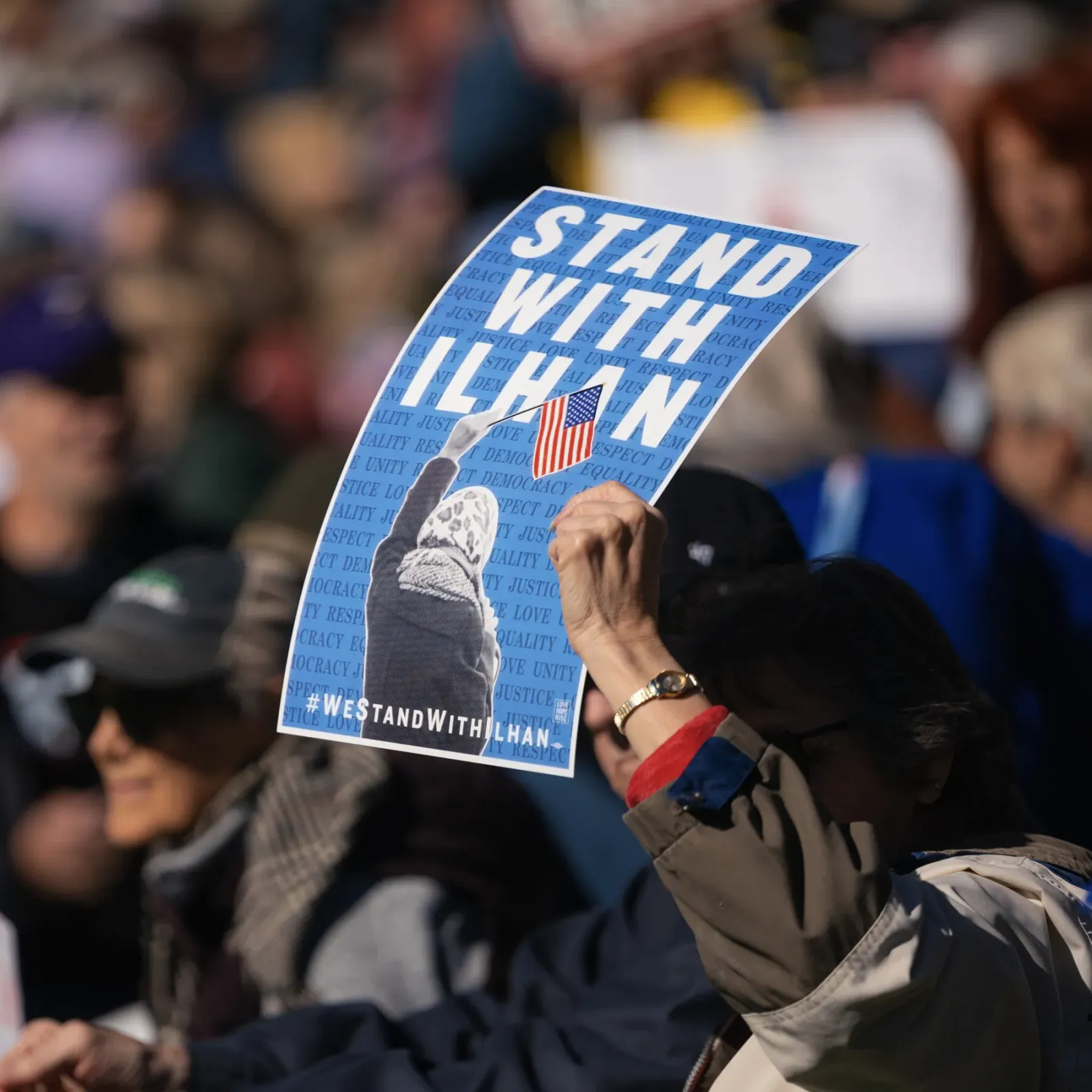
Obama Defends Ilhan Omar After Agents Search Her Home in Trump Inquiry
The former president's intervention raises the stakes in a federal probe into immigration paperwork that has put a prominent progressive lawmaker in the crosshairs.

Blair-era minister: cut welfare to fund youth job support
Alan Milburn's call for welfare cuts to fund employment support opens a Labour fight over benefits and the Neet crisis.
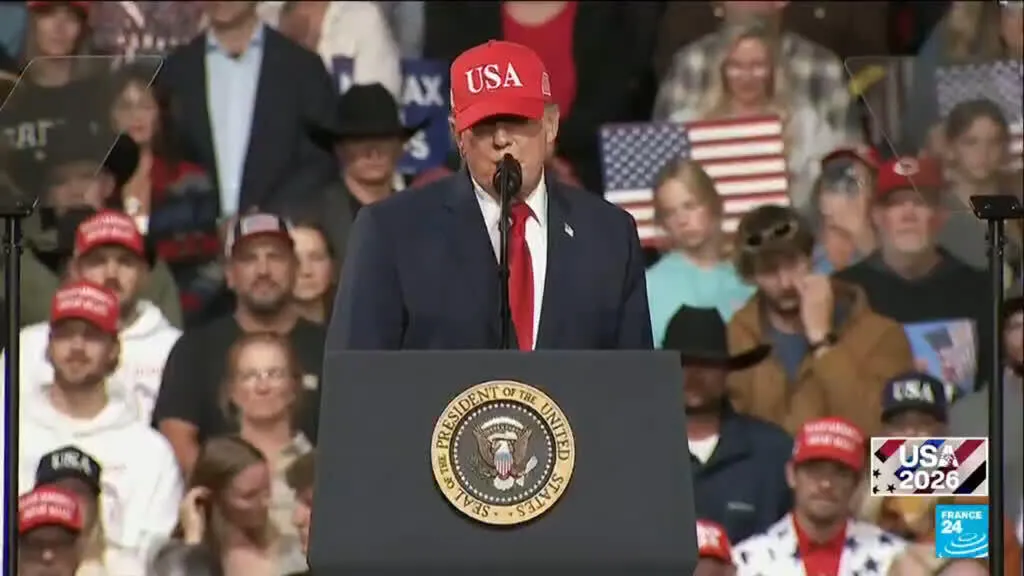
Hot September CPI: energy costs surge, voters feel the squeeze before midterms
The latest inflation print lands as Trump campaigns for GOP control of Congress, putting cost-of-living worries at the center of the midterm fight.