
Civilization 7 adds hotseat multiplayer next week, months into Firaxis' rehab
After a bumpy 2025 start, Firaxis is shipping another major update next week, including the hotseat mode fans asked for.
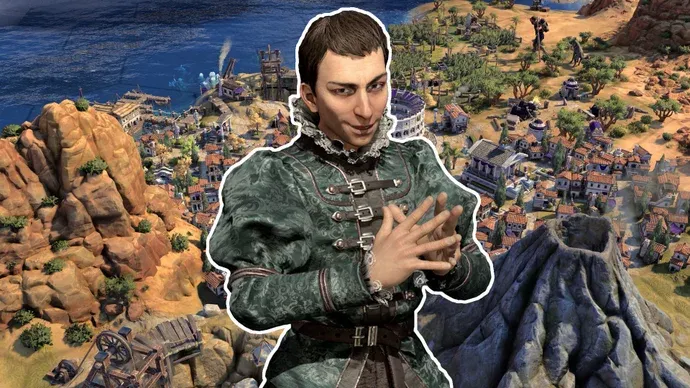
Firaxis is continuing its slow course correction for Civilization 7, with another major update arriving next week that includes much-requested hotseat multiplayer. For decision-makers, it is a live case study in how studios can recover credibility by shipping missing basics instead of rebranding the problem away.
Civilization 7 is getting the one feature players have been repeatedly asking for, with hotseat multiplayer arriving next week as part of another major update from Firaxis. This is not a small patch in the “we fixed a crash” sense. The development team is explicitly continuing a long revitalisation after the game’s bumpy launch roughly 18 months earlier.
The timing matters, too, because it frames what this update really is: not a triumphant sequel announcement, but a continuation of the course correction that started after players heavily criticized Civilization 7 at launch. Players panned the release for a range of issues, including a poor UI, controversial changes to the series’ classic formula, and a lack of features. Hotseat multiplayer landing next week is Firaxis trying to close the gap between what the franchise’s audience expects and what shipped.
If you run a game business, a studio, or any kind of product team, there is a pattern hiding in plain sight here. When a launch is criticized on fundamentals like user interface, feature completeness, and core design behavior, “fix later” is not a marketing slogan, it is an operational plan. You need to rebuild trust through repeated delivery. And because those complaints were both functional (UI, missing features) and experiential (changes to the series’ classic formula), the remediation has to do double duty: restore usability and restore familiarity.
This also shows why “slow and steady” updates can be strategically rational. Big launches carry high expectations, but the reputation damage can be durable when players feel the product shipped incomplete. In that situation, even incremental progress can become a scoreboard, especially if the updates are clearly tied to what fans requested. Hotseat multiplayer is a concrete example, because it is a specific mode that players asked for, not a vague promise of “more ways to play.”
There is a secondary layer that matters to executives beyond player sentiment: platform and community behavior. When a game lacks a feature that a community expects, multiplayer ecosystems and social play suffer. That can reduce word-of-mouth and complicate player retention. Multiplayer is not just entertainment, it is stickiness. So adding hotseat multiplayer can have second-order effects like expanding who can play together, when they can play together, and how often they return. In other words, it can affect engagement metrics in ways that are not visible from the patch notes alone.
There is also an interesting governance angle for boards and investors: how long a company should “stay on offense” versus “stay on defense” after a criticized launch. The source describes Firaxis’ course correction as continuing after a bumpy launch, now nearly 18 months later. That suggests a multi-cycle investment in remediation, not a quick turn of the wheel. For decision-makers, the risk is obvious. The cost of prolonged recovery can mount, and the narrative can sour if players feel the roadmap never arrives. The counterweight is also obvious. If the company consistently ships the missing pieces, it can convert skepticism into renewed credibility.
For context, classic Civilization fans have historically treated multiplayer structure and play modes as part of the series’ DNA, alongside progression, map interaction, and the feel of turns and tradeoffs. When Firaxis changed parts of that formula in the contested launch period, players responded. Now, bringing in a much-requested hotseat mode is a way to meet players where they are, instead of only trying to persuade them that the new direction is better. The strategic stake is that the franchise is large enough that “good enough” is not a baseline. It has to feel like Civilization, and it has to feel complete.
So what does this mean for other executives watching the industry? It is a reminder that post-launch credibility is earned with specifics. Firaxis is not only addressing technical friction, like the poor UI players criticized at launch. It is also filling feature gaps, which is where the “bumpy launch” narrative becomes harder to ignore. Hotseat multiplayer next week becomes the visible symbol of that effort, and it may help determine whether the revitalisation keeps compounding or stalls.
In the end, the strategic stakes for decision-makers in studios and adjacent product orgs are simple and high: trust is a product feature. Firaxis is betting that shipping the right missing mode next week can rebuild that trust after nearly 18 months of scrutiny and feedback. Whether that bet pays off will show up not only in headlines, but in whether players come back and whether they stay.
This story's Key Insights and Take-aways are locked.
Create a free account to unlock Executive Actions for one credit.
Register to UnlockAlways free for Executives Club members. Join the Club
More in Entertainment

Russell Brand's accuser 'bewildered and confused' as he denies 7 sex charges
The criminal case against the comedian is a live test of how media companies manage talent risk when serious allegations go public.

'It's a Magic Trick': Ballet Experts Say Rosalía's SNL Pose Is Impossible
Three ballet experts tell Rolling Stone Rosalía's gravity-defying SNL stillness shouldn't be possible - and why the debate is now part of the show.

Activision CMO: GTA 6 Will Boost Call of Duty, Not Bury It
Activision's top marketer says Rockstar's blockbuster will drive players back to consoles and into Modern Warfare 4, even as the company admits its recent strategy failed.