
Claude now leads 26% of Anthropic's AI R&D - AI is building itself
Anthropic's own model is driving a quarter of its research work, a signal that AI development is accelerating on itself.

Anthropic revealed that Claude, its flagship AI model, now leads 26% of the company's AI R&D work, a self-referential milestone in AI development. For decision-makers, this signals that AI's pace of improvement is increasingly powered by AI itself, reshaping competitive timelines and investment strategies.
Anthropic just dropped a number that should make every AI executive sit up: Claude, the company's own flagship model, now leads 26% of its AI research and development work. That means more than a quarter of the tasks involved in building Anthropic's next-generation systems - from code generation to experiment design to literature review - are being driven by Claude itself. It is AI helping build AI, and the company is openly telling us that this is a feature, not a bug.
The stat came alongside three measurements Anthropic shared to communicate the pace of AI development. While the company did not detail the other two metrics, the headline figure alone is a stark indicator of how quickly the field is entering a recursive loop. When a model becomes a primary tool in its own lab's R&D pipeline, the traditional human-in-the-loop development cycle compresses. Anthropic is effectively using Claude to accelerate the creation of Claude's successors, and that has profound implications for everyone watching the AI race.
For context, this is not a hypothetical future. Claude is already deployed across Anthropic's internal workflows, and the company is transparent that it is a significant contributor to its own evolution. This self-referential approach is a departure from the early days of AI research, where human researchers wrote every line of code and ran every experiment. Now, the model itself is leading a substantial share of that work, and the pace of improvement is likely to compound. If 26% of R&D is AI-led today, that percentage could climb quickly as the model gets better at its own development tasks.
The competitive stakes are immediate. OpenAI, Google DeepMind, and Meta are all racing to push the frontier of large language models, but Anthropic's disclosure suggests a new battleground: how much of your own R&D can your model handle? Labs that can effectively turn their models into research accelerators will gain a compounding advantage, because every improvement to the model makes the next improvement faster. This is the flywheel that Anthropic is now openly quantifying, and rivals will have to respond or risk falling behind on iteration speed.
Regulators and safety advocates are likely to take notice as well. AI systems that participate in their own development raise questions about control and alignment. If a model is leading research tasks, who is accountable for the direction of that research? Anthropic has long positioned itself as a safety-first lab, so its willingness to let Claude lead R&D work suggests it sees this as a manageable risk. But for policymakers, this is a new dimension of AI governance: not just what AI can do, but how much AI is doing to create the next generation of AI.
For enterprise leaders, the takeaway is more practical. If AI models are now capable of accelerating their own development, the timeline for AI capabilities may be shorter than many corporate roadmaps assume. Companies that are planning for a three-to-five-year AI adoption curve might need to compress that to eighteen months. The tools that are being built today are being built with AI assistance, which means they will arrive faster, with more features, and potentially with fewer human-designed guardrails. That is both an opportunity and a risk for every organization integrating AI into its operations.
Anthropic's disclosure also reframes how we should evaluate AI labs. Instead of just tracking model benchmarks or funding rounds, investors and partners should look at internal AI adoption rates. A lab that uses its own models to drive a quarter of its R&D is signaling a level of confidence and capability that goes beyond any single product release. It is a leading indicator of future performance, and it is the kind of metric that should be on every tech executive's radar.
Ultimately, the 26% figure is a milestone, but it is also a warning. The loop is closing: AI is now building AI, and the pace of that construction is accelerating. For those who lead companies, boards, or investment portfolios, the question is no longer whether AI will transform industries. It is how quickly that transformation will happen, and whether your organization is prepared for a world where the builders themselves are being built by the machines they create.
This story's Key Insights and Take-aways are locked.
Create a free account to unlock Executive Actions for one credit.
Register to UnlockAlways free for Executives Club members. Join the Club
More in Technology
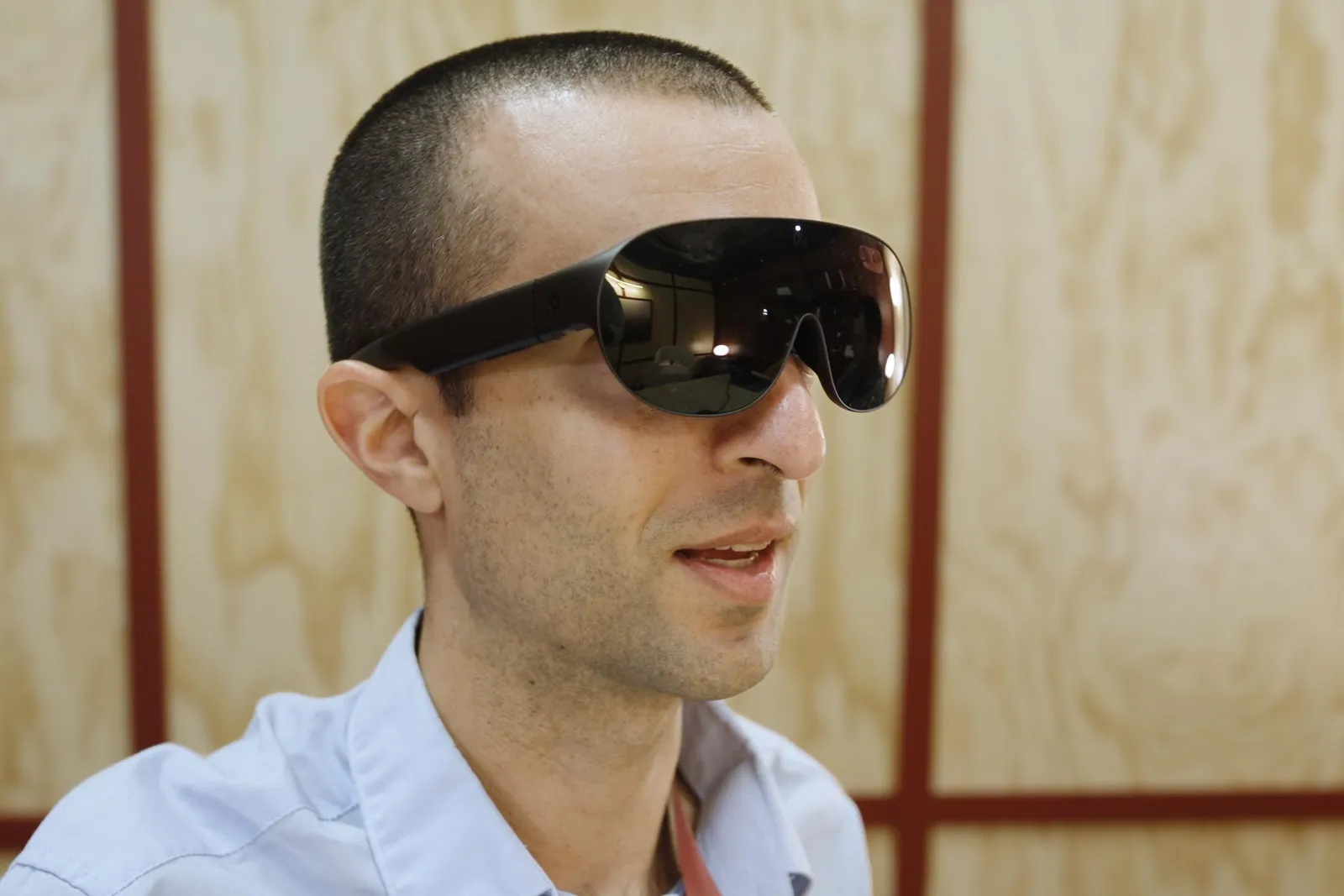
Meta's VR Glasses sit on your ears, not your face - and they're launching
The new form factor trades the head strap for a pocket computing puck, aiming to make VR lighter and more approachable than Quest or Vision Pro.

OpenAI poaches Patreon co-founder Sam Yam and two execs for creator push
OpenAI lands three Patreon veterans to build creator tools, signaling a major bet on the creator economy ahead of a big announcement.
AMD's one-line Linux patch reveals GDDR7 support for RDNA 5
The tiny code change lands as Nvidia ships GDDR7 on RTX 50-series, and it hints AMD's next-gen cards arrive by 2027-2028.