

Cocoa price crash: nearly 75% drop since 2024 peak devastates Ghana and Cote d'Ivoire farmers
A 2024 peak turned into a near-75% plunge, crushing farmer incomes in Ghana and Cote d'Ivoire, and forcing a reckoning for the entire value chain.
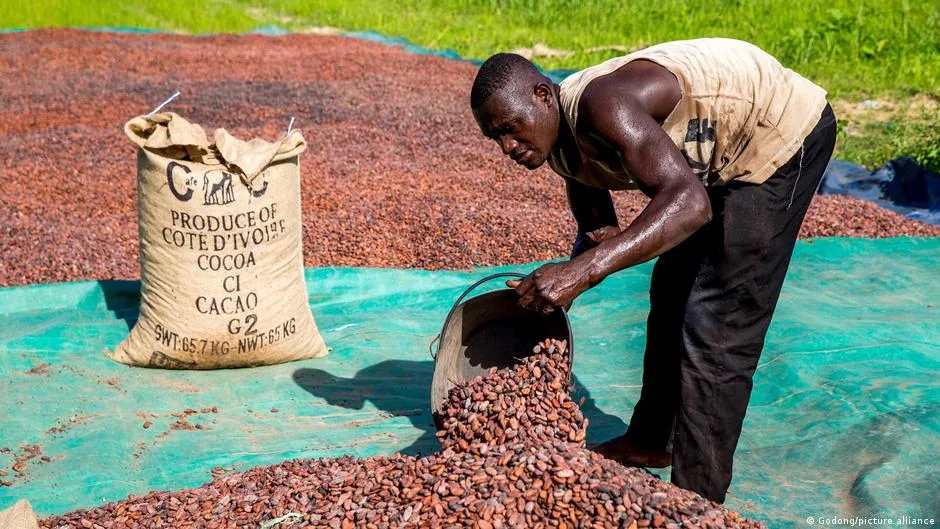
Cocoa prices hit a peak in 2024 and then plummeted by nearly 75%, triggering a financial blow for millions of farmers in Ghana and Cote d'Ivoire. For decision-makers, the crisis tests whether the sector can stabilize incomes and keep supply moving through the next cycle.
Cocoa prices surged to a peak in 2024, then collapsed by nearly 75%. The immediate casualty is brutally simple: millions of farmers in Ghana and Cote d'Ivoire are absorbing the hit to cashflow and household budgets that depend on cocoa sales.
For readers trying to connect the dots, the link is direct and urgent. When the global price for cocoa falls nearly 75%, the margin squeeze lands where it has least room to absorb shocks. Ghana and Cote d'Ivoire are central to global supply, so a crash does not stay in charts. It turns into fewer resources for farm inputs, delayed maintenance, and more pressure to sell at whatever price is available.
To understand why this becomes so crushing, you have to remember how cocoa economics work in practice. Many farmers operate on tight liquidity, relying on seasonal production and spot pricing dynamics. When cocoa turns from a profit story into a loss story, it is not just “lower revenue.” It is also a cascade of second-order effects: households pull back spending, farms use less fertilizer or pest control, and young workers are pulled away when agricultural returns look unreliable. That can affect not only next season’s yields, but also longer-term supply health.
So what changed? The source frames the core timeline clearly: cocoa reached a peak in 2024 and then plummeted by nearly 75%. That type of move is not a gentle dip. It is a regime shift in expectations. Businesses that plan around stable input costs suddenly face volatility they cannot fully hedge through contracts alone, especially when counterparties are farmers who do not control world pricing and have limited tools to smooth income.
This is where the “turning point” question becomes more than a headline line. When prices crash, the sector typically gets forced into hard decisions: who bears the risk, how buyers structure relationships, and whether any stabilizing mechanisms exist or can be scaled fast enough. For example, industry players and policymakers often debate approaches like longer-term offtake arrangements, price stabilization schemes, and stronger sustainability frameworks that include economic resilience for farmers. The reason these topics matter now is straightforward. If a crash like this repeats, then sustainability programs that focus only on labor and farming practices may fail to address the economic shock that drives attrition.
There is also a governance angle that executives and boards should care about. Cocoa value chains are long, meaning price changes can travel through multiple intermediaries before reaching farms, but the crash still lands hardest at the origin. That creates a recurring question for the entire chain: are incentives aligned so that when markets swing, upstream farmers are not left absorbing the worst of the downside? If the industry cannot answer that quickly, the political and social pressure tends to rise, which can spill into regulation, procurement rules, and reputational risk for global chocolate brands and their suppliers.
For decision-makers who manage risk, the takeaway is that cocoa volatility is not only a commodity story. It is an operational continuity story. Supply depends on farmer viability, and farmer viability depends on incomes that can survive market swings. If a nearly 75% plunge is enough to financially damage millions of farmers in Ghana and Cote d'Ivoire, then the “next cycle” could include lower investment, potential supply disruptions, and rising costs elsewhere as the industry scrambles to maintain volumes.
At the strategic level, the crisis is essentially a stress test of the sector’s resilience. The source ends with the key question: will this moment mark a turning point for the sector? For peers across consumer staples, supply chain management, and agricultural finance, the right way to frame it is simple. If the industry learns from this crash, it can build mechanisms that keep farmers afloat during downturns. If it does not, the same pain will likely reappear the next time prices fall and the value chain is forced to decide who pays for the shock.
This story's Key Insights and Take-aways are locked.
Create a free account to unlock Executive Actions for one credit.
Register to UnlockAlways free for Executives Club members. Join the Club
More in Politics

Glacial collapse, not rain, killed 180 in Nepal's Himalayan flood
The Himalaya's extreme geography hid the true cause of Nepal's catastrophic flood, a glacial collapse that turned a geological battleground into a mass-casualty zone.

Iran’s Esmail Baghaei says Oman talks start shipping via Hormuz, not US talks yet
Temporary route plans with Oman aim to restart commerce while Tehran says Washington dialogue is not on the table.

Standards watchdog opens probe into Reform UK deputy leader Richard Tice over interests
The parliamentary standards commissioner says it began an investigation on 28 July into a possible undeclared interest.