

Collin County Democrats demand Paxton investigation after votes outside his reported residence
A complaint asks Texas officials to probe whether Ken Paxton violated election law by voting while allegedly living elsewhere.
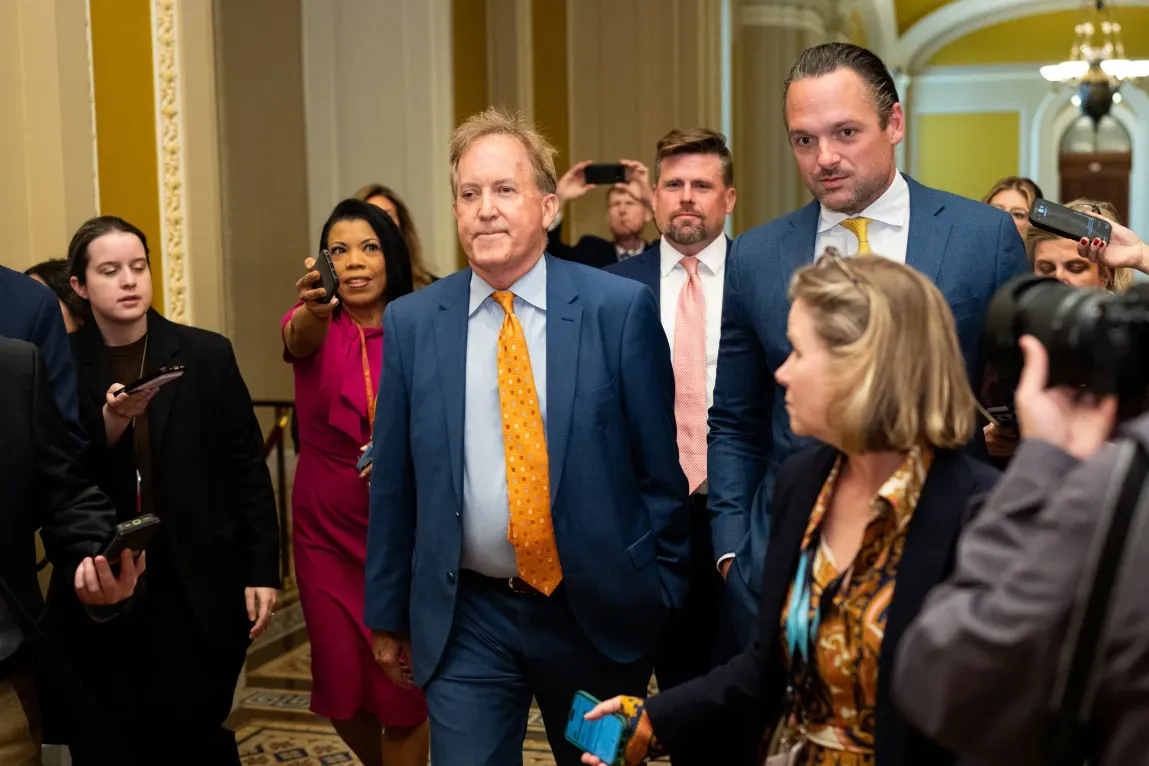
Texas Attorney General Ken Paxton is facing a new election-law complaint after ProPublica and The Texas Tribune reported he voted six times in two years while registered at a Collin County address he appears to no longer live in. The case puts Texas’ voter residency enforcement and the attorney general’s conflict-of-interest question on the hot seat for decision-makers.
Texas Democrats just asked Texas to turn up the heat on Ken Paxton. In a complaint filed Tuesday, the Collin County Democratic Party asked the Texas secretary of state to investigate whether the Republican attorney general committed election fraud by voting in the May primary runoff while registered at an address where he reportedly did not live anymore.
The immediate trigger matters because it lands on a very specific allegation: ProPublica and The Texas Tribune reported last week that Paxton voted six times in the past two years while registered at a Collin County address in which he previously lived with his wife, state Sen. Angela Paxton. Paxton moved out of that home in June 2024, according to a divorce filing by his wife and a source close to the Paxton family, and it is unclear where he has lived for the past two years. Reporting linked him to a home in neighboring Denton County since February.
At the center of the dispute is a state election-law concept that sounds boring until you realize it controls who can vote where. Texas law generally requires voters to be registered where they live. Voters can temporarily cast ballots using an address where they do not reside if they intend to return. The question raised by the complaint is whether Paxton could plausibly make that argument while his divorce proceedings and public situation appear to undermine the “intending to return” logic.
The complaint itself flags the irony in Paxton’s public posture. Mary Higbe, vice chair of the Collin County Democratic Party, pointed out that Paxton’s office, as recently as February, warned voters that “it is illegal to misrepresent your residence on election records.” In her filing, Higbe called Paxton’s alleged behavior “unconscionable (yet not surprising)” and argued that he should be held to the same standards he wants others to meet. That is not a technical detail. It is a rhetorical escalation that also matters for regulators, because enforcement credibility lives or dies on whether rules apply equally.
Now add the procedural wrinkle that makes this story more than a headline. Under the current system, the secretary of state conducts an “initial review and, if appropriate, refers it to the Office of the Attorney General,” according to Alicia Pierce, spokesperson for Secretary of State Jane Nelson, whose last day in the position is Friday. Pierce did not say whether the office would handle a complaint against Paxton differently. She instead pointed to the state law requiring the secretary of state to “promptly” refer complaints to the attorney general if there is “reasonable cause to suspect that criminal conduct occurred.”
San Antonio election lawyer Joaquin Gonzalez, who previously led the voting rights program at the Texas Civil Rights Project, argued that Paxton’s situation likely meets that threshold and raised the conflict-of-interest problem directly. Gonzalez said the ethical and best practice would be for the attorney general’s office to hire an independent special investigator to look into the complaint. That point is second-order but crucial for anyone who cares about institutional trust: if the same office that polices compliance is also the subject of the complaint, even a legally correct outcome can still look like an avoidable integrity failure.
The story also includes a timing element that will likely matter for how decision-makers respond. The day after the Collin County complaint was filed, the Texas Democratic Party issued a news release accusing Paxton of ignoring “bombshell voter fraud accusations.” Meanwhile, Paxton did not answer questions from the newsrooms in early July about his voter registration and residency. Neither Paxton nor the attorney general’s office responded about how they would handle the case if the secretary of state referred it to his office.
From the campaign side, Madison Cercy, Paxton campaign spokesperson, sent a broad statement that did not address the registration and residency questions. Cercy accused “political elite” and reporters of digging through the attorney general’s private life to “draw the most damning conclusion.” The campaign did not answer questions about Cercy’s previous statements to other news outlets that Paxton “is a lawful, registered Texas voter in full compliance with the law.”
So what happens next? It is unclear how the complaint will play out, but the mechanics are set: the secretary of state’s initial review, the referral standard of “reasonable cause,” and potentially an attorney general investigation that would need to address the conflict concern Gonzalez flagged. For Texas politics, this is an enforcement test. For election administrators and watchdogs across the country, it is a reminder that voter residency rules are only as strong as the processes that apply them when the complainant is a politically powerful incumbent.
For executives, boards, and investors watching government enforcement and reputational risk, the strategic stake is straightforward: when an office with regulatory power is also a litigation target, the system’s perceived fairness becomes part of the outcome. Even if the legal questions turn on intent, residence logistics, and whether the “temporary” ballot exception applies, the institutional question will follow Paxton into every room where rule-following is supposed to be non-negotiable.
This story's Key Insights and Take-aways are locked.
Create a free account to unlock Executive Actions for one credit.
Register to UnlockAlways free for Executives Club members. Join the Club
More in Politics
LA County: DOJ's 20,000 'noncitizen' voter list is 'unreliable,' includes U.S.-born
Preliminary review by Los Angeles County election officials finds errors in the federal list, raising the stakes for voter roll integrity ahead of November.

Trump's $1.5B Pentagon chip investment lands in North Carolina
A $1.5 billion defense infusion for North Carolina chipmaking signals a new era of Pentagon-backed reshoring - here's what it means for the industry.

Nigeria confirms first Ebola case in Abuja, a woman just off a Uganda flight
Health Minister Muhammad Ali Pate says the patient flew in from Uganda, putting Africa's latest outbreak on Nigeria's doorstep.