
COP31 stalls as countries weigh forcing a Saudi showdown on fossil fuels
Two weeks of UN climate talks in Turkey have overrun without a deal, and the decision now facing governments will shape energy costs, transition timelines and capital allocation for years.
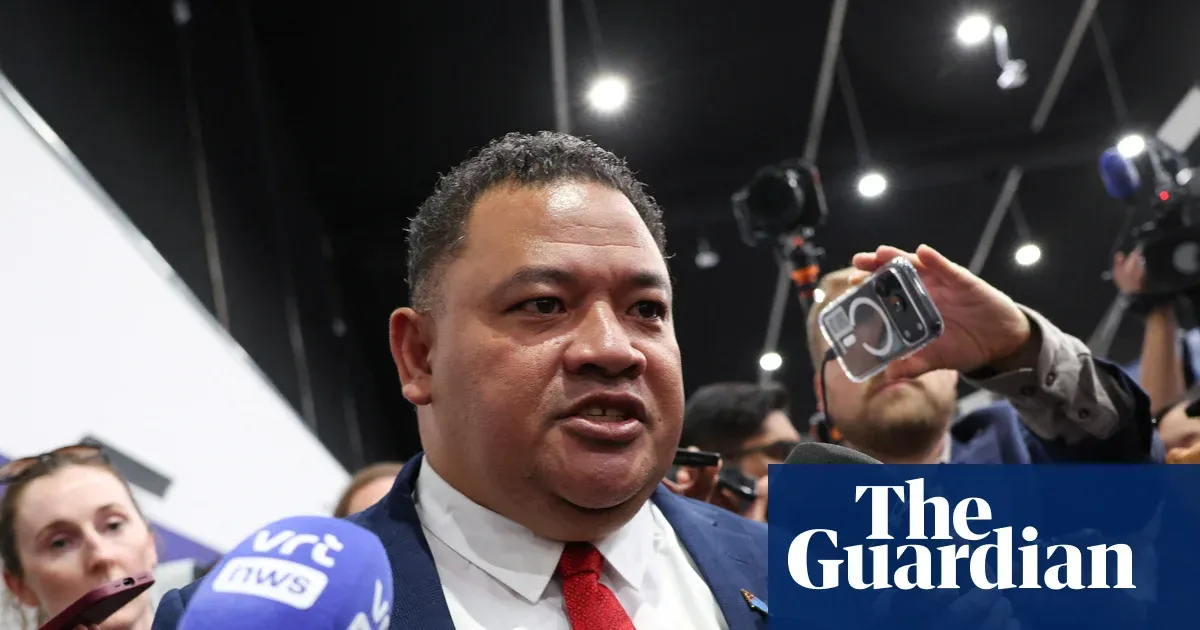
COP31 co-conveners Australia and Turkey spent Saturday in round-the-clock meetings with scores of countries after the fortnight-long summit overran without agreement on phasing out fossil fuels or on aid for developing nations. Governments are now weighing whether to force a showdown with Saudi Arabia and its allies, a procedural gamble that would set the tone for every corporate transition plan priced off the back of UN climate language.
Climate talks reached a standstill in Turkey on Saturday night, and the countries in the room are now openly weighing the one move UN climate diplomacy almost never makes: forcing a showdown with Saudi Arabia and its allies over the global need to phase out fossil fuels. The co-conveners of the Cop31 summit, Australia and Turkey, held meetings with scores of countries throughout Saturday and into the late evening as the fortnight-long talks overran without resolution. Countries and campaigners grew increasingly frustrated at the lack of progress. That is where things stand: no deal, no adjournment, and a bloc of governments deciding whether to escalate.
To understand why that matters, you need the mechanics. UN climate decisions are historically taken by consensus, which means any single delegation can hold the entire text hostage. That gives outsized leverage to a small number of producer economies, and it is why the closing hours of a COP so often become a standoff between a majority that wants firm language on fossil fuels and a minority that can simply refuse to sign. Forcing a showdown typically means one of two things: pushing contested language through over the objections of that minority, or taking the rare step of putting a decision to a vote. Either path breaks a norm, and norms are the only enforcement mechanism this process has ever had.
Two separate fights are tangled together in the stalled text. The first is the transition itself, meaning language on moving away from fossil fuels and toward renewables. The second is aid for developing countries, the finance that poorer nations have long argued is the price of their participation in any ambitious outcome. The original summary of the talks puts it plainly: governments have failed to agree on both the transition to renewables and on aid for developing countries. Those two items are not separate stories. They are the same negotiation, because finance is the currency that buys consent for transition language.
For context on how this became so fraught, the COP process has been circling fossil fuel language for years. COP28 in Dubai produced the first global stocktake decision calling on parties to transition away from fossil fuels, a breakthrough precisely because it named the cause rather than the symptoms. COP29 in Baku then fought over the finance side, landing on a headline number that developing countries immediately called insufficient. COP31 has inherited both arguments at once, with Australia and Turkey co-convening and no resolution in hand.
Saudi Arabia sits at the center of the impasse because of what it is: one of the world's largest oil producers, and historically the most consistent voice against treaty language that singles out fossil fuels for phaseout. Its allies in that position are other producer economies with similar exposure. This is not a philosophical disagreement about commas. A phaseout commitment in a UN decision becomes a reference point for national regulators, disclosure regimes, development bank lending criteria and corporate transition plans. Weak language licenses delay. Strong language compresses timelines.
That is why a stall in Turkey is not an abstract diplomatic story. Every company that has built a net-zero target, a capital expenditure schedule or a stranded-asset assumption on the expectation of tightening global policy now has to price in the possibility that the signal gets weaker rather than stronger. Energy traders read these texts. Utilities read them. So do the banks underwriting long-dated infrastructure. When the world's climate process cannot agree on direction, the cost of capital for transition projects tends to rise, not fall, because uncertainty is expensive and investors charge for it.
The second-order risk is procedural, and it outlasts this summit. If a group of countries pushes past consensus to force the issue, future hosts inherit a template for doing so, and every future blocking minority loses a little leverage. If instead the majority folds and accepts diluted text, the precedent runs the other way: obstruction works, and the next summit starts from a weaker baseline. Either outcome sets expectations for COP32 before a single delegate arrives.
For executives and boards, the practical read is this. Do not build a strategy that depends on the UN process resolving cleanly, because on Saturday night it did not. Build one that survives a world where climate language stalls, finance stays contested, and national policy does the work instead. The countries mulling a showdown in Turkey are making a decision about ambition. The companies watching them are making a decision about whether to wait.
This story's Key Insights and Take-aways are locked.
Create a free account to unlock Executive Actions for one credit.
Register to UnlockAlways free for Executives Club members. Join the Club
More in Science

Europe and Japan park $2B twin probes at Mercury after eight years
BepiColombo's arrival ends an eight-year, $2 billion cruise and hands Europe and Japan a multi-year data edge on the solar system's least-studied planet.

BepiColombo becomes only the second spacecraft ever to orbit Mercury
The international mission reaches the planet closest to the sun, giving scientists a rare second set of eyes and giving operators a case study in long-horizon R&D.

Job ad says bachelor's required. Drop that line and pay for non-degree workers rises.
HR writes the requirements that decide who never gets screened at all, and the evidence now links removing degree requirements to higher pay for the workers who were being filtered out.