
Crew abandons burning LPG tanker in Strait of Hormuz as attacks surge
A projectile strike reportedly forced the crew off a gas carrier in the world's most important energy chokepoint, and the surge in attacks around it is now a board-level risk for anyone moving energy by sea.
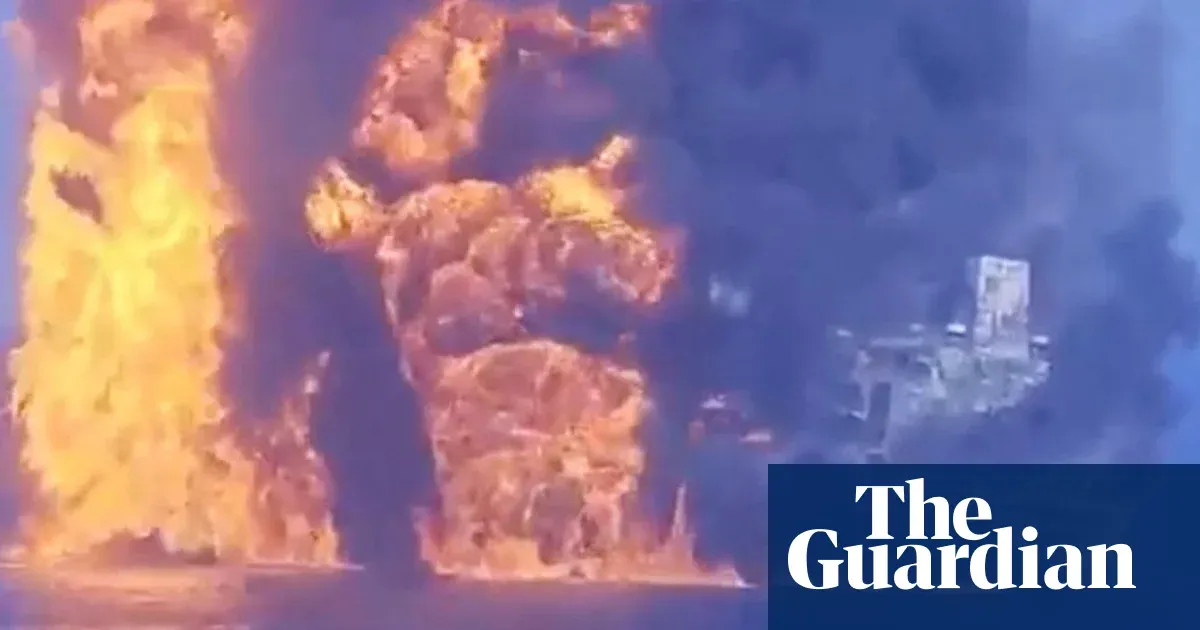
The crew of an LPG tanker abandoned ship in the Strait of Hormuz after maritime security sources told Reuters the vessel was reportedly struck by a projectile, setting it on fire amid a recent surge in attacks around the waterway. For decision-makers, the incident puts a price on the world's most important energy chokepoint: insurance terms, freight rates, and delivery schedules for anyone moving Gulf oil or gas now hinge on how long the attacks continue.
The crew of an LPG tanker abandoned ship in the Strait of Hormuz after the vessel was reportedly struck by a projectile, maritime security sources told Reuters. The ship caught fire. The reporting does not name the vessel, its flag state, its owner, or the nationality of the crew, and no party has claimed responsibility. What is confirmed is the sequence: a projectile, a blaze, and a crew that concluded the deck was no longer survivable.
That last detail is the one to sit with. Abandoning ship is not a precaution; it is the final option in a mariner's playbook, taken when fire, cargo, or structural damage has outrun what a crew can fight. An LPG carrier is a floating pressure vessel. Its cargo, liquefied petroleum gas such as propane and butane, is carried cold or under pressure, and when it escapes and ignites it burns hot and fast. Crews train for years to avoid exactly this moment, which is why the decision to leave tells you more about conditions on board than any official statement yet issued.
The fire also lands inside a pattern rather than out of nowhere. Attacks around the waterway have surged in recent weeks, according to the same reporting. The Strait of Hormuz is the narrow neck between the Gulf and the open ocean, roughly 21 miles wide at its tightest point, with inbound and outbound shipping lanes separated by only a few miles of water. There is no alternative route of comparable size. Ships either pass through it or they do not reach the Gulf at all.
That geography is why a single burning tanker becomes a global story. Historically, around a fifth of the world's oil consumption has moved through this chokepoint by sea, alongside a large share of the liquefied natural gas exported from the Gulf. Bypass pipelines exist, notably across Saudi Arabia to the Red Sea and across the UAE to the Gulf of Oman, but they carry only a fraction of the volumes that transit by water. The strait has no spare capacity sitting idle, and no switch to flip when it tightens.
Markets typically reprice this kind of risk within hours, and the first place it shows up is insurance. War risk premiums for vessels calling in the region rise, underwriters tighten terms or withdraw cover for specific voyages, and charterers start asking whether a fixture is worth the exposure. When cover gets expensive or unavailable, some owners reroute, adding days and fuel to a voyage. Freight rates for the ships still willing to sail tend to move in the opposite direction, which is good news for tanker owners and bad news for everyone paying the bill downstream.
There is a legal layer too. Freedom of navigation in international straits is a bedrock principle of the law of the sea, and attacks on commercial shipping in a chokepoint test how seriously states are prepared to enforce it. Flag states, insurers, and ship managers all carry duties toward crew welfare, and a crew that has abandoned ship becomes a diplomatic question as much as a commercial one. Note also the sourcing: the strike is reported, attributed to maritime security sources, not confirmed by a named authority. In a chokepoint incident, the gap between what is reported and what is verified is exactly where rumor and market noise live.
For executives, the exposure is broader than it looks. Energy procurement teams buying crude or LNG, refiners scheduling cargoes, shipping lines fixing routes, insurers writing hull and cargo cover, and any board with a supply chain that touches the Gulf all inherit this risk whether or not they own a vessel. The second-order effects are the ones that bite: a spike in war risk premiums raises the landed cost of energy, a rerouting decision adds weeks to delivery schedules, and a crew shortage in high-risk waters can idle tonnage even when the ships themselves are undamaged.
What to watch next is specific. Whether the vessel and its owner are identified, and by whom. Whether any state or group is attributed with the strike. Whether underwriters pull cover for the strait, which would force rerouting decisions faster than any political statement. And whether the recent surge in attacks continues, because a single burning tanker is an incident, while a sustained campaign is a repricing of the entire Gulf logistics map.
This story's Key Insights and Take-aways are locked.
Create a free account to unlock Executive Actions for one credit.
Register to UnlockAlways free for Executives Club members. Join the Club
More in Business

GTA VI hauls $3.79bn in one day, out-earning every film ever made
Rockstar's own estimate covers a single Thursday plus a record 32.5m prerelease units, and it lands on every board weighing IP concentration, pricing power and launch risk.

FBI's crime database breached again, the second hack in months
CNN reports hackers hit the National Crime Information Center, the shared backbone of US policing, and the repeat timing is the part every security team should study.

S&P 500 Enters Correction, Down 10% From Its High on AI Worries
The index's slide past the 10 percent line is a symbolic verdict on investor mood, and the AI trade that powered the rally is now the thing testing it.