

Cuba’s grid collapses again: second nationwide blackout in five days
A second blackout underscores how a six-month US fuel blockade and worn infrastructure are grinding Cuba’s power system down.
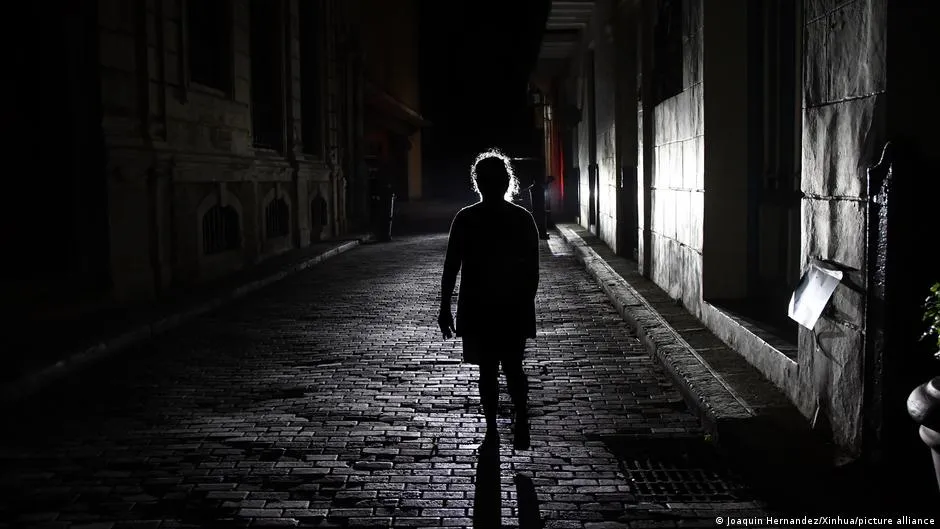
Cuba suffered a second nationwide blackout in five days, as its electricity grid continued to crumble. For decision-makers, the repeat outage signals widening operational and economic risk tied to fuel access and legacy energy assets.
Cuba has suffered a second nationwide blackout in five days, and the pattern matters: this is not a one-off technical glitch, it is a system under strain. The core problem is blunt and structural. Cuba’s electricity grid has crumbled amid a six-month US fuel blockade, layered on top of energy infrastructure that was already dilapidated.
In other words, the lights did not simply flicker. The grid broke again, and it broke again quickly, showing that whatever resilience remained after the first blackout did not hold. For leaders, the immediate consequence is obvious but serious: when national power fails repeatedly, every dependent system fails too, from refrigeration and water pumping to communications and transportation signaling. Even if restoration crews get electricity back in time, the underlying constraints are still there, waiting to reassert themselves the moment conditions worsen.
To understand why this keeps happening, you have to look at the fuel side and the asset side. The source points to a six-month US fuel blockade as a driver of the grid’s deterioration. In practical terms, fuel restrictions can turn power generation into a rationing game, where generators run less often, at less capacity, or with less flexibility than the system needs. That can force outages that ripple through the network, because the grid is only as stable as the balance between generation, transmission, and demand.
Then there is the infrastructure reality. The source also emphasizes “already dilapidated energy infrastructure.” That phrase does not sound like a punchline, but it is the difference between a bad day and a chronic failure cycle. When the physical system is aging, every stressor becomes more dangerous. Equipment failures that might be manageable with adequate spare parts, maintenance windows, and spare capacity become cascading events. When power is scarce and assets are fragile, operators cannot buffer shocks the way they normally would.
The regulatory backdrop for this kind of situation is also more complicated than it looks from the outside. Utilities and regulators typically plan around reliability standards, outage scheduling, and contingency power. But those assumptions rely on stable inputs and manageable maintenance constraints. When external fuel restrictions persist and internal infrastructure is degraded, traditional planning tools start to lose their grip. The system may technically be “operational” between major failures, but it can be operating in a fragile state, where a small disturbance triggers a large one.
For boards and senior executives, there are second-order implications that reach beyond Cuba’s borders. Power outages at national scale can disrupt supply chains, currency and imports planning, and household consumption patterns. They can also increase demand for emergency energy solutions, raise operating costs for essentials, and create long recovery tails that absorb human and financial resources. Even companies that are not directly power utilities often feel the impact through logistics constraints, labor disruptions, and the knock-on effects of instability.
There is also a geopolitical and risk-management angle. A six-month US fuel blockade is not a short-term weather event. It signals a policy constraint that can persist or worsen, making it difficult for affected systems to stabilize. In energy markets and infrastructure finance, that kind of uncertainty tends to raise risk premiums, shrink feasible investment timelines, and complicate procurement of components and services that rely on global supply chains.
What should executives take from this, beyond the immediate news? The repeated blackout shows how quickly reliability can unravel when you combine constrained inputs with aging assets. If you sit on the board of a utility, an industrial operator dependent on stable power, or a fund backing energy infrastructure, the lesson is not “Cuba is unique.” The lesson is that grid stability is a stack. Remove fuel security, degrade physical resilience, and the entire stack becomes more brittle. Then the next failure is not a mystery. It is a countdown.
This story's Key Insights and Take-aways are locked.
Create a free account to unlock Executive Actions for one credit.
Register to UnlockAlways free for Executives Club members. Join the Club
More in Politics

Glacial collapse, not rain, killed 180 in Nepal's Himalayan flood
The Himalaya's extreme geography hid the true cause of Nepal's catastrophic flood, a glacial collapse that turned a geological battleground into a mass-casualty zone.

Iran’s Esmail Baghaei says Oman talks start shipping via Hormuz, not US talks yet
Temporary route plans with Oman aim to restart commerce while Tehran says Washington dialogue is not on the table.

Standards watchdog opens probe into Reform UK deputy leader Richard Tice over interests
The parliamentary standards commissioner says it began an investigation on 28 July into a possible undeclared interest.