
Dana White calls the White House UFC cage a one-off after UFC paid $60 million
The Freedom 250 event may have hit every engagement metric White wanted. The price tag makes it impossible to repeat.
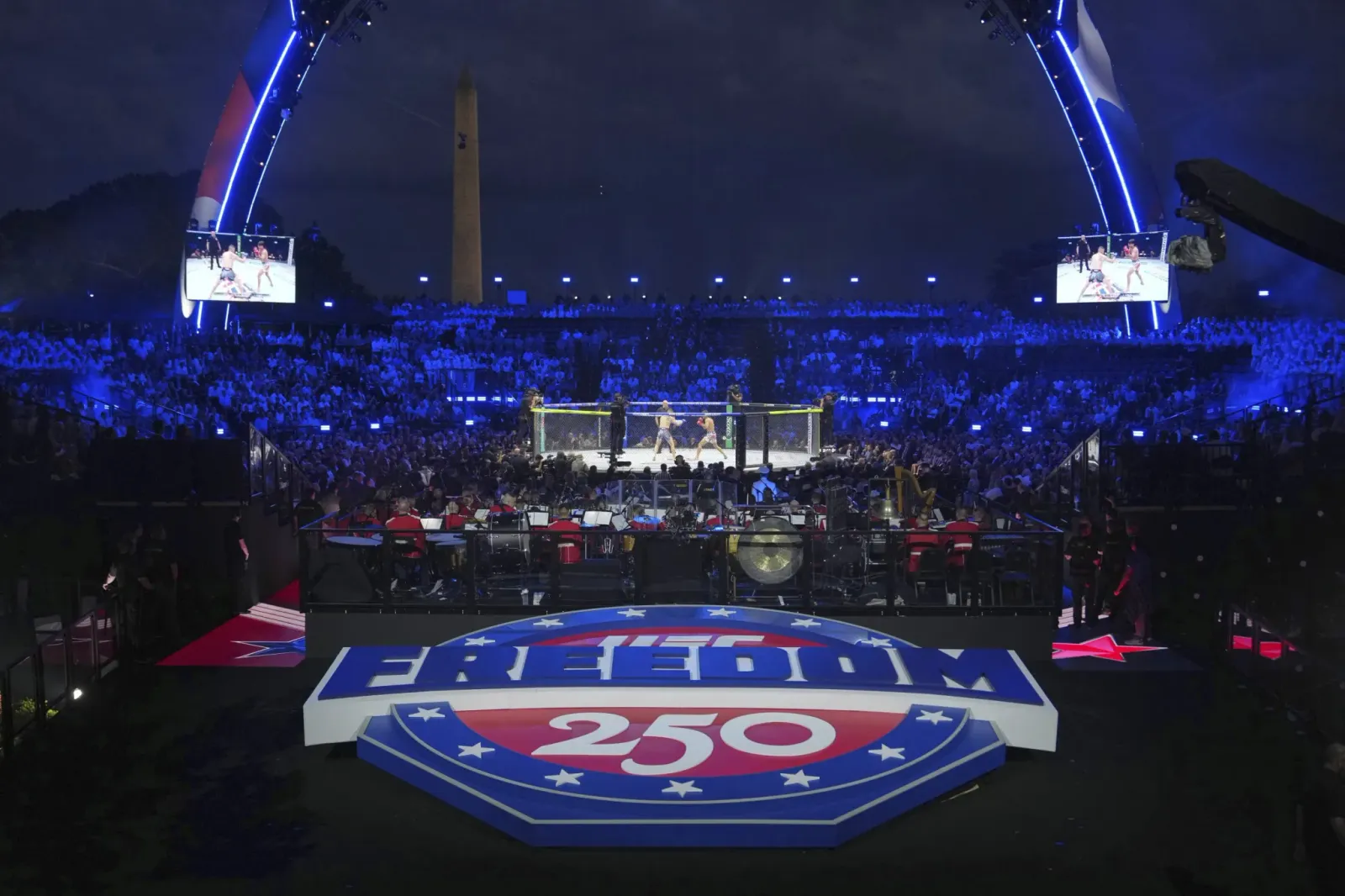
UFC CEO Dana White told reporters that the Freedom 250 White House cage event will 'never happen again,' citing its cost. UFC says it covered the $60 million tab, and White links that price with logistics and federal-site constraints that made the build a headache.
UFC CEO Dana White didn’t just wrap Freedom 250 in fireworks and patriotic confetti. He also declared the whole thing a one-and-done, saying the UFC cage erected on the White House lawn will “never happen again” because it was too expensive to repeat.
White made the call after UFC described the night as a success on multiple fronts. White said UFC surpassed its goals in every metric he could list at a news conference that stretched well into Monday morning, celebrating merchandise sales and streaming service subscriptions. And in terms of what fans actually saw, UFC delivered: Justin Gaethje battered Ilia Topuria in the main event to win the UFC lightweight title, then celebrated by throwing a backflip off the top of the wire-mesh cage. Trump stayed until the end of the seven-card show, put on a white “USA” baseball cap at one point, and repeatedly shared in the victory moments with handshakes and fist-bumps, including with Melania.
So why the “never again” language if the show checked the engagement boxes? White’s answer is blunt: the build and the federal-locations execution were financially and operationally brutal. He framed it as something he can’t afford, and he explicitly linked the money problem to future planning by saying, “I can’t afford it. I’ll never do the Sphere again and we’ll never do this again.” The reference to another pricey venue is telling. White is not arguing about whether the concept could work. He is arguing about the economics of doing it the hard way.
The source is equally clear about the dollar amount driving the decision. UFC said it was footing the $60 million tab for the Freedom 250 cage and the associated staging and production work. That figure matters because UFC is a business that can scale entertainment quickly when it controls the environment. Traditional arena shows are comparatively repeatable. Outdoor builds at high-profile federal landmarks are not. White pointed to a bundle of constraints: constant headaches over weather concerns in a rare outdoors show, the logistics of constructing the cage, and the challenge of staging events at federal landmarks. Put together, it is less like producing a sporting event and more like running a time-sensitive engineering project under tighter public scrutiny.
There is also a regulatory and governance angle, even if White doesn’t get into legal citations. Freedom 250 was not just in a venue. It moved through and leveraged the White House as a backdrop: fighters toured the West Wing, walked past presidential portraits, went through the Roosevelt Room and Cabinet Room, and winners met with Trump. The event also featured tributes to first responders, active military, and other White House-designated heroes, with the Marine Band providing pulsating patriotism. When you mix a major commercial sports brand with federal-site choreography, you inherit layers of planning, security considerations, and constraints that don’t behave like normal venue contracting.
White also tried to contain the political narrative that surrounded the show. He said the night “created some unity,” and argued that for people who worried it was going to be a big political statement, it wasn’t. White described it as Americans celebrating a birthday, and said for first-time viewers, the goal was simple: they might like the sport and the guys’ stories. He even noted that the winners received that meet-and-greet access. The subtext is that UFC wanted broad reach beyond its usual fight-night audience, which helps explain the emphasis on streaming subscriptions and merchandise.
Yet the operational story still wins the day. White’s “never again” is not a teardown of the spectacle. It is a cost-and-complexity verdict. After an event branded “Freedom 250,” billed to celebrate Trump’s 80th birthday and the 250th anniversary of the signing of the Declaration of Independence, UFC effectively learned the limit of how far it can push a premium partnership with the White House when the price is $60 million and the risk is operational disruption.
For executives watching from the outside, the strategic takeaway is about capital allocation and repeatability. UFC can market novelty, and it can sell big moments. But when the unit cost and friction spike because the environment is outside your control, your board and your finance function will eventually push back. International Fight Week is next, and UFC 329 is set to mark Conor McGregor’s return after a five-year break, in a more traditional arena back in Las Vegas. That contrast is the blueprint. Freedom 250 may have been a once-in-a-generation media moment. But White just told the industry that the next move is to take the winning formula back somewhere you can actually scale.
And maybe that is the real reckoning: not whether the night worked, but whether it was worth building the cage on the South Lawn when you could get the same attention in venues designed for exactly this.
This story's Key Insights and Take-aways are locked.
Create a free account to unlock Executive Actions for one credit.
Register to UnlockAlways free for Executives Club members. Join the Club
More in Business

Gina Rinehart backs SpaceX with a $1B+ stake after its $2.5T debut valuation
The Aussie mining billionaire just put Hancock Prospecting behind Musk's rocket-and-satellite combo, and markets noticed.
Fox agrees to buy Roku for $22B, paying $160.00 per share
What looks like a simple streaming bet is actually a $22 billion corporate reshuffle with board and regulatory gravity.
SpaceX jumps 6% in premarket, valuing the company at $2 trillion+ after its debut
The stock’s first-day surge pushes SpaceX past $2 trillion, reshaping how investors and regulators think about private space risk.