

Doug Burgum confirms three wildland firefighters died June 27 battling Colorado-Utah fires
A joint response to the Knowles and Gore fires cost three lives, raising pressure on how agencies coordinate risk and resources.

Interior Secretary Doug Burgum said three wildland firefighters died on Saturday, June 27, while responding jointly to the Knowles and Gore fires along the Colorado-Utah border. The deaths underscore the operational and coordination stakes for decision-makers managing wildfire risk across agencies.
Interior Secretary Doug Burgum said Sunday that three wildland firefighters died Saturday, June 27, while responding jointly to the Knowles and Gore fires along the Colorado-Utah border. Burgum described the loss as “three wildland firefighters serving with the U.S. Forest Service and the U.S. Wildland Fire Service” who “lost their lives on Saturday, June 27.”
The significance here is immediate and sobering: these were not civilian losses tied to an accident at a desk, but line-of-duty fatalities during an active response at the intersection of two major fires, Knowles and Gore, in a corridor that spans Colorado and Utah. Burgum’s statement confirms both the timing and the joint nature of the deployment, which matters because wildfire response is typically a multi-agency, multi-jurisdiction effort where handoffs, shared situational awareness, and allocation of resources can be the difference between containing a flare-up and losing control of it.
Wildfire operations run on speed and coordination. Once a fire grows, agencies usually shift from planning to execution, and that means decisions have to be made with imperfect information. Even when teams train together, real incidents force different units to operate in the same physical space with different equipment, rules of engagement, and command structures. In that environment, the “jointly” part of Burgum’s description is not just administrative. It signals a response where people from the U.S. Forest Service and the U.S. Wildland Fire Service were operating as part of a combined effort to address two fires at once.
Burgum’s framing also points to why public officials disclose incident deaths promptly. When the federal government is involved, the operational facts are closely tied to accountability, and transparency is part of maintaining trust while investigations and after-action reviews are likely to follow. For executives and boards, the takeaway is not about blame or policy theater. It is that the public sector treats safety outcomes as core operational performance indicators, not side issues. In disasters, morale, retention, and readiness can all be affected by how agencies communicate, mobilize, and learn.
There is also a second-order implication for the broader risk ecosystem. Wildfires are not only a field challenge, they are a systemic stress test for supply chains, aviation and equipment availability, and staffing. When firefighters die in an active incident, it accelerates attention on readiness gaps such as coverage, fatigue management, and the capacity to surge personnel when multiple fires compete for the same infrastructure. Even if this particular incident is unique in its geography and behavior, it lands on the same management dashboard that leaders track every fire season: can the system scale at the exact moment scaling is required?
For decision-makers in adjacent roles such as contractors, insurers, infrastructure operators, or organizations that depend on emergency response continuity, incidents like this also influence planning timelines. Safety events can lead to tightening of procurement standards, more conservative operational assumptions, and increased scrutiny of training and coordination protocols. That can change how fast equipment is mobilized, how quickly mutual aid commitments are activated, and how emergency communications are prioritized.
And for peers in leadership positions across emergency services, government relations, and risk management, the strategic stake is clear: joint firefighting efforts demand shared clarity. The more complex the situation, the more the system depends on synchronized decision-making under pressure. Burgum’s statement gives the hard facts: three wildland firefighters died on June 27 while responding jointly to the Knowles and Gore fires along the Colorado-Utah border. The businesslike lesson for leaders is that coordination is not a slogan. It is an operational capability that must be designed, funded, and stress-tested before the next incident turns urgent.
This story's Key Insights and Take-aways are locked.
Create a free account to unlock Executive Actions for one credit.
Register to UnlockAlways free for Executives Club members. Join the Club
More in Politics
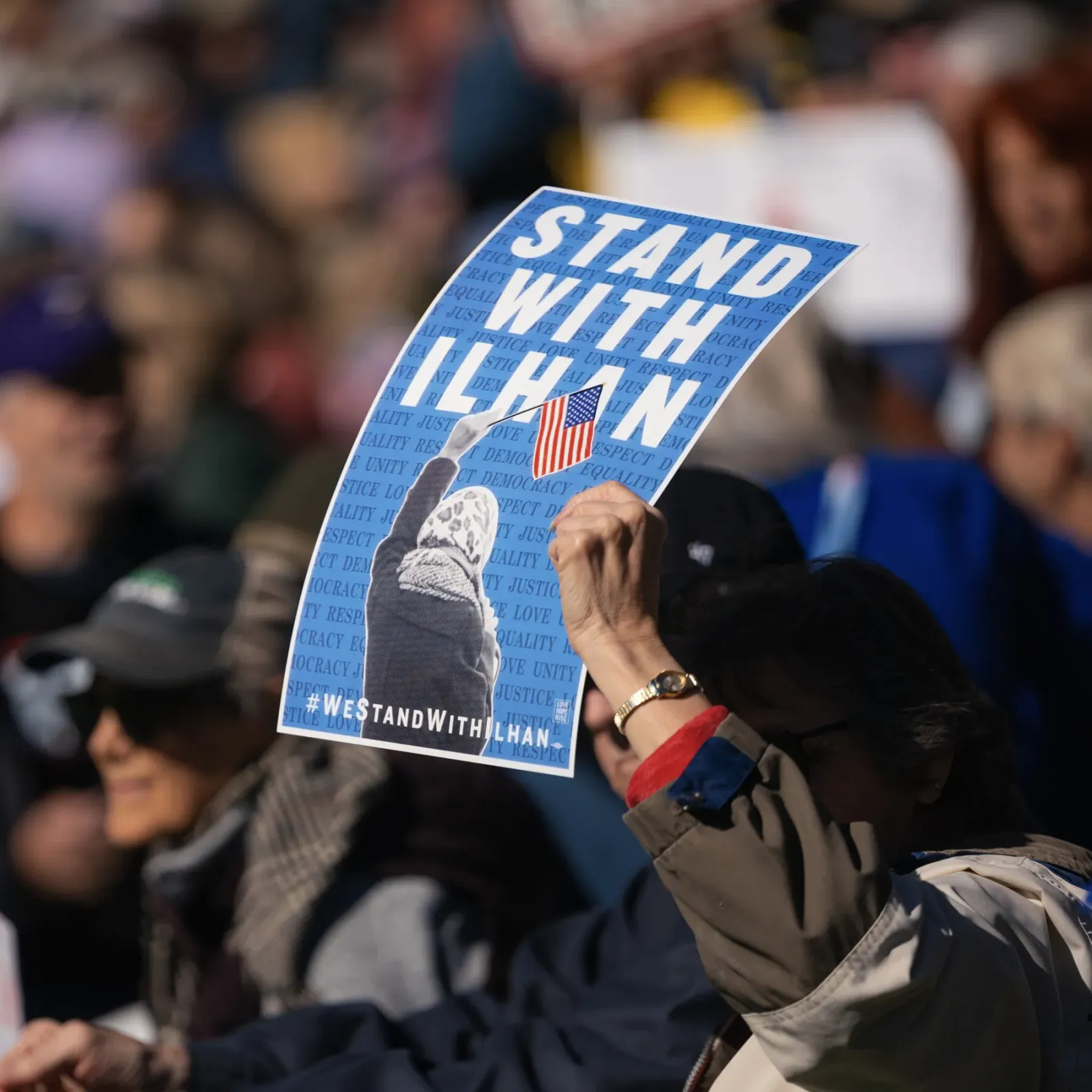
Obama Defends Ilhan Omar After Agents Search Her Home in Trump Inquiry
The former president's intervention raises the stakes in a federal probe into immigration paperwork that has put a prominent progressive lawmaker in the crosshairs.

Blair-era minister: cut welfare to fund youth job support
Alan Milburn's call for welfare cuts to fund employment support opens a Labour fight over benefits and the Neet crisis.

Hot September CPI: energy costs surge, voters feel the squeeze before midterms
The latest inflation print lands as Trump campaigns for GOP control of Congress, putting cost-of-living worries at the center of the midterm fight.