
Dr. Alan Kennedy-Asser warns Europe is warming fastest as wildfires surge
Europe’s fastest-warming heat is colliding with active wildfire outbreaks, forcing firefighting systems and risk models to play catch-up.
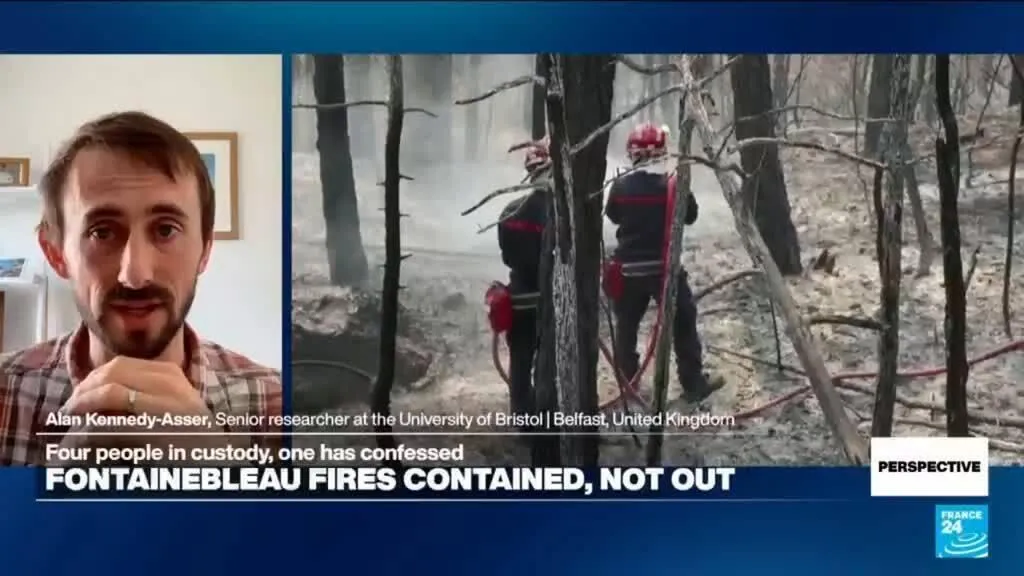
Dr. Alan Kennedy-Asser, Senior researcher at the University of Bristol, tells FRANCE 24 that European temperatures are warming the fastest and that this shift is reshaping weather patterns that feed wildfires. The consequence for decision-makers: wildfire risk is becoming a more immediate operational and financial planning problem, not a distant climate debate.
Europe is getting hotter faster. That is the core warning from Dr. Alan Kennedy-Asser, a Senior researcher at the University of Bristol, in an interview with FRANCE 24 about changing weather patterns and their effects on wildfires currently raging across Europe.
Kennedy-Asser’s point lands with urgency because the story is not theoretical. FRANCE 24 frames the interview against the backdrop of hundreds of French firefighters just managing to contain two fires that have raged across parts of the famous Fontainebleau forest near Paris. When firefighting is “just managing” in a place so close to major population centers, it is a signal that extreme weather is moving from background risk to front-line reality.
So what does “warming the fastest” actually mean for wildfire behavior? In plain terms, hotter conditions can shift how heat, dryness, and wind interact, which can turn “normally difficult” fire seasons into periods where flames spread faster and control becomes more fragile. While the interview focuses on changing weather patterns and their effects, the practical takeaway for operators is that the baseline is moving. If the baseline is moving, the historical record stops being a reliable guide for how bad this year can get.
That matters beyond the firefighters on the ground. Wildfires create cascading pressure on supply chains, insurance pricing, infrastructure operations, and public services, especially when outbreaks are clustered in the same region. France’s Fontainebleau situation, described by FRANCE 24 as involving two fires with hundreds of firefighters still working to contain them, is a reminder that even near major cities, emergency capacity can be stretched quickly. In a system built around contingency plans that assumed “typical” seasons, a faster-warming climate can create more frequent deviations from plan.
There is also a regulatory and governance angle hiding inside the heat. Climate and disaster risk increasingly show up in how governments and regulators expect organizations to assess material risks. Boards and risk committees often start with financial statements. But wildfire events test operational resilience in ways that feed directly into budgeting: what happens to coverage, what happens to downtime, and what happens to worker safety when weather extremes become more common. Even when the immediate story is firefighting, the longer story is risk management frameworks that must keep pace with conditions changing faster than planning cycles.
At the operational level, think about incentives. Firefighting resources are finite, and emergency response depends on coordination among local authorities, national agencies, and sometimes cross-border support for logistics. When wildfires intensify, the opportunity cost rises. Resources that could be deployed elsewhere are tied up. Communications become critical. Evacuations and closures affect businesses and schools. Decision-makers who treat wildfire risk as a seasonal nuisance rather than an operational variable may find themselves reacting instead of managing.
There is a second-order effect too: how companies and investors evaluate long-term exposure to regions, facilities, and assets that sit near forests and wildland interfaces. If European temperatures are warming fastest, then exposure mapping becomes more than an environmental checkbox. It becomes a question of where downtime risk concentrates and how quickly infrastructure can be restored after an event.
For executives in similar roles across Europe, the strategic stakes are straightforward. Dr. Alan Kennedy-Asser’s warning from FRANCE 24 is tied to a real-time emergency in and around the Fontainebleau forest, with hundreds of French firefighters trying to contain two fires. The signal is that climate-driven weather shifts can amplify extreme events in the same time windows where organizations expect to operate with confidence. The board-level question becomes: does your risk model still assume the past is the best predictor of the future, or are you updating it to reflect a new, hotter baseline?
This story's Key Insights and Take-aways are locked.
Create a free account to unlock Executive Actions for one credit.
Register to UnlockAlways free for Executives Club members. Join the Club
More in Politics

LA County: DOJ's 20,000 'noncitizen' voter list is 'unreliable,' includes U.S.-born
Preliminary review by Los Angeles County election officials finds errors in the federal list, raising the stakes for voter roll integrity ahead of November.

Trump's $1.5B Pentagon chip investment lands in North Carolina
A $1.5 billion defense infusion for North Carolina chipmaking signals a new era of Pentagon-backed reshoring - here's what it means for the industry.

Nigeria confirms first Ebola case in Abuja, a woman just off a Uganda flight
Health Minister Muhammad Ali Pate says the patient flew in from Uganda, putting Africa's latest outbreak on Nigeria's doorstep.