
Drone strikes in el-Obeid turn classrooms into danger zones as Sudan’s civil war tightens
What’s changing on the ground in el-Obeid, why aid groups warn the crisis is worsening, and what it means for decision-makers.
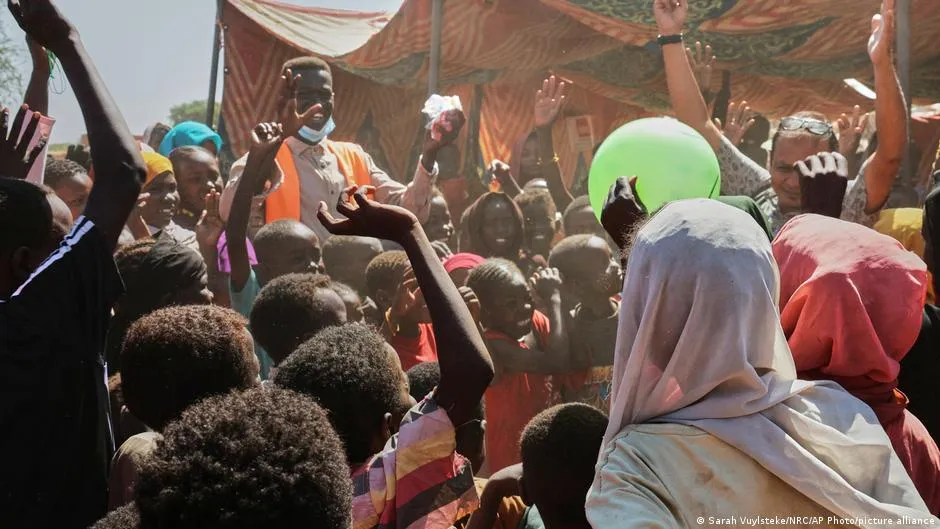
Children in Sudan's besieged city of el-Obeid are afraid to go to school as drone attacks hit civilian infrastructure. Aid groups warn of a worsening humanitarian crisis with escalating civilian harm.
Children in Sudan's besieged city of el-Obeid are afraid to go to school because drone attacks are hitting civilian infrastructure. The immediate story is terrifyingly simple: when drones make everyday places feel like frontline targets, the first casualty is normal life, especially for kids who are trying to learn instead of survive.
In el-Obeid, the fear is not abstract. Aid groups warn the humanitarian crisis is worsening as violence concentrates on civilian systems that communities rely on to function. Schools are not just buildings, they are supply chains for protection, routines, and basic public services. When that infrastructure is struck, families face a grim math problem: send children to school and risk harm, or keep them home and risk losing access to education and support they can’t easily replace.
For executives and operators, this is where a conflict story becomes a governance story. In environments like Sudan, civilian infrastructure is often the backbone of the humanitarian response itself. Aid organizations depend on predictable access routes, functioning utilities, safe public facilities, and local coordination. Drone attacks that land on civilian infrastructure can disrupt those conditions fast, even when no one explicitly targets aid operations. The result is cascading delays, higher security costs, and the slow unraveling of services that people only notice when they stop.
There is also a regulatory and compliance angle, even if the headlines never mention it. Many organizations that work in conflict settings must manage risk under sanctions and humanitarian access frameworks, while also complying with evolving rules around the responsible use of aid, reporting obligations, and internal controls for program continuity. When attacks intensify, the operational baseline changes. That can trigger more stringent verification processes, stricter monitoring, and sometimes the hard decision to scale down programs if staff and beneficiaries cannot be protected.
The second-order implication is that “civilian infrastructure” is a broad category, and drones can make it feel smaller and closer than ever. Schools, transport hubs, water and sanitation nodes, and community spaces can become interconnected targets in a way that amplifies harm across sectors. When one part of the system goes down, everything downstream gets harder, from attendance and staffing to the ability of aid workers to move safely and deliver supplies.
Aid groups’ warning that the humanitarian crisis is worsening matters because it signals worsening trajectory, not just isolated incidents. In a besieged city, time is not neutral. Every day that schools stay closed and civilian systems take hits can deepen vulnerabilities that last long after the next ceasefire attempt, if one happens at all. For decision-makers, that means response planning cannot assume stabilization will arrive quickly. It has to be built for sustained strain.
If you run a foundation, an NGO, a humanitarian procurement function, or an enterprise with people in conflict-adjacent supply chains, the lesson is brutally operational. The environment can change faster than budgets and approvals. Drone strikes that push kids out of classrooms are also telling you that civilian harm risks are rising, access is more fragile, and the cost of maintaining programs increases as security concerns escalate.
Peers in similar roles should treat this as a “continuity under fire” problem, not only a “disaster relief” problem. When aid groups warn of a worsening humanitarian crisis, leadership should immediately ask what indicators will tell you the situation is deteriorating, how quickly operations can adapt, and how to communicate the operational reality without creating false confidence. In el-Obeid, the fear of going to school is the human scoreboard. The strategic stake is whether organizations can keep services moving when the frontline leaks into daily life.
This story's Key Insights and Take-aways are locked.
Create a free account to unlock Executive Actions for one credit.
Register to UnlockAlways free for Executives Club members. Join the Club
More in Politics

Trump and Netanyahu risk another Gaza clash after Trump’s new announcement
The move lands amid a shaky Trump-Netanyahu relationship shaped by the war against Iran, raising fresh diplomatic and strategic volatility.

DOJ drops Reflecting Pool case, calling contractor damage from a rushed, botched installation
The prosecution against a former Olympian collapses in court filings as DOJ points blame at installation failures and overspray.
Trump orders US to hit Iran “as soon as this weekend,” WSJ reports
A reported shift toward harder strikes and possible energy targets raises escalation, munitions, and war-crime risk in one move.