
Eukaryotes weren't a single merge: genes arrived in multiple bacterial waves
The oldest “complex cell” story gets rewritten, adding a new layer of gene transfer chaos to the eukaryote origin.
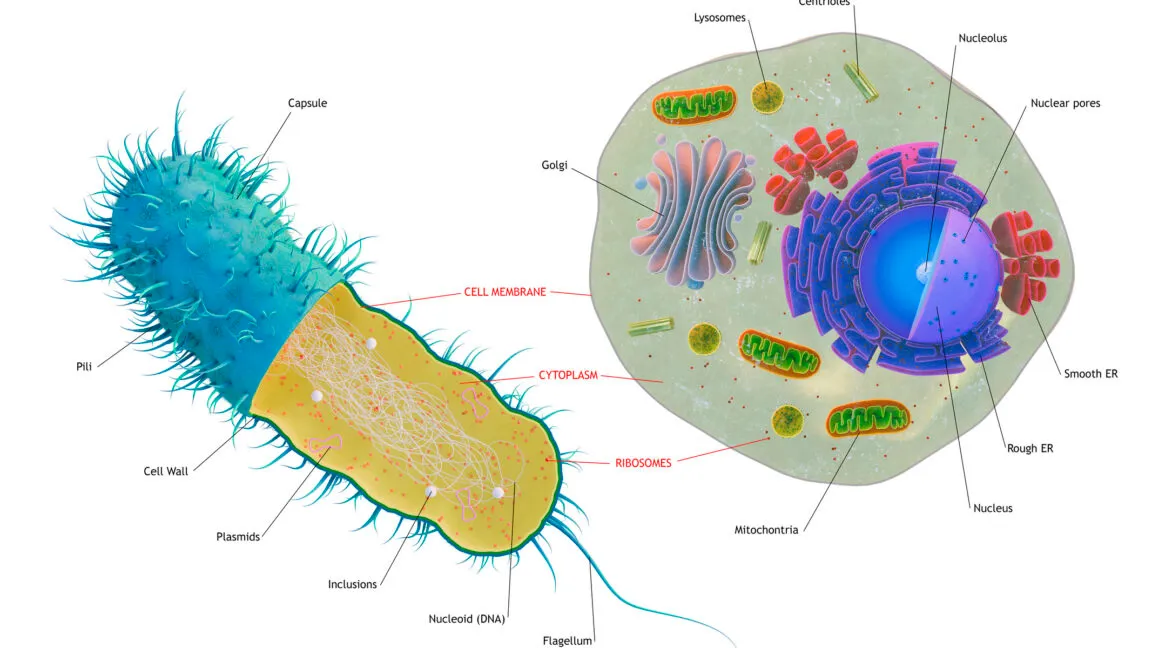
A new study reviewed genes shared by all eukaryotes and concluded their origins include multiple waves of gene transfers from bacteria, not just one. For decision-makers, the implication is a reminder that early systems are rarely clean, single-cause mergers, and that “hybrid” architectures can outperform oversimplified narratives.
We like origin stories with clean edges. It is why the classic explanation for eukaryotes is so sticky: a fusion between archaeal cells and bacteria, with bacteria eventually evolving into mitochondria, followed by a bunch of bacterial genes being moved into the nucleus of the emerging eukaryote. That picture made the evolution of complex life feel like one big merger event.
But the new twist is immediate and pretty consequential for how scientists describe the earliest complex cells: a careful look at genes shared by all eukaryotes points to several waves of gene transfers from bacteria. In other words, the “bacteria and archaea merged” story is still right in the big picture, but it was only part of the timeline, and it was not one tidy handoff.
To understand why this matters beyond the academic excitement, you have to picture what scientists are actually doing. Eukaryotes are the branch of life that includes the cells that make you and everything you can see, contrasted with bacteria and archaea, which are more compact, seemingly featureless cells. For a long time, the simplest narrative fit what researchers could explain: the early eukaryote looked like a hybrid because genomes were built through successive waves of gene transfers. Over time, as the merger progressed, many bacterial genes moved to the nucleus of what was becoming a eukaryote, intermingling with archaeal genes already there.
The mitochondria detail is the anchor for the popular version. Mitochondria are chemical-power-generating structures, and they still retain a bit of their own genome. That is the “smoking gun” for the idea that, at some point, bacterial ancestry became embedded inside the host cell. If that sounds like a corporate acquisition, it is because it is structurally similar: one entity absorbs another, and the absorbed part keeps a residue of identity.
Now the new study is essentially stress-testing that merger storyline by focusing on genes shared across all eukaryotes. These shared genes act like a common baseline, the kind of genomic “paperwork” you would expect if there was one dominant transfer event. Instead, the study concludes the reality is more complicated, and that there were several waves of gene transfers from bacteria. That does not erase the core merger concept. It adds timing complexity.
Why would timing complexity matter? Because it changes how you model system formation. If you assume one big transfer wave, you tend to treat evolution like a sequence of steps with a single main storyline. Several waves imply repeated opportunities for incoming genetic material to integrate, compete, and reorganize. The hybrid genome was not just the outcome of a merger. It was also a history of multiple bacterial contributions at different stages.
There is also a modern parallel in how boards and leaders evaluate acquisition and integration. The original “fusion” model is like saying a deal happened once and then the combined company ran as a coherent unit. The updated “multiple waves” view resembles something closer to a prolonged integration period, where different assets and capabilities are integrated at different times. In the corporate world, that distinction affects everything from governance to long-term product strategy. In biology, the translation is conceptual, but the core lesson is similar: complex systems often assemble through repeated inflows, not a single transaction.
For executives watching tech, biotech, or platform ecosystems, the second-order implication is that “hybrid” systems are not inherently messy or less robust. Hybrid architectures can be the mechanism by which complexity emerges. The source frames the eukaryote genome as a mish-mash of genes from bacteria and archaea, plus genes evolved in the eukaryotic lineage itself. Add multiple bacterial transfer waves, and you get a picture where adaptation is distributed over time, not centralized into one moment.
So the real stake here is epistemic: when you describe how something complex started, you need to match your model to the evidence. This study does not deny the broad merger between bacteria and archaea. It just refuses to let the story stay too tidy. If the first complex cells were formed by a merger that also involved gene transfers happening in several waves, then the origin of eukaryotic life is not a single event. It is a layered process where bacterial genes kept arriving, reshaping the hybrid genome along the way.
This story's Key Insights and Take-aways are locked.
Create a free account to unlock Executive Actions for one credit.
Register to UnlockAlways free for Executives Club members. Join the Club
More in Technology

OpenAI says 10,000 agents cracked a 90-year math problem in 88 hours
The company's claim is audacious, but one mathematician is pushing back. Here's what it means for AI-driven discovery.

Meta still serves child sexual abuse ads on Instagram in India - BBC report
A new report following the BBC Eye investigation says the ads are still there - what it signals for every platform with a self-serve ad engine.

White House yanks 'Build the Wall' game after Tetris Company copyright warning
The administration's arcade game vanished in hours - and the takedown playbook every brand can learn from.