

F1's Unanimous Deal Puts V8 Engines Back on the Grid by 2030
A rare unanimous agreement among teams, manufacturers and regulators sets Formula 1 on a path back to V8 power by 2030, forcing every engine program already committed to the 2026 hybrid rules to re-plan against a new deadline.
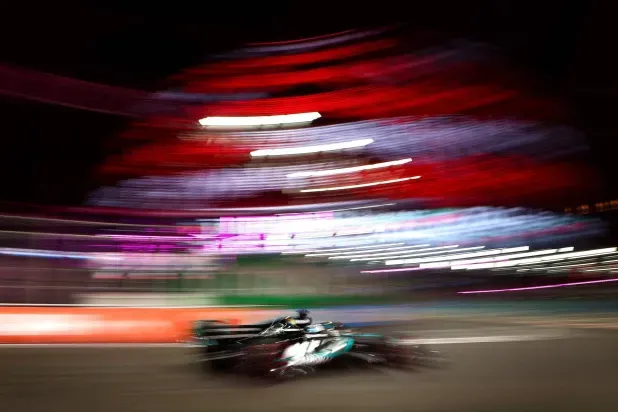
Formula 1's stakeholders have unanimously agreed to a deal that sets the series on a path back to V8 power by 2030, according to Asharq Al-Awsat. For the manufacturers, teams and sponsors already funding the 2026 hybrid power units, that unanimity converts a settled technology roadmap into a four-year capital allocation problem.
Formula 1 is heading back toward V8 power. According to a report from Asharq Al-Awsat, a unanimous deal has set the series on a path to return to V8 engines by 2030, a move that would end the turbo-hybrid era that has defined the sport since 2014 and reverse more than a decade of direction. The word that matters most in that headline is "unanimous." Engine rules are typically the hardest thing in F1 to change, because they touch every team's balance sheet, every manufacturer's boardroom and every fan's ears at the same time. Getting every stakeholder onto the same page is not a formality. It is the story.
The 2030 target matters because of what sits between now and then. F1 has already locked in a new power unit formula for 2026, one that keeps the 1.6-litre V6 turbo hybrid architecture while shifting the energy balance heavily toward the electrical side and running on fully sustainable fuel. That formula is not theoretical. For context, it is the premise on which Audi is entering as a works team, Ford is partnering with Red Bull Powertrains, Honda is returning with Aston Martin, and General Motors is building toward its own engine supply. A unanimous agreement pointing to V8s in 2030 means every one of those programs is now working against a clock that was not visible when the money was committed.
Unanimity in F1 is rare for a reason. Engine regulations have historically been the trigger for the sport's biggest fights: threats of breakaway series, vetoes, exit warnings and multi-hundred-million-dollar development races that only the richest manufacturers could survive. When every stakeholder agrees, it usually means the deal hands each of them something. For teams, that is typically cost certainty and a simpler, cheaper unit to buy. For manufacturers, it is usually a marketing story they can sell to a board. For the commercial rights holder, it is spectacle: noise, speed and a product that looks and sounds unmistakably different from an electric series. The V8 is the loudest available version of that trade.
The tension is obvious. The global car industry is pouring capital into electrification, and F1 has spent a decade positioning itself as a laboratory for hybrid technology that transfers to road cars. A pure V8 would cut against that pitch. That is why any credible return to eight cylinders almost certainly arrives with a caveat: sustainable fuels, and very likely some form of electrical assistance, so the series can still argue it is relevant to the powertrains of the 2030s. The engineering question is not whether a V8 can be built. It is whether a V8 can be built that satisfies regulators, sponsors and manufacturers who have already bet their F1 budgets on a hybrid narrative.
For the teams and manufacturers already committed, the 2030 date is a capital allocation problem with a four-year fuse. Engine programs are typically planned on five-to-ten-year horizons, because tooling, dyno time and specialist personnel cannot be switched on and off like a light. A unanimous agreement now gives those programs a defined end point, which is better than uncertainty but still expensive: engineers who spent years optimizing hybrid energy recovery may find that work obsolete before it peaks. The organizations that manage this best will treat the 2030 rule as a portfolio decision rather than a purely engineering one, weighing which capabilities to keep funding, which to wind down, and which to sell as transferable expertise.
Watch three things from here. First, the details: a path back to V8 power is not the same as a signed technical regulation, and the gap between an agreement in principle and a published rulebook is where many F1 plans quietly die. Second, the manufacturers' response: any entrant that joined on a hybrid premise will want clarity on what happens to its intellectual property, its headcount and its marketing story. Third, the fans. F1's audience has grown sharply during the hybrid era, particularly in the United States, and the sport is betting that a louder engine deepens that relationship rather than fracturing it.
The broader lesson travels well beyond motorsport. F1 is one of the few global properties where technology strategy, regulatory strategy and entertainment strategy are effectively the same decision, made by the same people, on the same timetable. A unanimous vote to move back toward V8s by 2030 says the sport has decided that complexity carries a cost, and that the product on the track matters more than the engineering under the hood. For executives in any capital-intensive industry, that is the interesting part. Sometimes the winning move is not the most advanced one. It is the one your customers can actually feel.
This story's Key Insights and Take-aways are locked.
Create a free account to unlock Executive Actions for one credit.
Register to UnlockAlways free for Executives Club members. Join the Club
More in Business

GTA VI hauls $3.79bn in one day, out-earning every film ever made
Rockstar's own estimate covers a single Thursday plus a record 32.5m prerelease units, and it lands on every board weighing IP concentration, pricing power and launch risk.

FBI's crime database breached again, the second hack in months
CNN reports hackers hit the National Crime Information Center, the shared backbone of US policing, and the repeat timing is the part every security team should study.

S&P 500 Enters Correction, Down 10% From Its High on AI Worries
The index's slide past the 10 percent line is a symbolic verdict on investor mood, and the AI trade that powered the rally is now the thing testing it.