

FAA ground stop halted 9,500 flights. Airlines owe you almost nothing.
A nationwide air traffic control outage froze US departures for nearly five hours, and because regulators label it 'uncontrollable,' carriers are not required to hand you a hotel room or a meal voucher.
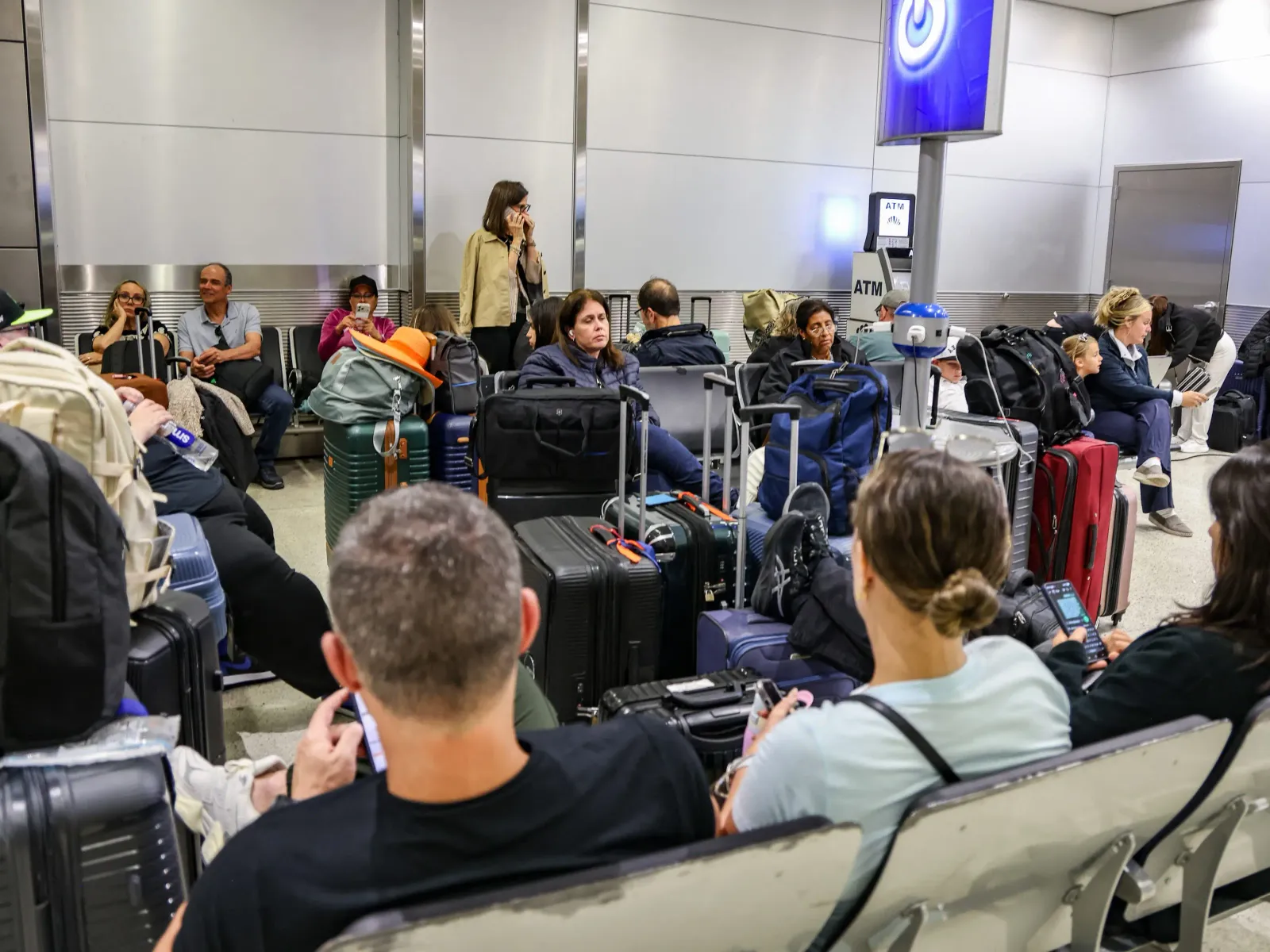
The Federal Aviation Administration issued a nationwide ground stop at roughly 3:45 p.m. Friday and lifted it around 8:30 p.m., leaving nearly 9,500 US flights canceled or never departed across Friday and Saturday, per Cirium. Because the Department of Transportation classifies an air traffic control outage as an uncontrollable disruption, airlines owe passengers a refund on cancellations but no hotel, meal, or rebooking guarantees, pushing recovery costs onto travelers and their credit cards.
Nearly 9,500 flights scheduled to leave the United States on Friday and Saturday were canceled or never took off, according to Cirium, the aviation analytics firm. More than 8,200 of those were Friday departures; another 1,200 were set for Saturday. Together, roughly 20% of all scheduled flights out of the US across those two days were wiped out. The trigger: the Federal Aviation Administration issued a nationwide ground stop at about 3:45 p.m. Friday. It was lifted around 8:30 p.m., but by then the damage was done, and the source material is blunt about what follows: flight chaos is nearly guaranteed to stretch into the weekend.
Here is the part that stings. Under Department of Transportation rules, an air traffic control outage counts as an 'uncontrollable' disruption. That means airlines are not required to provide freebies such as hotel stays or food vouchers. The only hard obligation carriers must meet is a refund for a cancellation, and it has to go back to your original form of payment, not a travel credit or a voucher, and it must cover add-ons such as bags and seats. Do not confuse this with the DoT's customer service dashboard, which shows passenger compensation for disruptions airlines can control, such as maintenance or crew scheduling. Pilots or flight attendants timing out because of the outage would not fall under crew scheduling.
That dashboard, launched in 2022, remains the best map of what the 10 largest US airlines promise when a disruption is on them. For controllable delays that leave a passenger waiting at least three hours for a new flight, or that require an overnight stay, Alaska Airlines, Allegiant Air, American Airlines, Delta Air Lines, Hawaiian Airlines, JetBlue Airways, Southwest Airlines, and United Airlines all offer both meal and hotel vouchers, per the DoT. Frontier Airlines is the outlier: it does not offer accommodations in the event of an overnight delay or cancellation, though it will provide a meal voucher. Airlines may still hand out goodwill vouchers during an uncontrollable event, but do not bank on it. Ask anyway. It costs nothing.
The operational playbook matters more than the policy. When a delay or cancellation drops, expect people to flock to the nearest customer service line, and expect the phone lines to clog. Wait times can be painfully long, and the best alternatives go quickly. Most airlines let customers rebook on their website or mobile app and waive any fees, which is often easier than making changes in person. If the available options are exhausted, run a parallel plan: wait to speak with a live agent, contact the airline through social media, or book a hotel for the night. A direct message on Facebook or Twitter can serve as a virtual placeholder, and you may hear back via chat before speaking to a live agent. The source lists carrier contacts: Alaska at 1-800-252-7522 or text 82008; Allegiant at 1-702-505-8888; American at 1-800-433-7300; Avelo at 1-346-616-9500; Breeze by text at 501-273-3931, with no phone number to call; Delta at 1-800-221-1212; Frontier by online chat or email, with no phone number; JetBlue at 1-800-538-2583; Southwest at 1-800-435-9792; and United at 1-800-864-8331.
Then check your wallet. Several major banks offer credit cards with travel insurance, including Chase's Sapphire Reserve and American Express' Platinum Card. Both offer trip protection, meaning customers who purchased their flights with those cards can benefit. During a mass stranding, that coverage can reimburse cardholders for unexpected hotel, meal, and transportation costs tied to events outside their control. Travel insurance does not apply in all circumstances, short delays among them, so check your policy before making a claim. Making the claim anyway does not hurt, even if the answer is no.
Finally, know when to walk away. Delays and cancellations are inevitable, so set a cutoff time and stop spending the day sitting around a terminal. Once that moment passes, consider alternative ways to reach your destination, such as driving or taking a bus or train, which travel insurance may also cover. If you are stuck in another city with no other option but to stay in a hotel or wait at the airport, decide how you want to spend your time and make a plan rather than improvising at 2 a.m.
The bigger read for anyone running a business that depends on movement, whether that is logistics, field service, events, or a distributed team, is how fast a single infrastructure failure becomes a thousand local crises. One ground stop, roughly five hours long, erased about a fifth of two days of US departures and pushed the cost of recovery onto passengers, who have no legal lever to pull beyond a refund. The guidance in this story was originally published in 2023 and most recently updated in November 2026, which tells you something on its own: the playbook for a stranded traveler has not changed, because the rules have not. Until they do, the refund is the right, the voucher is a favor, and the airline app is your fastest exit.
This story's Key Insights and Take-aways are locked.
Create a free account to unlock Executive Actions for one credit.
Register to UnlockAlways free for Executives Club members. Join the Club
More in Business

GTA VI hauls $3.79bn in one day, out-earning every film ever made
Rockstar's own estimate covers a single Thursday plus a record 32.5m prerelease units, and it lands on every board weighing IP concentration, pricing power and launch risk.
FBI's crime database breached again, the second hack in months
CNN reports hackers hit the National Crime Information Center, the shared backbone of US policing, and the repeat timing is the part every security team should study.

S&P 500 Enters Correction, Down 10% From Its High on AI Worries
The index's slide past the 10 percent line is a symbolic verdict on investor mood, and the AI trade that powered the rally is now the thing testing it.