
FAA lifts third-ever ground stop; Duffy warns 'more of these' are coming
More than a million travelers were stranded and Air Canada halted all US flights, and the Transportation Secretary says the aging analog air traffic system guarantees a repeat.
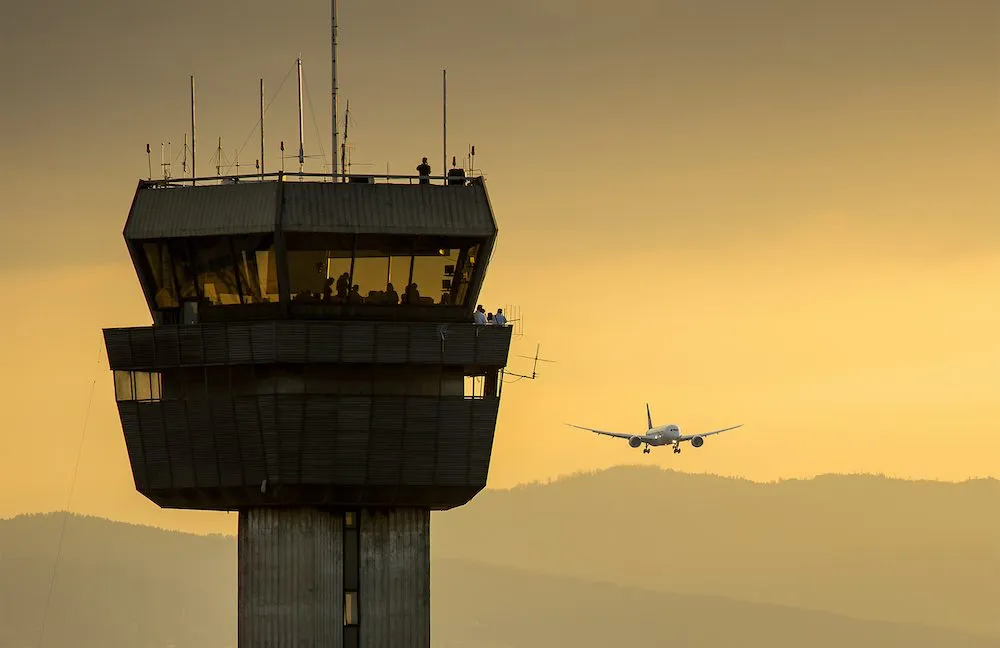
Transportation Secretary Sean Duffy blamed decades-old analog equipment after the FAA lifted its third-ever nationwide ground stop, clearing domestic departures at 8:35 pm EST Friday. For operators and boards, the episode reframes aging infrastructure as a live operational risk, not a budget line item, and signals that aviation disruption is now a recurring planning assumption.
The Federal Aviation Administration lifted its third-ever nationwide ground stop Friday evening, clearing domestic flights to begin taking off at 8:35 pm EST after several hours of paralysis. The number that matters: more than a million travelers were caught in the delays, and some airlines cancelled flights for the remainder of Friday rather than try to dig out. Air Canada went further than most, grounding every flight to and from the United States for the rest of the evening. "Due to the ongoing ground stop, Air Canada has cancelled all flights to and from the United States for the remainder of the evening," the carrier said.
Transportation Secretary Sean Duffy did not soften the diagnosis. "Today's nationwide ground stop happened because our air traffic control system is operating on DECADES-OLD analog equipment that simply cannot compete with the demands of the 21st century," he posted on X. Then came the line that should worry anyone who books a seat: barring massive system updates, Duffy cautioned there will be "more of these" ahead. That is a cabinet secretary telling the traveling public, in plain language, that the machinery keeping aircraft separated in the sky is not fit for the traffic it now carries.
It is worth being precise about what just happened, because a nationwide ground stop is the nuclear option in commercial aviation. It is not a delay at one hub or a weather reroute. It halts departures across the system at once, which is why the FAA reaches for it only when controllers cannot safely manage the volume of traffic in front of them. That this is only the third such order in the agency's history tells you how rare the tool is, and how seriously the decision to pull it was taken. The most recent comparable nationwide halt, in January 2023, was widely reported to have traced back to a corrupted notice-to-airmen system, and it took hours to restore normal operations. The pattern is consistent: the failure is not in the sky, it is in the software and hardware on the ground.
Duffy's "analog" framing is the part worth sitting with. Air traffic control modernization has been a stated priority across multiple administrations, typically funded in fits and starts and frequently squeezed when budget deadlines force short-term extensions rather than multi-year commitments. The result, historically, is a system that runs a mix of legacy hardware and newer digital layers, patched together because replacing it wholesale is expensive, slow, and politically thankless. Duffy's warning implies the patchwork has a ceiling, and the ceiling is now visible to a million passengers at a time. For anyone who has watched infrastructure debates get deferred year after year, this is what the deferral looks like when it finally comes due.
The airline economics compound fast. When departures stop, aircraft and crews end up in the wrong cities, and that misalignment does not reset when the ground stop lifts. Cancellations bleed into the following morning, crews can time out against duty limits, and carriers face refund and rebooking obligations under passenger protection rules. Air Canada's decision to scrub all US-bound and US-origin flying for the evening is the clearest illustration: once the schedule breaks, the cheapest move is often to stop selling the day and reset. That logic is rational for the airline and brutal for the traveler, which is exactly why the reputational cost lands on the carrier even when the root cause sits with a government system.
The second-order effects reach well past passenger terminals. A meaningful share of air cargo typically moves in the bellies of passenger aircraft, so a nationwide departure halt quietly freezes freight capacity alongside seats. Time-sensitive shipments, from pharmaceuticals to components feeding just-in-time manufacturing, do not wait politely for the next available slot. Add the business travel that simply does not happen, the meetings that move to video, and the hotel and ground transport revenue that evaporates with each cancelled leg, and the true bill for a few hours of grounded departures runs well beyond the airline income statements.
For executives and boards, the strategic read is threefold. First, treat air travel disruption as a recurring operational variable rather than a freak event, and build contingency into travel policy, client commitments, and time-critical logistics. Second, watch the modernization funding fight closely, because Duffy's public warning is the kind of statement that historically precedes a push for capital, and the companies positioned around air traffic control systems, sensors, and aviation software stand to benefit if that money actually moves. Third, note the political asymmetry: the FAA owns the root cause, but airlines absorb the customer anger, which means carriers have every incentive to lobby hard for upgrades they do not directly control. The next ground stop is not a question of if. Duffy has already told you it is coming.
This story's Key Insights and Take-aways are locked.
Create a free account to unlock Executive Actions for one credit.
Register to UnlockAlways free for Executives Club members. Join the Club
More in Technology

Anthropic mathematician claims Claude helped crack the Riemann hypothesis
If the proof holds, AI has toppled math's most famous open problem; if it does not, it is a case study in announcing breakthroughs before anyone verifies them.

AI's $4 Trillion Wipeout Erases Nasdaq's Gains for the Year
A brutal week took roughly $4 trillion off the AI sector and left the Nasdaq flat for the year, and the damage ran the full length of the supply chain.

Anthropic mathematician says AI proved the Riemann hypothesis. Verification will take time.
A single unverified claim from inside Anthropic now sits against more than 160 years of open mathematics, and the gap between asserting a proof and surviving peer review is the entire story.