
Farage said he needed “a million a year” before a £5m gift: why the timing matters
A March 2024 earnings discussion inside Reform UK and an April £5m crypto-linked transfer raise fresh questions for UK politics.
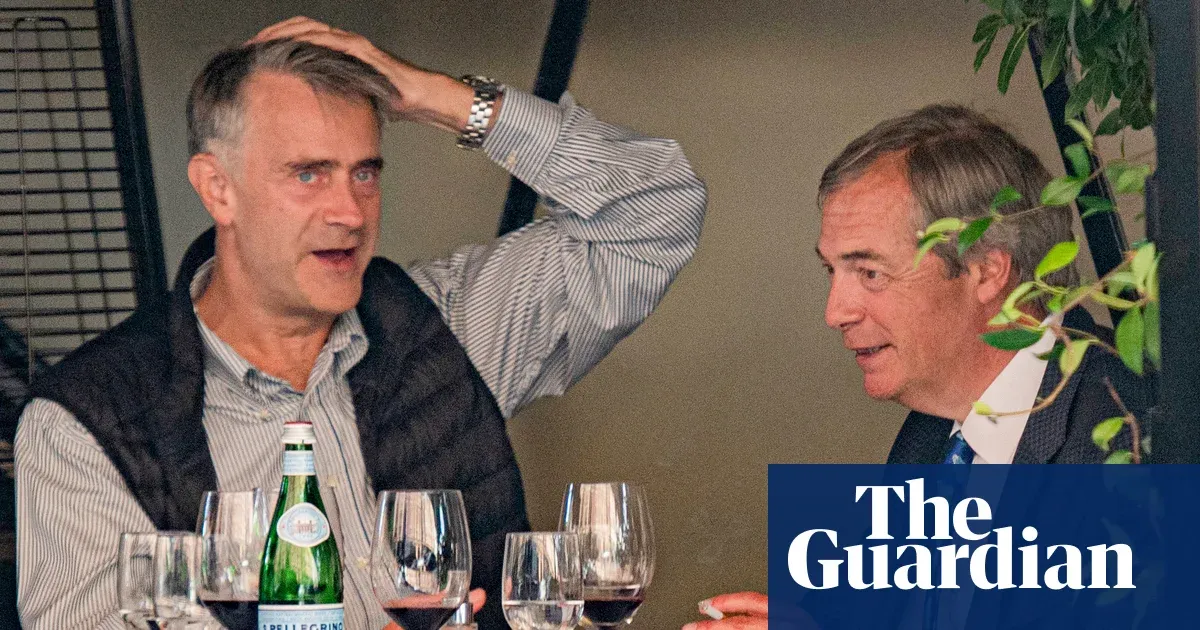
Nigel Farage, Reform UK’s leading figure, told senior figures in the party in March 2024 he would need “a million a year” to cover lost earnings if he stood as an MP in the 2024 general election, according to sources cited by The Guardian. That comes ahead of an undeclared £5m gift made by crypto billionaire Christopher Harborne on 5 April, which the lawyers for Harborne say was preceded by that discussion.
Nigel Farage told senior figures in Reform UK in March 2024 that he would need “a million a year” to cover lost earnings if he stood for parliament in the 2024 general election, sources told The Guardian. That disclosure lands just before an undeclared £5m gift was made by crypto billionaire Christopher Harborne on 5 April, according to Harborne’s Thailand-based lawyers.
In other words, the chronology matters. Farage’s reported remarks about compensation were discussed internally in March 2024, then a £5m payment appears shortly after, on 5 April. The Guardian reports that Harborne’s lawyers trace the sequence and tie the gift to the earlier conversation, but the timing also intensifies scrutiny around why the gift was structured the way it was and why it was undeclared. For anyone managing communications, governance, or compliance in politics, this is the kind of timeline that becomes its own headline machine.
To understand why this is a big deal beyond the gossip factor, zoom out to the incentive problem. In electoral politics, the personal economics of candidates are supposed to be transparent enough that the public can judge motivations and conflicts. When a figure signals a need to replace income and then receives a very large payment soon afterward, the question is not only “how much money changed hands,” but “what did the parties think they were agreeing to, and did they treat it as something that required disclosure?” Even when parties insist the payment is consistent with those needs, the optics can be corrosive, especially when the payment is reported as undeclared.
This is also where UK campaign finance and declaration norms start to feel less like paperwork and more like risk management. While the source does not lay out the full regulatory mechanics, it does highlight the core issue: an undeclared gift from Harborne, who the article describes as a crypto billionaire. When money in politics is tied to a sector that often faces rapid scrutiny, both regulators and the public tend to watch the compliance details even more closely. That means the “how” of a gift, not just the “how much,” can be decisive for credibility.
Another second-order complication is how internal conversations can become external evidence. The Guardian report says the March discussion took place “shortly before the undeclared gift was made.” For parties, that creates a governance problem with two layers. First, it raises questions about internal decision-making: who was involved, how the needs were framed, and what was understood about what would happen next. Second, it raises evidentiary risk: when discussions are remembered later, or when sources describe them to journalists, those conversations can be used to interpret the meaning of subsequent transfers.
For Harborne, the article says his lawyers are Thailand-based and that they provided context about the sequence. That is a familiar pattern in political finance disputes: legal teams try to anchor the narrative to intent and chronology. But even when lawyers can describe “what happened first,” compliance questions often remain about whether the treatment of the money matched the expected disclosure standards. In modern politics, a legal explanation can reduce one risk while creating another: the public and watchdog institutions may still focus on disclosure failures, administrative handling, or transparency gaps.
For Farage and Reform UK, the report intensifies a basic credibility test. Farage’s reported framing in March, “a million a year” to cover lost earnings, suggests an explicit cost-benefit logic for standing as an MP. If the subsequent £5m gift is connected to that logic, then the story becomes a financial justification tale. If it is not, or if the relationship is unclear, then it becomes a conflict-of-interest puzzle. Either way, the political cost is real, because such stories do not just impact one candidate. They can change how donors, regulators, and media treat every other large payment tied to party figures.
And for executives, founders, and investors who think they are watching politics from the sidelines, this is a governance reminder with a financial aftertaste. Where incentives are high, transparency is not optional. In the same way that boards worry about related-party transactions, political parties and campaign organizations face an analogous question: when money moves quickly, even a well-intentioned explanation may not be enough if the disclosure posture looks off. In the end, the strategic stake is that UK political credibility depends on trust that incentives are visible. A £5m undeclared transfer, reported alongside a “a million a year” internal earnings discussion, forces peers across the political spectrum to confront the same uncomfortable question: what would your timeline look like if it were audited in public?
This story's Key Insights and Take-aways are locked.
Create a free account to unlock Executive Actions for one credit.
Register to UnlockAlways free for Executives Club members. Join the Club
More in Politics

LA County: DOJ's 20,000 'noncitizen' voter list is 'unreliable,' includes U.S.-born
Preliminary review by Los Angeles County election officials finds errors in the federal list, raising the stakes for voter roll integrity ahead of November.

Trump's $1.5B Pentagon chip investment lands in North Carolina
A $1.5 billion defense infusion for North Carolina chipmaking signals a new era of Pentagon-backed reshoring - here's what it means for the industry.

Nigeria confirms first Ebola case in Abuja, a woman just off a Uganda flight
Health Minister Muhammad Ali Pate says the patient flew in from Uganda, putting Africa's latest outbreak on Nigeria's doorstep.