

Freedom 250 delays National Mall entry after extreme heat forecast hits 107
D.C. pushes back access to the July 4 fireworks as Freedom 250 organizers brace for 107-degree conditions.
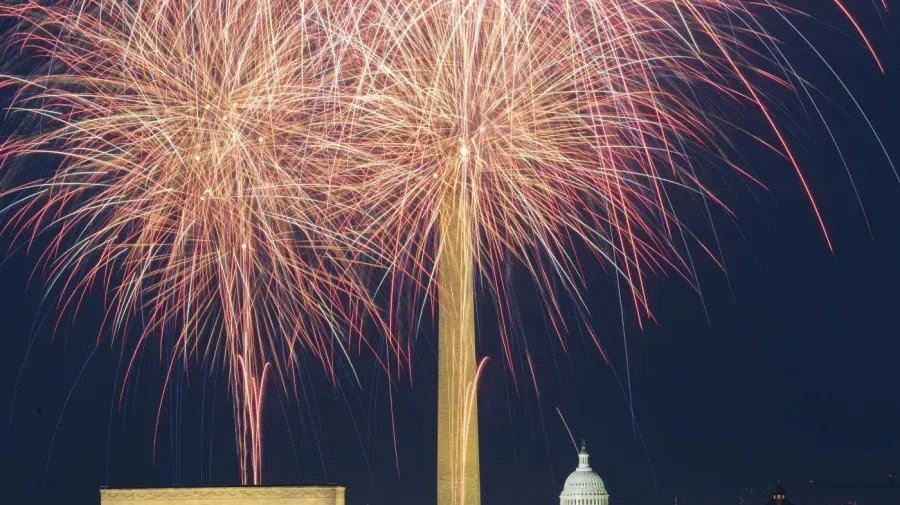
Freedom 250 organizers said entry to the National Mall for Saturday's “Salute to America 250 Celebration & Fireworks” was delayed due to extreme heat. President Trump also insisted he would still deliver a lengthy speech despite forecasts that temperatures will climb to 107 degrees.
Washington, D.C. is already in a different kind of countdown. Freedom 250 organizers said Thursday that entry to the National Mall for Saturday’s “Salute to America 250 Celebration & Fireworks” has been delayed, as the city braces for extreme heat, with temperatures forecast to climb to 107 degrees.
The stakes are immediate and operational, not abstract. A delayed entry schedule means people and logistics have to be rebalanced fast, and organizers are dealing with a weather-driven constraint that can cascade into everything from crowd movement to staffing plans. In parallel, President Trump insisted he would still deliver a lengthy speech at the event on Saturday, even with the 107-degree forecast hanging over the program.
For decision-makers watching from the sidelines, this is a useful stress test of how large, high-visibility events behave when a single variable changes. Heat is not like a rain forecast where you can usually swap gear and keep the same flow. Extreme temperatures force real-time safety calculations and can disrupt the entire timing of arrival, security screening, and where people can be stationed while waiting. Even without the details of the exact delay length, the core fact from Freedom 250 is clear: organizers made the call to delay entry to manage the extreme-heat risk.
Now layer in the political and symbolic incentives. This is a July 4 celebration framed as a record-breaking fireworks show and branded “Salute to America 250 Celebration & Fireworks.” Events like this are designed to deliver spectacle on schedule. That means there are pressures to keep the program moving as planned, or at least to project continuity. Trump’s insistence that he would still deliver a lengthy speech signals a desire to maintain the event's intended cadence despite the forecast. Whether the speech is later shortened or still runs as long is not stated in the source, but the insistence is itself a decision point for organizers: can you hold the optics while also respecting the constraints that extreme heat imposes?
There is also a governance and compliance angle that tends to get missed in real time. In many large public events, there is a “safety first” posture that is operationally supported by public agencies and internal event safety teams. When the weather becomes extreme, schedule adjustments are often the blunt tool organizations reach for because the risk does not scale down politely. Delay entry, adjust staging, and change how crowds are dispersed are common levers. The source attributes the delay to extreme heat and quotes the organizers. That implies the event leadership treated heat as a driver strong enough to move logistics, even while the political element pushed for continued delivery of a lengthy speech.
For executives thinking about second-order effects, the heat advisory wrinkle is a reminder that schedule risk is business risk. High-profile events function like live brand campaigns with physical constraints. If attendance patterns shift because of delayed entry, that can affect downstream operations: vendor staffing, transportation loads, and the timing of security and emergency response. Even if the core event still happens, a delayed entry flow can create a new set of peaks, not eliminate them. That matters for anyone managing complex operations where the “moment of truth” is time-based.
There is another subtle implication here: the calendar stakes are unusually tight. July 4 events are not flexible in the way regular conferences are. You cannot simply move the celebration to another day without undermining the entire meaning of the date. So when extreme heat hits, the organization’s options shrink. That makes the decision to delay entry more consequential. It also sets a tone for how leadership will handle deviations elsewhere, because once you establish that weather is strong enough to change access timing, everyone else on the team has to operate under that reality.
For peers in comparable roles, the lesson is not just “heat is dangerous.” It is how fast leadership has to coordinate conflicting pressures: safety-driven operational changes on one side, and high-stakes program commitments on the other. Freedom 250 organizers publicly flagged the delayed entry due to extreme heat and flagged the forecast reaching 107 degrees. Trump publicly insisted he would still deliver a lengthy speech at the event on Saturday. When those two forces exist at the same time, the operational question becomes: how do you preserve the event’s core promise without turning the safety plan into collateral damage?
The answer will reveal itself on Saturday, but the decision makers already made one clear move: entry delay. In a world where every headline is earned in real time, that choice is the kind of early signal that defines whether an organization manages risk or just absorbs it.
This story's Key Insights and Take-aways are locked.
Create a free account to unlock Executive Actions for one credit.
Register to UnlockAlways free for Executives Club members. Join the Club
More in Politics

Glacial collapse, not rain, killed 180 in Nepal's Himalayan flood
The Himalaya's extreme geography hid the true cause of Nepal's catastrophic flood, a glacial collapse that turned a geological battleground into a mass-casualty zone.

Iran’s Esmail Baghaei says Oman talks start shipping via Hormuz, not US talks yet
Temporary route plans with Oman aim to restart commerce while Tehran says Washington dialogue is not on the table.

Standards watchdog opens probe into Reform UK deputy leader Richard Tice over interests
The parliamentary standards commissioner says it began an investigation on 28 July into a possible undeclared interest.