
South Korea president orders probe after World Cup exit, targets KFA reform
Lee Jae Myung demands Ministry action over a hiring controversy that fans blame for the failure.
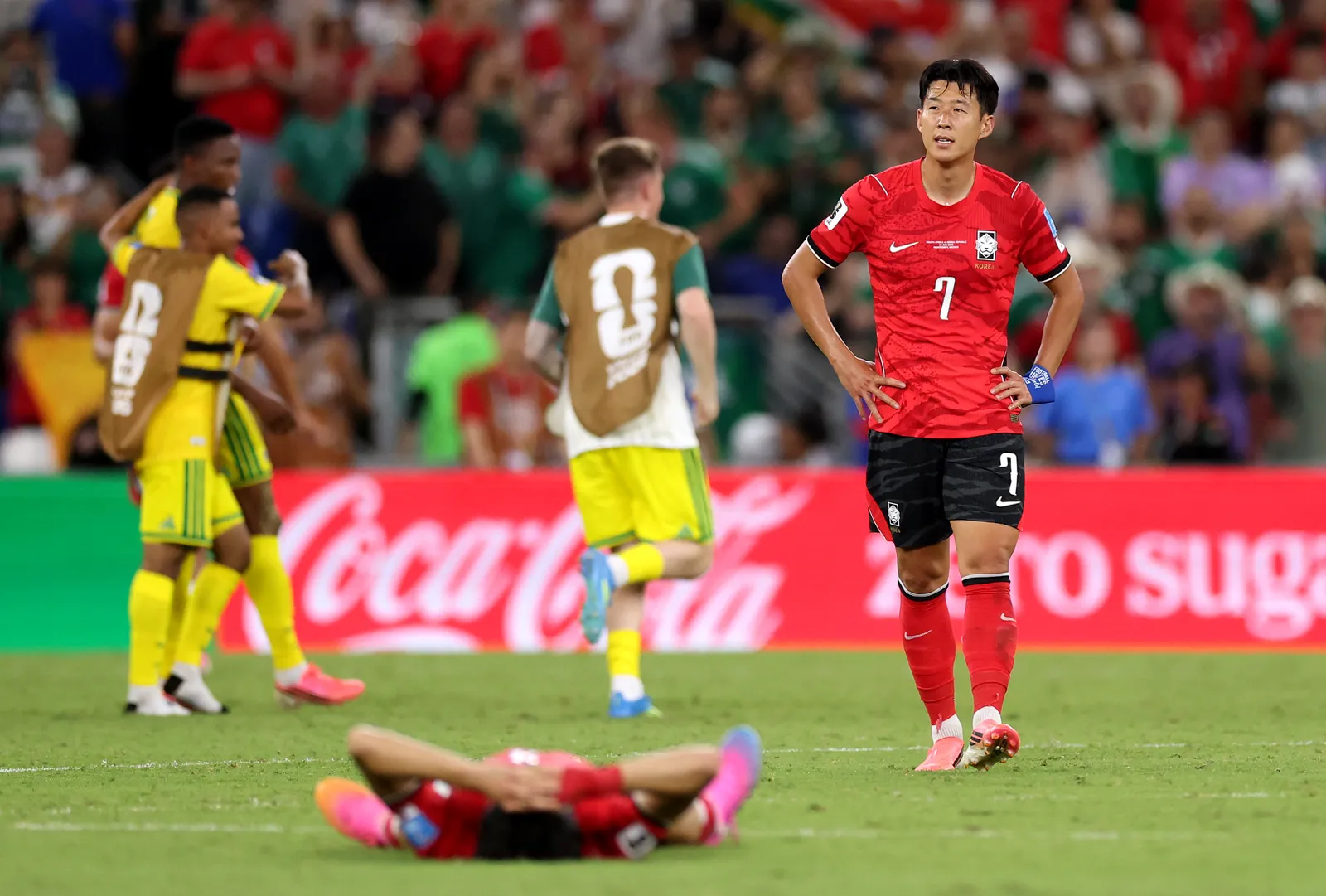
South Korea's President Lee Jae Myung urged the Ministry of Culture, Sports and Tourism to investigate the national team’s failure to advance to the round of 32 after a disappointing World Cup. The fallout spreads beyond football, spotlighting how public funding and opaque hiring can turn sports results into governance pressure.
A World Cup exit is usually the end of an emotional weekend. In South Korea, it turned into a governance reckoning within days, after President Lee Jae Myung publicly demanded an official investigation into why the team failed to reach the round of 32.
On X on Sunday, Lee wrote, “I feel not just confusion but utter bewilderment at this unexpected outcome,” and said he was “deeply sorry for causing such profound disappointment to the public over this absurd affair.” He also promised reform to sports administration “to ensure such a thing never happens again.” The target is not just the on-field performance. The president linked the outcome to what he called a broken leadership selection process, writing, “When favoritism and cronyism take precedence over competence in selecting a commander, the result is as predictable as fire burning paper.” He pointed back to head coach Hong Myung-bo’s controversial appointment in July 2024.
Here is what the source reports about how Hong got the job, and why that became politically combustible. The selection sparked speculation about favoritism because the Korea Football Association abruptly selected him after months of pursuing foreign candidates. Critics questioned the transparency of the hiring process. Later, a government audit found the KFA violated several of its own hiring procedures, which fueled allegations of preferential treatment.
But the audit did not go as far as the public anger. It did not conclude that Hong himself had acted improperly, and Hong denied receiving special treatment. Even so, Hong remained head coach, because authorities concluded that while the appointment process was procedurally flawed, there was no legal basis to cancel his contract. That distinction matters, because it helps explain the mismatch between formal conclusions and public sentiment. Hong could be “legally safe” and still be viewed as an illegitimate appointment in the court of public opinion. Hong has already announced his resignation, but the source notes that it has not calmed Korean fans, many of whom believe results would have been different if the coach had been selected through a proper hiring process.
Why would a sports failure draw a presidential spotlight? In the Politico account, the answer is incentives and money. Public funds account for about 30 percent of the KFA’s budget, which means the organization is not insulated from political oversight the way a fully private entity might be. The post also ties the president’s attention to a defining goal of Lee’s presidency: strengthening transparency and accountability in both private and public sectors. In that framework, an opaque hiring process at an institution with public financing becomes a governance issue, not just a football staffing story.
And this is where South Korea’s story stops being “just sports” and starts looking like a case study on institutional risk. The source says lawmakers from across the political spectrum have voiced a common desire to reform the KFA, suggesting the episode is now a bipartisan reform agenda item. That matters for decision-makers because once a national reputation story becomes a public accountability story, boards, regulators, and ministries tend to respond with urgency, even when the underlying evidence is narrower than the headlines. The audit finding did not prove wrongdoing by Hong, but it did identify process violations. Process violations are easier to regulate, easier to politicize, and easier to weaponize in public debates about competence, legitimacy, and fairness.
South Korea is portrayed as the most far-reaching example of political fallout, but it is not the only country where politicians have moved into football’s aftermath. In Turkey, after a stunning crash-out that triggered rage from many fans, the football federation president İbrahim Hacıosmanoğlu reportedly asked the justice minister Yılmaz Tunç to prosecute fans who insulted the national team after elimination. The incident was also complicated by politics: the team’s official account shared a promotional video from President Recep Tayyip Erdoğan’s ruling Justice and Development Party, which fueled accusations that the federation blurred the line between sport and politics. The elimination “only deepened that political entanglement,” according to the source.
Taken together, these cases reflect different definitions of accountability, but one common denominator: the belief that the World Cup is more than a run-of-the-mill sporting event. When public funding, government audits, and national leaders all converge, a coaching decision can morph into a test of governance credibility. For executives, sports administrators, and policymakers watching from the sidelines, the second-order lesson is straightforward: the operational outcome might be a match result, but the governance outcome can be a reform mandate, investigations, and new oversight expectations, even when legal conclusions about individual misconduct are limited.
The strategic stakes for leaders in similar roles are not subtle. If transparency and hiring procedures are questioned, the organization can face political pressure that outlasts the tournament clock. And once reputational fire spreads, it is hard to put out with resignations alone, because the public debate is no longer only about who coached the team. It is about who selected leadership, whether procedures were followed, and whether public institutions that rely on taxpayers are accountable when emotions spike and scrutiny expands.
This story's Key Insights and Take-aways are locked.
Create a free account to unlock Executive Actions for one credit.
Register to UnlockAlways free for Executives Club members. Join the Club
More in Politics

Glacial collapse, not rain, killed 180 in Nepal's Himalayan flood
The Himalaya's extreme geography hid the true cause of Nepal's catastrophic flood, a glacial collapse that turned a geological battleground into a mass-casualty zone.

Iran’s Esmail Baghaei says Oman talks start shipping via Hormuz, not US talks yet
Temporary route plans with Oman aim to restart commerce while Tehran says Washington dialogue is not on the table.

Standards watchdog opens probe into Reform UK deputy leader Richard Tice over interests
The parliamentary standards commissioner says it began an investigation on 28 July into a possible undeclared interest.