

Switzerland approves $247 million for 2038 Winter Olympics bid push
Exclusive IOC bid talks, a growing sports-government bankroll, and what it signals for other host candidates.
Switzerland’s government backed plans for international sports competitions from 2027 to 2029 in June and approved $247 million funding for the 2038 Winter Olympics. The move tightens Switzerland’s position in its ongoing “privileged dialogue” with the IOC and raises the competitive bar for other venues.
Switzerland just approved $247 million to fund its 2038 Winter Olympics bid. And in Olympic host-hunting terms, that is not “nice to have” money. It is the kind of allocation that signals seriousness, moves internal stakeholders from interest to execution, and keeps the country’s momentum in a process where timing and credibility matter.
The bid is not starting from scratch either. Switzerland’s Olympic committee president, Ruth Metzler-Arnold, framed the effort as a long-term push to bolster Swiss sport, while Switzerland simultaneously holds a key procedural advantage with the International Olympic Committee. The source notes that Switzerland is in a “privileged dialogue” with the IOC over its 2038 Winter Games bid, meaning it holds exclusive rights to organize a bid until the end of next year. In other words, Switzerland is being allowed to run the lane for now, and the money is meant to keep it ahead of the pack when that lane eventually opens up.
This is happening against a broader government strategy: Bern is throwing its weight behind Switzerland’s sports hosting pitch. In June, Switzerland backed plans to fund international sports competitions from 2027 to 2029. Alongside the $247 million Olympics funding, the country also moved money toward specific events: it approved more than $1 million each to support the 2027 World Rowing Championships in Lucerne and the 2028 European men’s Handball Championships in Zurich. The pattern matters. Rather than treating the Olympics as a standalone bet, Switzerland is building an extended runway of “relevant experience” that can translate into operational confidence, sponsor appeal, and political legitimacy.
For boards and public-private partners, this kind of funding mix is a useful signal about how host economics are being managed. Hosting international sport is not just about venues. It is about attracting international sports organizations and maintaining the credibility and infrastructure those organizations expect. The source points out that Switzerland already has a sizable sporting footprint. Major international sports bodies, including FIFA, the International Olympic Committee, the UEFA European football governing body, and the Union Cycliste Internationale, are headquartered in Switzerland. That means Switzerland is not only bidding on events. It is also living inside the governance network that decides which bids rise.
And the government appears to be reinforcing that network with broader commitments beyond a single mega-event. Government money will flow to swimming, figure skating, basketball, and bobsled championships. From a second-order perspective, that can reduce uncertainty for event organizers. More funding for a wider range of sports can strengthen year-round training and facility utilization, which is exactly what an IOC host evaluation tends to care about. Even if a bid review is about the Olympics specifically, the operational story surrounding how a country supports sport across disciplines can influence perceptions.
The IOC process itself is where the $247 million becomes even more strategic. The source says Switzerland is in a privileged dialogue with the IOC, holding exclusive rights to organize a bid until the end of next year. It also includes a timeline from Karl Stoss, the chair of the IOC’s Future Host Commission for the Olympic Winter Games, who said in February that a host election could happen as soon as April 2027. That date matters for governance and planning cycles. Public funding approvals, infrastructure timelines, and private partnership negotiations all have to align with election and delivery phases. Approving the funding now suggests Switzerland is trying to front-load capability before the field gets bigger.
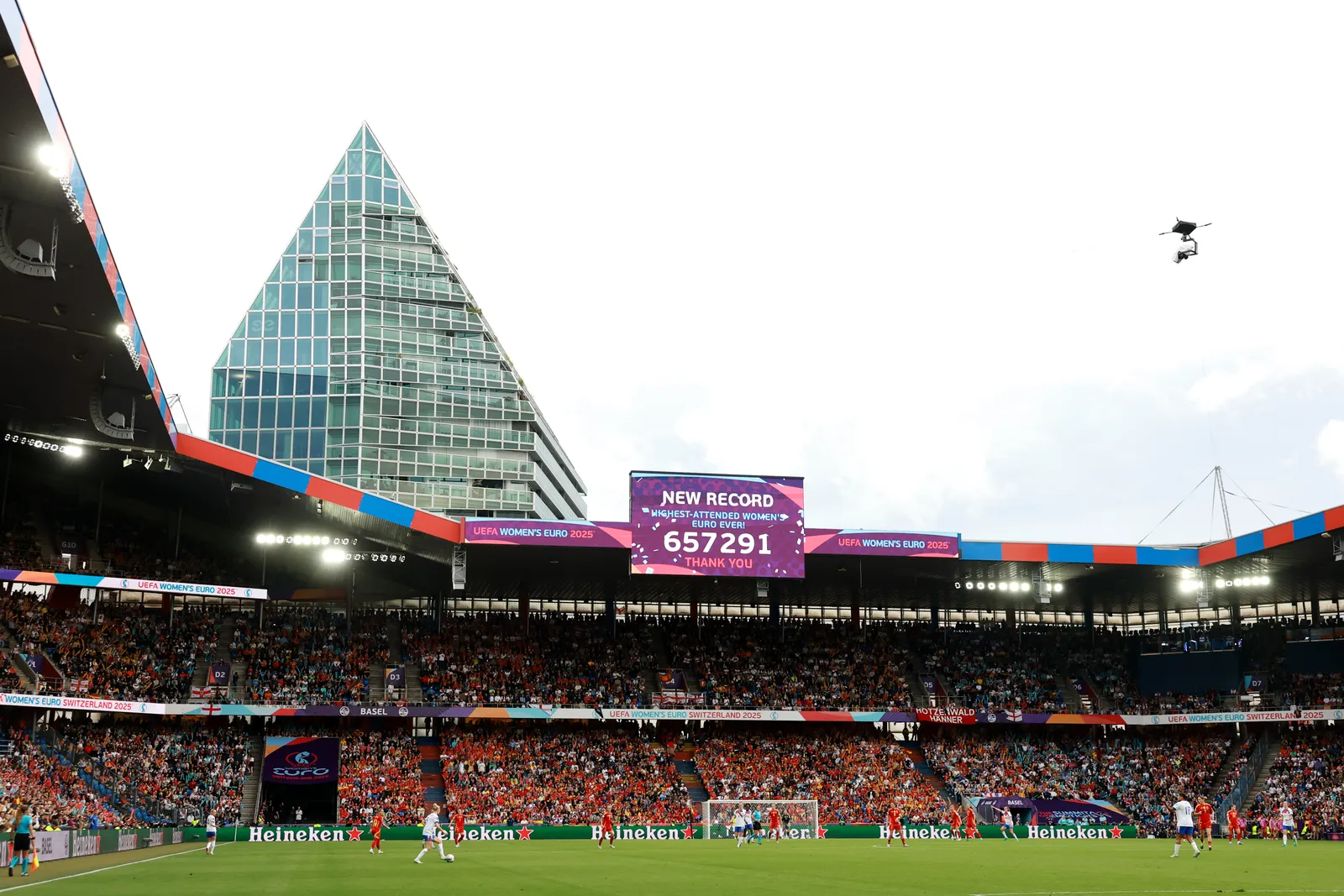
Switzerland is also showing recent and adjacent hosting proof points that support its credibility. The source notes that Switzerland hosted the 2025 Women’s European Championship and co-hosted the 2008 men’s European Championship. Those are not the Winter Olympics, but they demonstrate that Switzerland has executed large-scale sporting events on the European stage before. For executives in sponsorship, stadium and venue operations, or national sports agencies, that kind of track record can be a bridge to commercial deals, because sponsors want both visibility and operational reliability.
Finally, the source brings in momentum from the soccer field, reminding readers that sports credibility is not only built by governments and bids. Switzerland’s progress in its long-shot 2026 World Cup campaign continues tonight in Vancouver against Algeria. While that detail is more “sports narrative” than bid mechanics, it still matters in the ecosystem. Public enthusiasm and performance at major tournaments can make domestic stakeholders more willing to support investment and can improve the overall brand story when the Olympics bid is being sold internally and externally.
For decision-makers at other host candidates, Switzerland’s playbook is hard to ignore. The combination of government funding, existing headquarters in the sports governance ecosystem, and an IOC process advantage creates a multi-layered advantage. Switzerland is effectively using capital allocation to keep the bid machine running while it has exclusive access to the process. When the host election window opens as early as April 2027, the winners will likely be the countries that can turn privileged procedural access into concrete readiness.
This story's Key Insights and Take-aways are locked.
Create a free account to unlock Executive Actions for one credit.
Register to UnlockAlways free for Executives Club members. Join the Club
More in Politics
Glacial collapse, not rain, killed 180 in Nepal's Himalayan flood
The Himalaya's extreme geography hid the true cause of Nepal's catastrophic flood, a glacial collapse that turned a geological battleground into a mass-casualty zone.
Iran’s Esmail Baghaei says Oman talks start shipping via Hormuz, not US talks yet
Temporary route plans with Oman aim to restart commerce while Tehran says Washington dialogue is not on the table.
Standards watchdog opens probe into Reform UK deputy leader Richard Tice over interests
The parliamentary standards commissioner says it began an investigation on 28 July into a possible undeclared interest.