

French firefighters let almost 200,000 evacuees go home, but Europe’s wildfire risk isn’t done
A hard-won retreat ends one fire fight, but Europe’s climate-fueled season keeps ratcheting pressure on leaders.
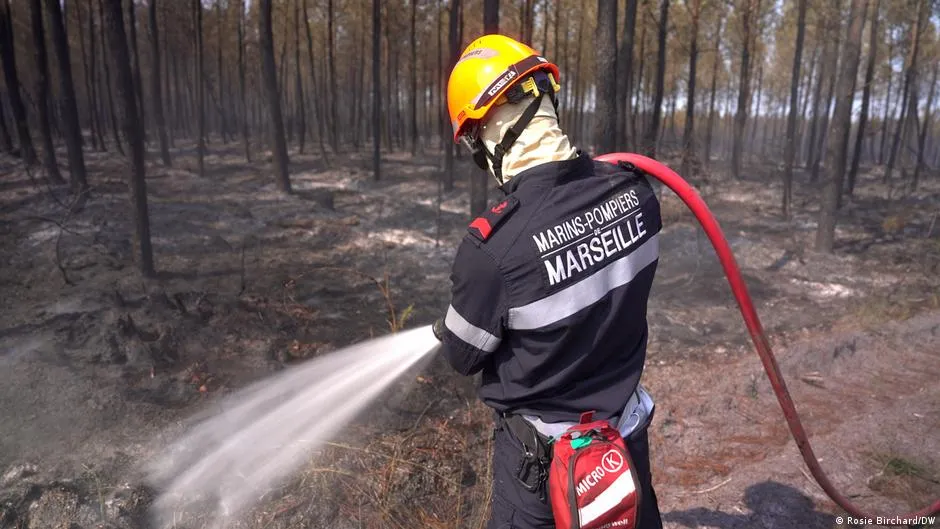
French firefighters have brought a massive blaze under control, enabling almost 200,000 evacuees to return home. For decision-makers, the win is temporary, because Europe’s wildfire season remains driven by climate forces.
French firefighters have won out over a massive blaze, with almost 200,000 evacuees returning home. That is the immediate, human headline. It also signals something operational: the line held long enough for evacuations to unwind and communities to start normalizing again.
But the story has a second half that matters just as much for executives and operators: Europe’s climate-fueled wildfire season is far from over. In other words, today’s containment does not mean tomorrow’s risk disappears. The same drivers that power one major blaze can power the next, especially as the season advances.
To understand why this matters beyond the fire crews, zoom out to how wildfire seasons behave in Europe and why “contained” can still feel like “not finished” for leadership teams. Wildfires are not isolated events. They strain everything around them at once: local emergency services, regional coordination, infrastructure access, and the ability of companies and public agencies to keep running critical functions. When almost 200,000 people are moved out, the ripple effects do not stop when families come back. Businesses, schools, and transit systems have to restart. Hospitals and utilities have to return to steady-state operations. Local governments have to reconcile what was lost, what was damaged, and what it will take to be ready next time.
For board members and C-suite leaders, the key is that wildfire risk is increasingly understood as a recurring operational threat, not a rare catastrophe. When a headline says “climate-fueled wildfire season,” it is pointing to a pattern: conditions that make fires more likely and more intense also tend to extend the season and raise the probability of additional incidents. So even if one blaze is beaten, the environment that produced it is still there. That is why the source can credibly celebrate a victory and still insist the season is far from over.
There is also an incentive problem for decision-makers that shows up in moments like this. After a big event, organizations often shift attention back toward day-to-day priorities, because the urgency of the immediate crisis fades. Yet the next phase is planning readiness under fatigue. Evacuees return home, but leadership still needs to ask what systems were stressed, what bottlenecks appeared, and how quickly operations could resume. The second-order implication is that operational resilience becomes a repeating cycle: respond, restore, review, and reinforce, all before the next flare-up.
Regulatory and governance considerations are often triggered in the aftermath of disasters, even when no new law is announced overnight. Public agencies typically re-evaluate emergency response frameworks, land management approaches, and coordination protocols after major incidents. Companies, especially those with facilities near wildfire-prone areas, also revisit duty-of-care practices, insurance posture, and business continuity assumptions. The source does not list specific policy actions, but the underlying governance reality is straightforward: when the season is climate-driven, the baseline risk gets harder to treat as exceptional.
Financially, the leadership question becomes risk pricing and capital allocation. A win like “almost 200,000 evacuees returning home” can look like a temporary relief on the surface. Yet directors and CFOs think in terms of variance and tail events. Climate-fueled seasons can increase the odds of additional large incidents, which in turn can affect claims history, insurance availability, and the cost of maintaining protective measures. Even for organizations not directly in the path of any specific blaze, supply chain disruptions and labor availability can become the hidden exposure.
What should peers take from this? First, the most important signal is not just that firefighters fought effectively. It is that evacuations can be reversed at scale, which reflects coordination and capacity. That is excellent news. But second, the source’s warning is the strategic spine of the whole briefing: Europe’s wildfire season is far from over, and climate is doing the driving. If you are a CEO, COO, or board member in a region facing similar seasonal hazards, you should treat today’s containment as a checkpoint, not a conclusion.
This story's Key Insights and Take-aways are locked.
Create a free account to unlock Executive Actions for one credit.
Register to UnlockAlways free for Executives Club members. Join the Club
More in Politics

Obama Defends Ilhan Omar After Agents Search Her Home in Trump Inquiry
The former president's intervention raises the stakes in a federal probe into immigration paperwork that has put a prominent progressive lawmaker in the crosshairs.

Blair-era minister: cut welfare to fund youth job support
Alan Milburn's call for welfare cuts to fund employment support opens a Labour fight over benefits and the Neet crisis.

Hot September CPI: energy costs surge, voters feel the squeeze before midterms
The latest inflation print lands as Trump campaigns for GOP control of Congress, putting cost-of-living worries at the center of the midterm fight.