

Ghostrunner studio One More Level moves Valor Mortis to October to dodge September crush
As September 2026 fills with GTA 6 escapees, One More Level shifts its Napoleonic Soulslike to a calmer window.
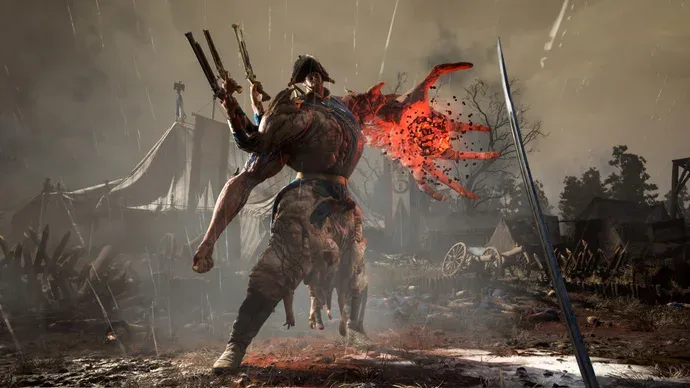
One More Level, the Ghostrunner studio, is shifting its Napoleonic first-person Soulslike Valor Mortis to October. For decision-makers, it is another signal that release schedules are becoming a strategic battlefield, not just a marketing calendar.
It is not just players who are getting crowded out. The games industry has built a second-order problem on top of its biggest stress test: the need to avoid racing for attention with GTA 6. After Summer Game Fest, the pattern became hard to ignore. Instead of fewer big releases, the market effectively created a sinkhole of demand, and September 2026 is now described as so packed with releases that even reaching even a fraction of them takes real dedication, and real time and money.
That is the backdrop for the move now made by One More Level, the Ghostrunner studio. Its promising Napoleonic first-person Soulslike, Valor Mortis, is shifting out of the scrum and is now set to release this October. In plain English, this is a scheduling decision meant to protect the game from being swallowed by a month that is already overloaded. And it matters because overload is not a theoretical risk. If players are forced to triage, then every competing launch becomes a fight over attention, playtime, and budget. One More Level is trying to step out of that fight early enough to keep its release from turning into background noise.
This is also what happens when a blockbuster gravity well shapes strategy across an entire ecosystem. The immediate incentive is clear: many developers want to avoid being adjacent to the biggest magnet in the room. But when everyone reacts to the same magnet, the market does not end up with empty space. It ends up with a pile-up in the next most attractive window, and that pile-up has downstream consequences. For players, it becomes a problem of consumption capacity. For studios, it becomes a problem of marketing efficiency and conversion. For publishers and investors, it becomes a problem of timing risk: even a great game can underperform if the audience is already committed somewhere else.
October, by contrast, is the strategic alternative One More Level is choosing. The reason this kind of move is more than a calendar tweak is that releases are linked to the whole machine around them. A launch timing shift can ripple through the planning of marketing beats, the timing of previews and demos, the coordination of distribution partners, and the internal cadence of content readiness. It can also affect how teams think about launch-week metrics. When the market is crowded, studios tend to be measured against an even narrower set of opportunities.
There is another angle that decision-makers should recognize: the market behavior itself is a sign of how attention is allocated. September 2026 is being framed as packed enough that it will take dedication to get through even a fraction of releases. That implies scarcity in player attention, not scarcity in production. In other words, the bottleneck is not that games cannot be made. It is that too many of them arrive at once relative to how much players can actually play and budget.
This is where boards and executives have to think like risk managers, not just schedulers. If studios pile into a single window to dodge one event, the industry can create its own congestion and then punish everyone inside it. A shift like this by One More Level is effectively an attempt to regain negotiating power with the audience. It reduces the overlap with the peak congestion described around September 2026, and it potentially increases the odds that players will notice, prioritize, and stick with the game beyond the initial launch wave.
The regulatory background for this kind of story is indirect but real. Regulation in games and digital markets often shows up in the form of consumer protection rules, platform policies, and scrutiny around digital storefront behavior, pricing transparency, and data practices. While the source story does not cite any regulator or rule here, the practical governance environment still matters because release timing intersects with how storefronts and platforms manage recommendations, visibility, and promotions. In crowded months, algorithms, promotional slots, and category shelf space become more contested. That does not change the game itself, but it can change the probability of discovery, and discovery is the first gate most games need to pass.
For executives at other studios, the takeaway is uncomfortable in a useful way. If the market learned anything from Summer Game Fest, it is that people can react in sync and still create new harm. One More Level is demonstrating that even a strong launch plan can be invalidated by industry-wide scheduling spillover. The strategic stakes are straightforward: when the audience is triaging, you cannot win by being merely present. You have to choose a window where presence turns into priority. One More Level is making that choice now, and if the September rush is real as described, more studios may follow the same logic to escape the orbit of GTA 6 without colliding with the industry’s own crowded aftermath.
This story's Key Insights and Take-aways are locked.
Create a free account to unlock Executive Actions for one credit.
Register to UnlockAlways free for Executives Club members. Join the Club
More in Entertainment

Entertainer Russell Brand denies 7 sex charges amid accuser's 'couldn't breathe' claim
The alleged victim's account sharpens the reputational and legal stakes for Brand, his platforms, and any business tied to a public figure under criminal scrutiny.

Russell Brand's accuser 'bewildered and confused' as he denies 7 sex charges
The criminal case against the comedian is a live test of how media companies manage talent risk when serious allegations go public.

'It's a Magic Trick': Ballet Experts Say Rosalía's SNL Pose Is Impossible
Three ballet experts tell Rolling Stone Rosalía's gravity-defying SNL stillness shouldn't be possible - and why the debate is now part of the show.