

Glenn Ivey calls hard-left talk “overblown” after Democrats win primaries
A Maryland congressman pushes back on the narrative of a leftward shift as socialist victories reshape internal Democratic power.
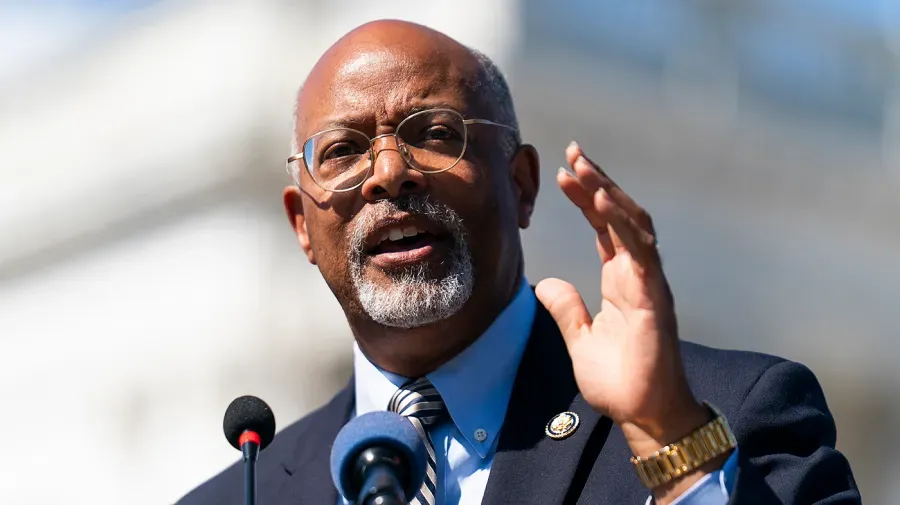
Rep. Glenn Ivey (D-Md.) said Friday that claims the Democratic Party is taking a hard-left turn are “frankly overblown.” His comments came after notable wins by democratic socialists in Democratic primaries, with Ivey contrasting himself and other winners who do not hold those positions.
Rep. Glenn Ivey (D-Md.) moved to cool the temperature in Democratic politics on Friday, calling talk of a hard-left turn “frankly overblown.” He made that point after “notable wins by democratic socialists in Democratic primaries,” arguing that the story people are telling about the party does not capture the full map of what voters actually did.
Ivey’s core argument was simple, and it goes straight at the headline version of events. He said, in effect, that it is not just one wing of the party winning. “There are a lot of other people, like me, who won our elections on Tuesday who don’t take those kinds of positions....” In other words, even if democratic socialists scored visible primary wins, Ivey wanted the public to remember that other Democrats also won, and not all of them are running on the most extreme policy agenda.
To understand why that matters beyond cable news cycles, you have to notice what these narratives do. In politics, the left-right framing is not just ideology. It becomes a coordination mechanism. It affects which candidates get early money, which donors and advocacy groups feel safe backing, and how party leaders decide who to court for committee seats and leadership influence. In business terms, think of it like a risk premium. When one wing appears ascendant, capital follows the expectation of policy change, and institutions adapt early, sometimes before the facts catch up.
The mention of primary results is the giveaway for why this is timing-sensitive. Primaries are where a party’s internal incentives are most exposed. Voters who show up in primary elections tend to be more ideologically engaged than the average general-election voter. That is why democratic socialist wins can look like a wave, even if they do not necessarily represent a uniform shift across every district. Ivey is trying to prevent an overgeneralization from catching on, because once the narrative takes hold, it can become self-reinforcing. If party insiders believe the base is locked into a single direction, they may reposition messaging, platform priorities, and even legislative staffing priorities around that assumption.
There is also a governance angle here. In a legislature, policy direction is not decided by slogans. It is decided by committee assignments, bill sponsorship, negotiation leverage, and the willingness of members to trade. Even if a faction gains attention through primary wins, the practical power shows up in who controls the calendar and who can cobble together votes. A backlash story about a “hard-left turn” could prompt leaders to preemptively centralize control, tighten messaging discipline, or prioritize different coalition partners, all of which affects downstream outcomes such as regulatory posture, procurement rules, labor enforcement, and implementation details of legislation already on the books.
That is why Ivey’s pushback is more than a talking-point. It is an attempt to influence the interpretive framework. If the public, donors, and stakeholders believe the party has decisively pivoted left, that belief can ripple into how external actors plan. For companies and regulated industries, policy expectations drive compliance investment timelines, lobbying calendars, and risk modeling. For advocacy groups, the perceived direction of the party determines whether they press for immediate changes or hedge with incremental wins.
Second-order effects are especially likely when the evidence is real but partial. Democratic socialist victories in primaries can be consequential, but they do not automatically mean the entire party moved together. Ivey is signaling that the results are mixed. That matters for how the party talks to moderates, how it structures messaging for swing districts, and how it calibrates platform commitments to avoid energizing one part of the base while alienating others.
Bottom line: Ivey is arguing against a simplistic conclusion that bigger headlines want you to draw. He is emphasizing that the Tuesday election cycle produced winners beyond the most ideologically visible challengers, including himself, and that not all victorious Democrats share those hard-left positions. For decision-makers watching from inside the party, or for stakeholders trying to anticipate regulatory and legislative direction, the stake is clear: if you treat a slice of primary momentum as the entire party’s trajectory, you can misread the balance of power, overreact, and get outmaneuvered in the next round of negotiations.
This story's Key Insights and Take-aways are locked.
Create a free account to unlock Executive Actions for one credit.
Register to UnlockAlways free for Executives Club members. Join the Club
More in Politics
Obama Defends Ilhan Omar After Agents Search Her Home in Trump Inquiry
The former president's intervention raises the stakes in a federal probe into immigration paperwork that has put a prominent progressive lawmaker in the crosshairs.

Blair-era minister: cut welfare to fund youth job support
Alan Milburn's call for welfare cuts to fund employment support opens a Labour fight over benefits and the Neet crisis.

Hot September CPI: energy costs surge, voters feel the squeeze before midterms
The latest inflation print lands as Trump campaigns for GOP control of Congress, putting cost-of-living worries at the center of the midterm fight.