
GoFundMe's US food fundraisers jump 40% as researcher flags 'new era of desperation'
CEO Tim Cadogan says incomes have not kept pace with essentials, and a 50% jump in dollars donated shows the safety net is fraying faster than policy can patch it.
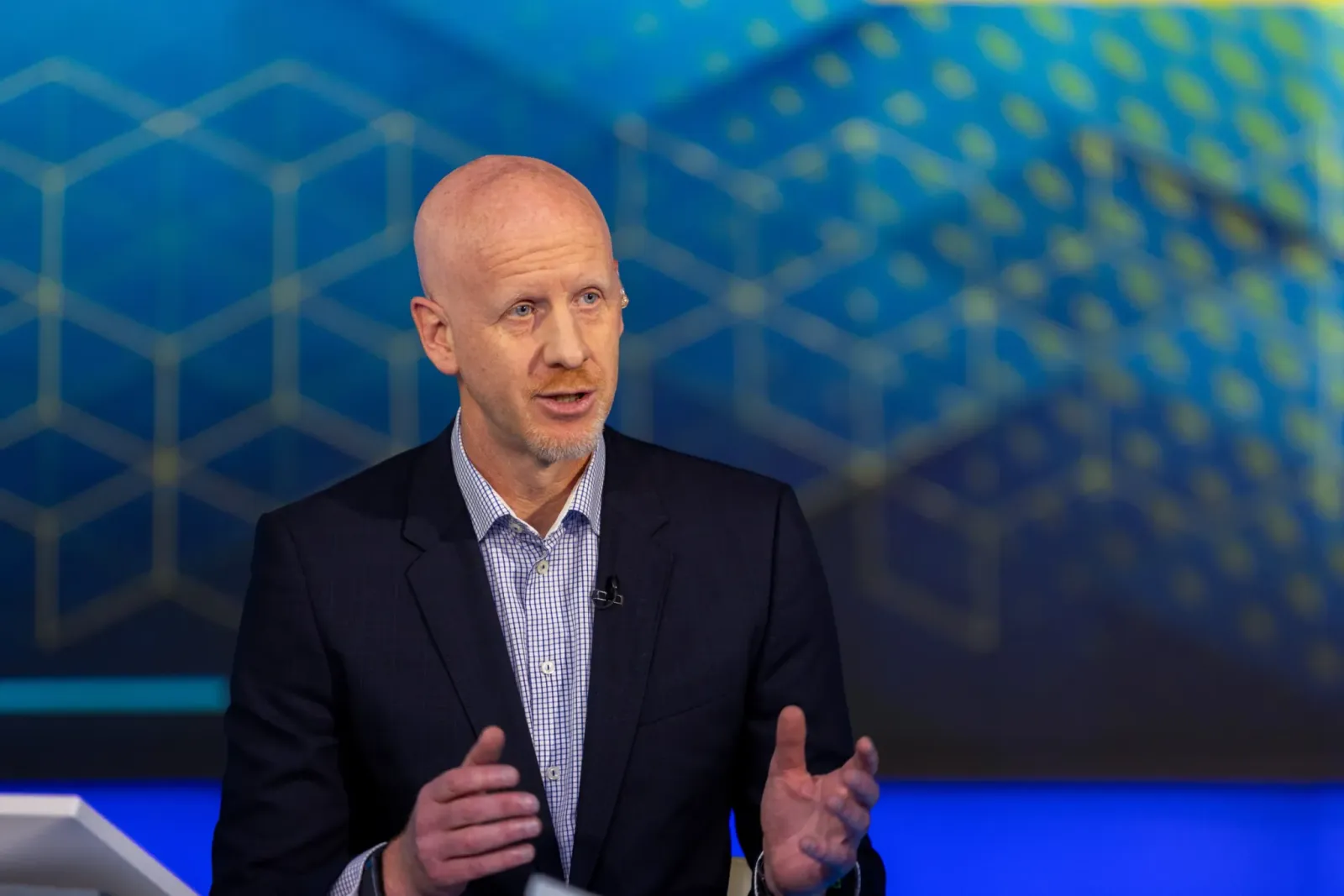
GoFundMe CEO Tim Cadogan told Fortune that food-related fundraisers are up 35% across English-speaking markets and 40% in the US, with donations to those campaigns up 50%. For executives, the platform's numbers are a real-time gauge of household stress that now moves with both inflation and safety-net policy.
GoFundMe's US food fundraisers are up 40% year over year. That is the figure CEO Tim Cadogan handed to Fortune, and it lands alongside two more: food-related campaigns rose 35% across the platform's English-speaking markets (the US, Canada, the UK, Australia and Ireland), and the dollars donated to them climbed 50%. Read that again in plain English. More people are asking strangers to cover their groceries, and more strangers are saying yes. The largest crowdfunding platform on earth has become a real-time readout on whether households can make it to the end of the month.
Cadogan does not dress it up. "The costs of regular things, food, rent, gas prices, obviously, particularly this year, and not just here but elsewhere in the world, have gone up, and folks are struggling in many cases to be able to afford all of that," he told Fortune. His second line is the one that should sit with anyone modeling consumer demand: "Things are more expensive, and a lot of people's incomes have not moved up at a commensurate rate." That gap, not any single price shock, is what is pushing essentials onto a donation page.
This is not a one-year blip. Cadogan traces it back roughly four years, to the late-pandemic stretch when supply chains seized up and the effects flowed through to shelf prices. GoFundMe built a dedicated food, rent and monthly bills tab in October 2020 to catch the wave. The wave kept coming: essentials fundraisers rose 20% last year, after quadrupling the year before. The "monthly bills" category is now among the platform's fastest-growing, second only to individual support for nonprofits.
Martin Lukk, a postdoctoral research fellow at the Data Sciences Institute at the University of Toronto, argues the category did more than measure the problem. "In response to an overwhelming number of campaigns for exactly these things, they invented this new category, and that seemed to usher in this new era of desperation that probably really didn't exist during the pandemic," Lukk told Fortune. The mechanism is worth sitting with: a labeled, visible destination for grocery and rent appeals can normalize asking, and normalize giving, in ways a general-purpose fundraising page never did.
The macro backdrop explains why the appeals keep landing. Americans now spend nearly half their income on food and housing alone, according to the Bureau of Labor Statistics' annual Consumer Expenditures Report published last month. Food spending rose 4.6% year over year and housing climbed 5.8%, pushing the share of income going to those two necessities to a 15-year high. Wages have not kept up. Minutes from the latest Federal Open Market Committee meeting found wage growth lagging the 3.7% inflation rate over the prior 12 months, and BLS data put average US wage growth at roughly 3.1% in the 12 months ending September 2026, with inflation-adjusted wages and salaries down 0.6%. Add the Iran war and tariff uncertainty, and the squeeze has both a price tag and a timeline.
History says this is what crowdfunding is for. The practice is documented as far back as the 1700s, when the Irish Loan Fund made small loans to low-income rural families who pooled resources. In 1885, publisher and lawmaker Joseph Pulitzer raised money for the pedestal beneath the Statue of Liberty, pulling more than 160,000 donors and $100,000 in about five months. GoFundMe, founded in 2010, arrived as the financial crisis was tightening lending requirements and pushing artists and entrepreneurs online to raise capital. Creative projects gave way to philanthropy and charity drives. Now the fastest-growing slice is groceries.
Here is the part that should interest anyone who thinks of this as pure economic weather. Between November 2025 and 2026, US food-related fundraisers fell about 20%, a swing the company attributes to the Trump administration freezing SNAP benefits last November, which had caused a spike in food-related campaigns. In other words, the platform's numbers move with policy, in both directions. When the safety net stretches, the appeals spike. When the comparison period is distorted by a benefits freeze, they fall. GoFundMe is not just a thermometer for inflation; it is a thermometer for the gap between what people earn and what the state covers.
Lukk has the data to back that read. In GoFailMe: The Unfulfilled Promise of Digital Crowdfunding, written with Erik Schneiderhan, he notes that Quebec, which has more social programs, sees less crowdfunding than Canadian provinces with thinner safety nets. GoFundMe has seen a similar pattern in its own numbers. Politics could move it further. With a wave of Democratic lawmakers heading to Washington, Lukk sees room for policy that could ease the pressures driving people to the platform. Republicans largely conceded they lost so many midterm elections because they failed to address affordability. "I wouldn't be surprised if, with greater leverage in the Senate and the House, that any kind of social policy initiatives the Democrats might be able to pass in the coming years, that those might be able to absorb some of this, and potentially reduce the amount of campaigns that we see on GoFundMe," Lukk said.
Lukk does not expect the platform to shrink; he expects the need to. "GoFundMe really seems to respond to those gaps in the safety net," he said, pointing to where the net is fraying and where future policy might repair it. "I wouldn't give up on social policies," he added, "and at least to continue imagining a world where some of these could reduce the kind of desperation that we see flowing out onto GoFundMe." For executives, the takeaway is operational. Consumer stress at this scale shows up in grocery volumes, rent delinquencies, credit losses and employee financial strain, and it is now measurable in near real time through a donation platform. Walmart CEO John Furner told investors on Thursday that customers are "stable, resilient" heading into the holidays, even as the company reports about half of Americans call their finances their greatest stressor. Both can be true. The question for boards is which one shows up in the first half of next year.
This story's Key Insights and Take-aways are locked.
Create a free account to unlock Executive Actions for one credit.
Register to UnlockAlways free for Executives Club members. Join the Club
More in Business

GTA VI hauls $3.79bn in one day, out-earning every film ever made
Rockstar's own estimate covers a single Thursday plus a record 32.5m prerelease units, and it lands on every board weighing IP concentration, pricing power and launch risk.

FBI's crime database breached again, the second hack in months
CNN reports hackers hit the National Crime Information Center, the shared backbone of US policing, and the repeat timing is the part every security team should study.

S&P 500 Enters Correction, Down 10% From Its High on AI Worries
The index's slide past the 10 percent line is a symbolic verdict on investor mood, and the AI trade that powered the rally is now the thing testing it.