
Graham Platner suspends Maine campaign after rape allegation, forcing Democrats into a July 27 scramble
The GOP-held Senate seat may be reachable, but Democrats now have to replace Platner fast, credibly, and politically.
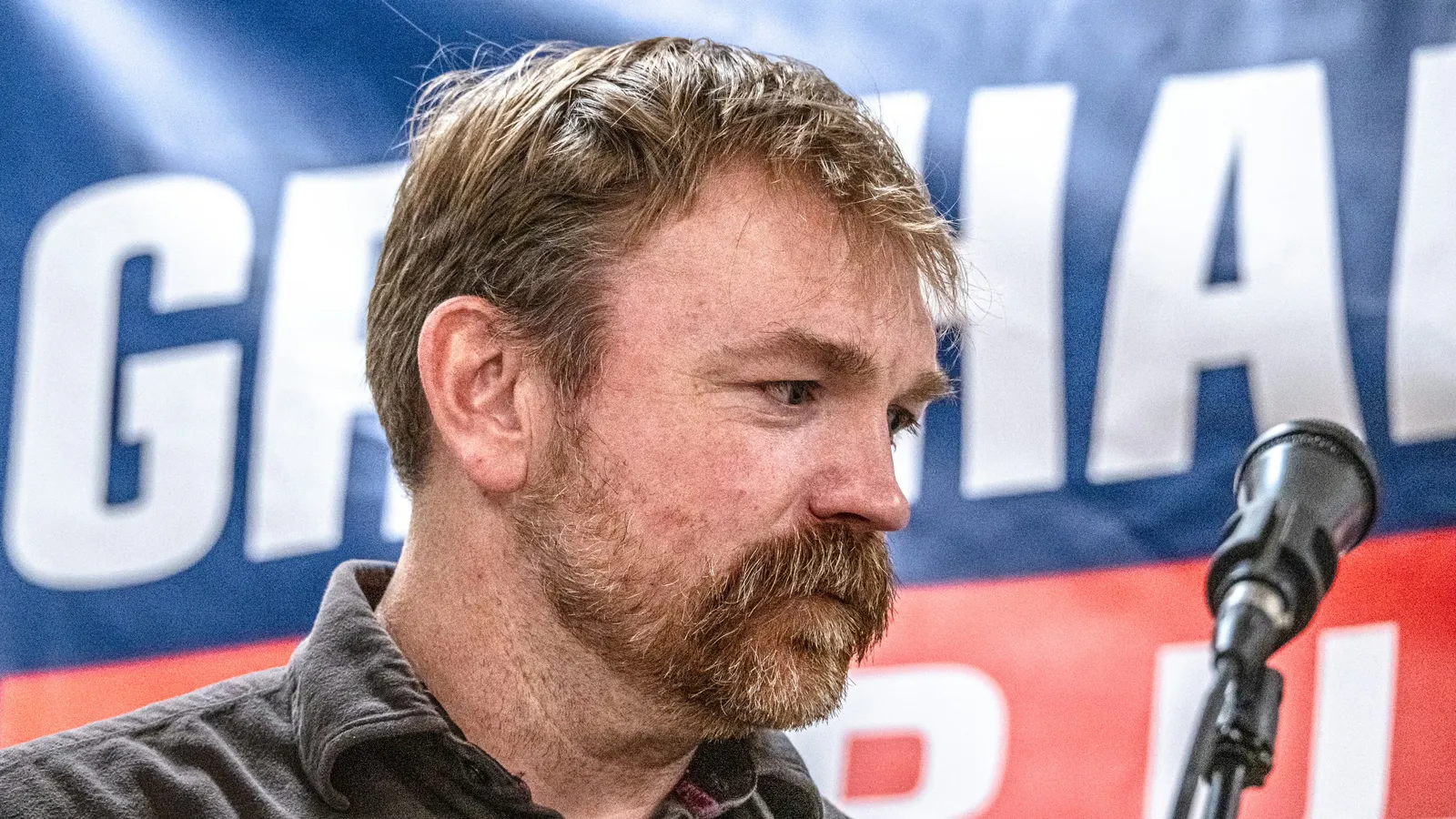
Graham Platner, the Democratic Senate nominee in Maine, suspended campaign operations after a woman accused him of rape, which he denied as “categorically untrue.” The decision hands Democrats a fast, high-stakes replacement process ahead of November, with a July 27 deadline for naming a successor.
Graham Platner just made Democrats’ Maine problem worse, and he did it on the way out. After Politico reported that “a woman had accused Platner of rape,” Platner posted a video on social media saying: “For the movement to continue, it can’t be me. For that reason, we are suspending campaign operations.” The next day, the tactical chessboard for Democrats narrowed fast, because Maine law requires that a replacement candidate be named by July 27. That means the party is not just responding to a crisis of trust. It is responding under a clock.
Complicating everything: Platner also “fervently denied the sexual-assault allegations” and seemed to imply that the party establishment was responsible for how his campaign was handled, saying, “We did it the right way. We did it the way that we were told we are supposed to make change.” He added, “And now they are not going to let us have it.” For an incoming candidate, this is more than baggage. It is a live argument about who controls narrative, vetting, and momentum. And in Maine, where Democrats have been chasing a Senate pickup for a long time, losing time can cost the entire season.
To understand why this is such a big deal, start with the geography of power. Maine has Susan Collins, an incumbent Republican senator who has held her seat for nearly 30 years. She is running for a sixth term. Democrats have needed a reason to think this is finally the moment, and the math looked briefly promising because Maine is the only state where Kamala Harris won in 2024 while an incumbent Republican senator is up for reelection. In 2020, Collins defeated Democrat Sara Gideon by nearly nine points even as Joe Biden carried the state by roughly the same amount. That history tells you Maine can lean Democratic on presidential elections and still keep a Republican senator. The campaign quality matters, not just the national wave.
The rest of the Democrats’ setup had also been unusually constrained. For months last year, Democrats were waiting for Senate Minority Leader Chuck Schumer’s preferred candidate, two-term Governor Janet Mills, to decide whether she would run. Mills expressed ambivalence and delayed until last fall. When she finally declared her candidacy in October, some of the voters Democrats might have relied on in a primary had already decided to support Platner. Platner, described as a gruff but charismatic oyster farmer with a military-combat record, had emerged “seemingly out of nowhere” with a well-connected, well-choreographed campaign rollout run by advisers who had worked on high-profile insurgent campaigns, including John Fetterman’s Senate win in Pennsylvania and Zohran Mamdani’s mayoral run in New York City. Even when allegations surfaced, Platner led Mills in nearly all public polling, sometimes by wide margins. By the end of April, Mills suspended her campaign, effectively conceding the Democratic nomination to Platner.
Then the coalition began to splinter. As the story accumulated allegations and controversies, establishment Democrats grew irritated at what they saw as insufficient vetting and, as Democratic strategist Yemisi Egbewole said, the need for candidates and campaign teams to “frame an accurate narrative” if they “pluck people out of obscurity.” Other Democrats questioned whether Platner was truly the “authentic” working-class outsider he claimed to be, citing details like his education at expensive private schools in New England and the fact that he had worked as a staffer on Capitol Hill. Matt Bennett of Third Way (a moderate think tank) characterized Platner as “feels like a D.C. person’s idea of a working-class candidate.” Those are the internal credibility debates that matter in a general election, where Collins is already known as a kind of unicorn in polarized times.
The latest allegation, however, forced a broader reckoning. Senators Bernie Sanders and Elizabeth Warren, the leftist streamer Hasan Piker, and many other progressives rescinded their support this week after Platner’s ex-girlfriend alleged that he had entered her home in 2021 and raped her. Platner called the allegation “categorically untrue.” Joseph Geevarghese of Our Revolution, a Sanders-aligned group, said: “The bottom line is, there’s no secrets in politics,” adding that it is “disappointing when we are let down by our standard-bearers.” In other words, this is not only about whether a Democrat wins in November. It is about whether the Democratic coalition still believes it is building something legitimate.
Now Democrats have to replace Platner quickly and hope they can rebuild what he temporarily assembled. The party is planning a nominating convention with 600 delegates chosen by county committees to choose Platner’s successor, announced after his suspension. Expect controversy, because this process puts the decision in the hands of the so-called Democratic establishment rather than directly with Maine voters via a caucus or mini-primary. In the short term, the party needs a candidate who can credibly unify the progressive grassroots that rallied to Platner and the establishment voters and validators needed to beat Collins. In the long term, they also need to decide what lesson they are teaching themselves: is insurgent energy worth it if vetting and narrative alignment lag behind ambition?
David Farmer, a Maine Democratic strategist, warned that “The longer this carries on, the weaker position we will be in come November,” and that Democrats must act with “confidence and with clarity” about strategy moving forward. This is the strategic stake for every executive and operator in politics-like ecosystems. When a candidate implodes, the real damage is not just polling. It is the time it steals, the trust it drains, and the control it shifts. Democrats are staring at a Senate race that could be winnable. But right now, they are also staring at a replacement process that could decide whether “winnable” survives contact with reality.
This story's Key Insights and Take-aways are locked.
Create a free account to unlock Executive Actions for one credit.
Register to UnlockAlways free for Executives Club members. Join the Club
More in Politics

Glacial collapse, not rain, killed 180 in Nepal's Himalayan flood
The Himalaya's extreme geography hid the true cause of Nepal's catastrophic flood, a glacial collapse that turned a geological battleground into a mass-casualty zone.

Iran’s Esmail Baghaei says Oman talks start shipping via Hormuz, not US talks yet
Temporary route plans with Oman aim to restart commerce while Tehran says Washington dialogue is not on the table.

Standards watchdog opens probe into Reform UK deputy leader Richard Tice over interests
The parliamentary standards commissioner says it began an investigation on 28 July into a possible undeclared interest.