
GTA 6 Lands a 99 With Critics. Players Are Review Bombing It.
Rockstar's biggest release has the best critical score in modern memory and a user score in open revolt, and the gap between them is the story publishers cannot afford to ignore.
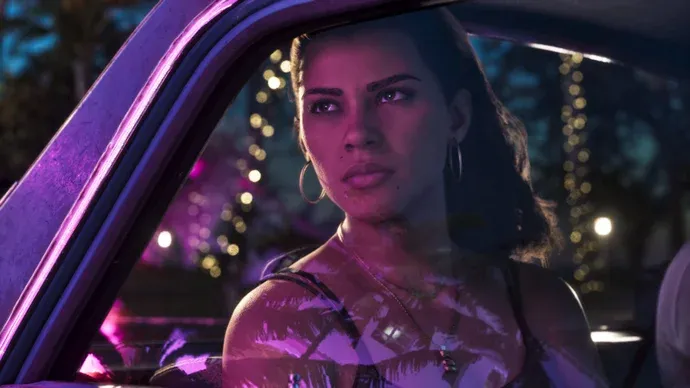
Rockstar Games' Grand Theft Auto 6 has posted a 99 Metascore from critics while drawing a wave of negative user reviews on Metacritic, according to Eurogamer. For executives, the split is a live case study in how one unverified user-score channel can now sit alongside, and sometimes overshadow, the most expensive critical consensus a marketing budget can buy.
Grand Theft Auto 6 has a 99 Metascore from critics. That is the number Eurogamer is reporting, and it puts Rockstar Games' latest in territory that historically only a tiny handful of titles have ever reached. On the same Metacritic page, players are review bombing it. Same game, same platform, two scores pointing in opposite directions, and the gap between them is the most interesting thing in gaming right now.
Start with what review bombing actually is, because the term gets thrown around loosely. It describes a flood of user reviews, coordinated or spontaneous, that drives a game's user score down fast and hard, usually over something that has little to do with the game's technical quality. Eurogamer's report does not specify what is driving this particular wave, so treat the motive as an open question. What is not open is the outcome: a critical consensus near the ceiling of the scale, and a user score in open revolt.
Why does a 99 matter so much? Metacritic aggregates critic scores into a single weighted number, and the top of that scale is brutally thin. Historically, only a handful of games have ever touched 99, and most of them are remembered as generational landmarks rather than merely good releases. For a publisher, that number is not vanity. It gets quoted in trailers, printed on box art, cited in investor decks, and used to justify premium pricing. The industry also has a long, documented history of tying developer bonuses to Metacritic thresholds, which means a critic score can translate directly into money for the people who built the thing.
Then there is the user score, which operates on completely different rules. Metacritic user reviews have historically required no proof of purchase, which makes them cheap to post and easy to coordinate. In recent years the platform has introduced waiting periods before user reviews go live on some major releases, a direct response to brigading. Those measures blunt the fastest attacks but do not eliminate them. The structural problem remains: a verified critic score and an unverified user score sit side by side on the same page, and readers routinely treat them as equally authoritative.
For Rockstar and its parent, Take-Two Interactive, the commercial math is more complicated than the outrage suggests. Grand Theft Auto is one of the most valuable franchises in all of entertainment, and its releases are treated less like product launches and more like cultural events. A user-score revolt does not, by itself, move unit sales. What it does move is the narrative, and narrative is the asset that carries a franchise between releases. Every headline that pairs "99" with "review bombing" hands a competing story to the same audience the marketing budget was built to reach.
Zoom out and the pattern is bigger than one game. User scores have become a lever, and players know it. A coordinated drop is one of the few tools an audience has that a publisher can actually feel, and it gets used to pressure studios over monetization, delays, platform exclusivity, and creative decisions. That makes the user score less a measure of quality and more a measure of sentiment, leverage, and timing. Executives who read it as a review are reading the wrong instrument.
The second-order effects are where this gets expensive. Retail and platform partners watch aggregate scores when deciding how much shelf space, homepage placement, and promotional inventory to commit. Advertisers watch sentiment when deciding whether a brand association is safe. Talent watches it too, because developers increasingly choose studios partly on how their work gets received. None of those decisions hinge on a single number, but all of them are shaped by the story the numbers tell together, and right now those numbers are telling two different stories.
The strategic lesson for anyone running a consumer business is not to ignore user reviews. It is to stop outsourcing your reputation to a single aggregator you do not control. Build direct measurement: first-party sentiment, community health metrics, retention, and the qualitative signal from the people who actually play. Watch the gap between critic and user scores as an early-warning indicator rather than a verdict. A 99 from critics is a remarkable achievement and a genuine marketing asset. A simultaneous user-score collapse is a signal that something in the relationship with the audience has shifted, and that is the part that compounds.
This story's Key Insights and Take-aways are locked.
Create a free account to unlock Executive Actions for one credit.
Register to UnlockAlways free for Executives Club members. Join the Club
More in Entertainment

GTA 6 banks $3.8bn in one day, torching every launch record
One game just out-earned every video game launch and every single-day film box office haul in history, and the fallout lands on every media CEO's forecast.

GTA VI Racked Up $3.79 Billion in a Single Day, Topping Every Film Ever
A 13-year wait produced a $3.79 billion day, more than any movie has made in its entire run, and it resets the launch math for every studio, streamer, and brand chasing the same attention.

GTA 6 sells 32.5M pre-sales and $3.79B day one, torches 13-year record
Rockstar's sequel didn't just beat Grand Theft Auto V's 13-year-old benchmark; it reset what a launch can be, with 32.5 million pre-sale copies and $3.79 billion in a single day.