
GTA VI Racked Up $3.79 Billion in a Single Day, Topping Every Film Ever
A 13-year wait produced a $3.79 billion day, more than any movie has made in its entire run, and it resets the launch math for every studio, streamer, and brand chasing the same attention.

Grand Theft Auto VI, the long-awaited sequel from Rockstar Games, generated $3.79 billion in a single day after a 13-year gap in the franchise, a haul larger than the lifetime box office of any film ever released. For decision-makers in media, entertainment, and consumer tech, the number resets the benchmark for what a launch can produce and reframes attention, not content, as the scarcest asset on the board's agenda.
Grand Theft Auto VI generated $3.79 billion in a single day. Read that against the only benchmark that matters in entertainment: no movie has ever made more than $3 billion at the box office, and that figure represents an entire theatrical run, not 24 hours. In one day, a video game out-earned every film ever released. The comparison is not apples to apples, and it does not need to be. It is the cleanest illustration yet of where the center of gravity in mass entertainment now sits, and it landed with a number so large that it stops being a sales figure and starts being a statement about who controls the world's attention.
The setup mattered as much as the product. Anticipation was high after a 13-year gap in the game franchise, a stretch long enough that a generation of players grew up, got jobs, and acquired credit cards in the interim. Scarcity of that length is nearly impossible to manufacture on purpose. It converts a product launch into a cultural event, and events command a premium: full-price purchases, hardware upgrades, and the kind of organic marketing no ad budget can buy. For context, entertainment franchises typically live or die on release cadence. A 13-year silence would kill most properties. This one turned the silence into leverage.
The $3.79 billion is also, historically, a floor rather than a ceiling. Films front-load: they open big, fade fast, and leave theaters. Games typically behave differently. A launch day opens a revenue tail that can run for years through ongoing sales, online modes, and add-on content, which is why publishers tend to treat launch week as the start of a cycle rather than the finish line. If that pattern holds here, the single-day figure will look small in hindsight. That is the part boards should sit with: the headline number is the opening bid, not the settlement.
The structural gap explains the gap in numbers. Theatrical revenue is shared with exhibitors and constrained by seats, screens, and showtimes. Digital distribution has no seats. A copy sold is a copy delivered, at effectively zero marginal cost, to a global audience that can all buy in the same minute. That is why the ceiling for a game launch sits above the ceiling for a film release, and why the $3 billion lifetime record for movies now reads less like a summit and more like a marker someone already ran past.
Second-order effects show up far from gaming. Every streamer, sports league, and advertiser is competing for the same finite hours in a day. A launch of this scale is a black hole for attention in the week it lands: subscriptions pause, backlogs pile up, and marketing calendars get quietly reshuffled. For media executives, the relevant question is not whether they compete with video games. It is what their own 24-hour number looks like, and whether they have anything capable of producing one.
Then there is execution risk, which is where big launches historically stumble. Infrastructure, storefront capacity, and customer support all get tested at a scale that is hard to rehearse. A launch that generates billions in a day also generates a proportional volume of refund requests, outage complaints, and reputational damage if anything breaks. The revenue line is the easy part to celebrate. The operational line is where the next quarter's narrative gets written.
For peers in adjacent industries, three things are worth noting. First, the 13-year gap worked, but it is not a repeatable playbook; patience only pays when the underlying brand is strong enough to survive the wait. Second, launch-day records are increasingly a distribution story as much as a creative one, which puts supply chain, servers, and storefronts on the critical path. Third, the benchmark just moved. Any media or consumer company that measures its biggest moment in hundreds of millions now has a comparison it cannot avoid.
The cleanest read is this: $3.79 billion in a day is not a gaming story. It is a story about where the world's discretionary spending and attention went, and how quickly the old ceilings stopped applying. The franchise waited 13 years to find out. It got its answer in 24 hours.
This story's Key Insights and Take-aways are locked.
Create a free account to unlock Executive Actions for one credit.
Register to UnlockAlways free for Executives Club members. Join the Club
More in Entertainment

GTA 6 banks $3.8bn in one day, torching every launch record
One game just out-earned every video game launch and every single-day film box office haul in history, and the fallout lands on every media CEO's forecast.

GTA 6 sells 32.5M pre-sales and $3.79B day one, torches 13-year record
Rockstar's sequel didn't just beat Grand Theft Auto V's 13-year-old benchmark; it reset what a launch can be, with 32.5 million pre-sale copies and $3.79 billion in a single day.
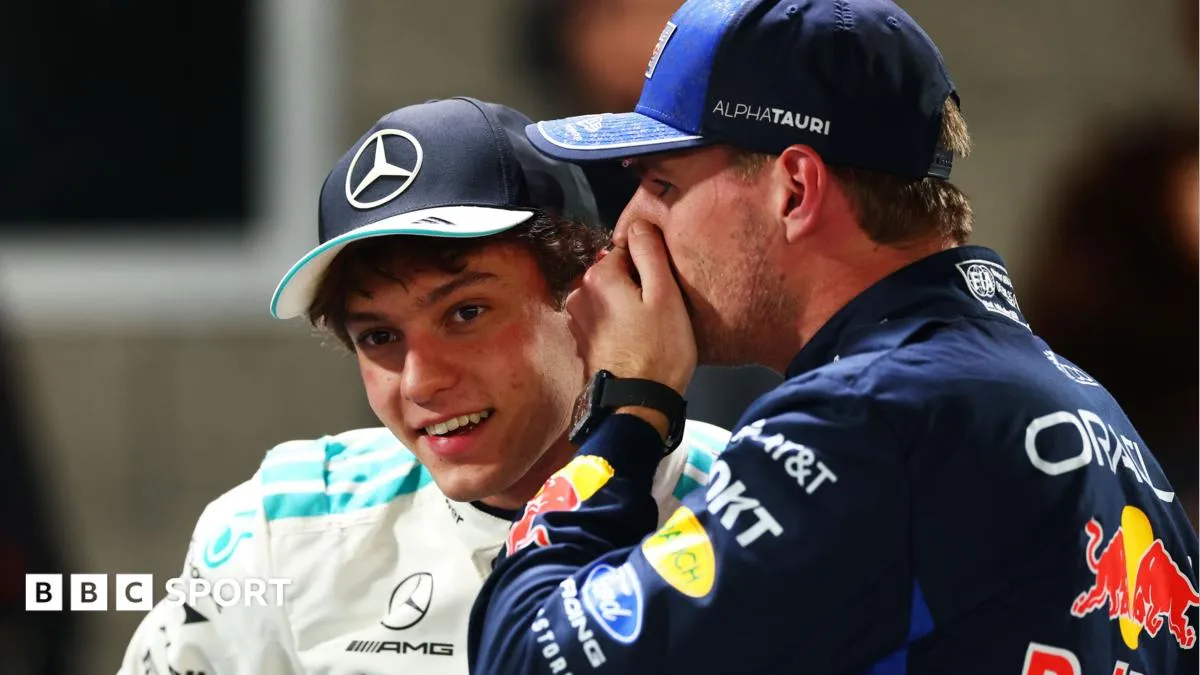
Antonelli is fastest in Vegas, but a penalty hands Verstappen pole
The quickest driver in Las Vegas qualifying will not start first, and the reversal rewrites Sunday's strategy before the lights even go out.