

Antonelli is fastest in Vegas, but a penalty hands Verstappen pole
The quickest driver in Las Vegas qualifying will not start first, and the reversal rewrites Sunday's strategy before the lights even go out.
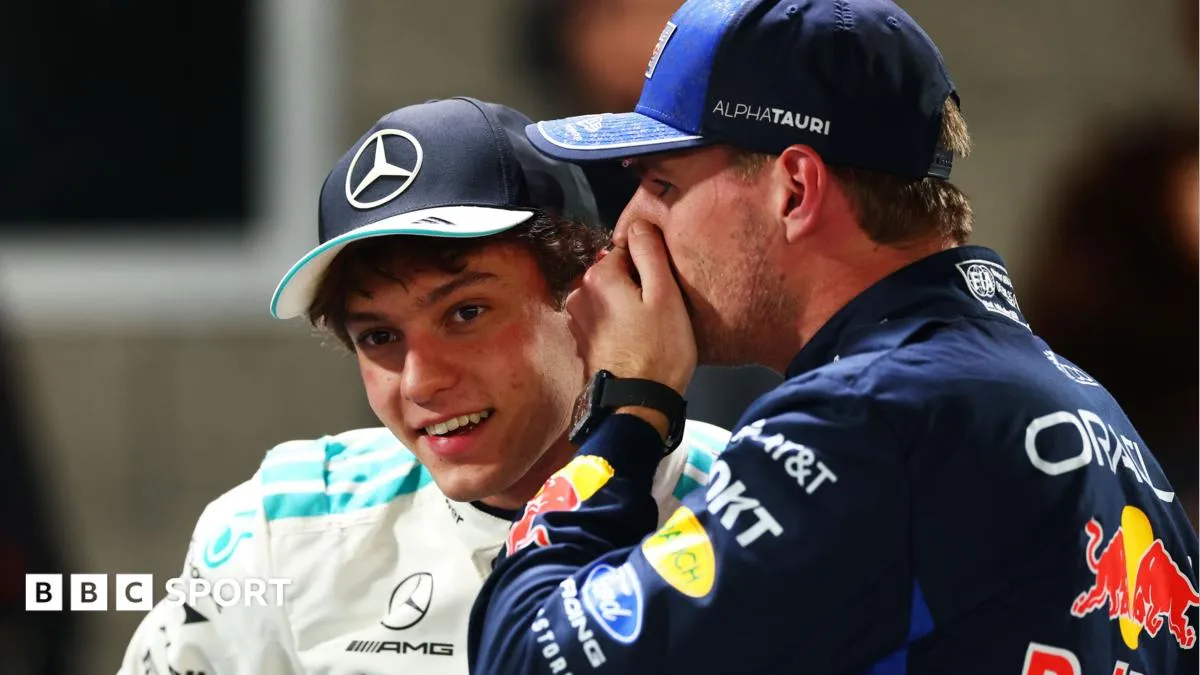
Mercedes' Kimi Antonelli set the fastest time in qualifying for the Las Vegas Grand Prix, but a grid penalty demoted him and handed pole position to Red Bull's Max Verstappen. The reversal puts the fastest car behind a rival on a street circuit where track position is historically decisive, sharpening the weekend math for both teams.
Kimi Antonelli was the fastest driver in qualifying for the Las Vegas Grand Prix. He will not start from pole. A grid penalty demoted the Mercedes driver and handed the top spot to Red Bull's Max Verstappen, flipping the front of the grid before a single racing lap has been run. The fastest car in Las Vegas on Saturday night will line up behind a rival on Sunday.
For readers who do not live inside the sport, the mechanics are worth thirty seconds. Qualifying sets the starting order, and the driver who posts the fastest lap is normally credited with pole position. A grid penalty is a separate, administrative punishment: the driver is demoted a set number of places regardless of how fast he drove. Penalties of this kind are typically triggered by component changes beyond a season's allowance, or by stewards' rulings on incidents such as impeding another driver. Whatever the precise cause here, the outcome is unambiguous. Fastest time: Antonelli. Pole position: Verstappen.
That distinction matters more in Las Vegas than at most venues. The Strip circuit is a street track, which historically means walls close to the racing line, limited run-off, and a surface that evolves dramatically as rubber goes down. Track position is worth real time when passing is hard, and clean air is worth more still. Las Vegas does offer long straights, so overtaking is not impossible, but the driver starting first controls the first corner, the first pit window, and the first safety car restart. Pole is not a guarantee. It is a head start, and in a sport decided by tenths, head starts compound.
The reversal lands hardest on the two teams at the centre of it. Mercedes loses the cleanest possible launch to its weekend, and Red Bull gains one it did not earn on pace. In a constructors' championship, every position carries money and, under the sport's rules, historically carries development influence too, since aerodynamic testing allowances are tied to where a team finishes. A pole that flips from one garage to the other is not just a headline. It is a small transfer of competitive advantage, and over a season those transfers decide who gets to spend more time in the wind tunnel.
For Antonelli, the sting is sharper than the standings suggest. He is one of the youngest drivers on the grid and he drives for Mercedes, a seat that comes with a spotlight most rookies never face. Outqualifying the field is exactly the statement a young driver needs to make, and he made it. The penalty does not erase the lap. It does mean the lap will be remembered as a footnote rather than a result, which is a strange kind of punishment in a sport that measures everything in hundredths.
For Verstappen, the arithmetic is simple and slightly awkward. He starts first without having been fastest, which is a gift in a street race and a talking point everywhere else. Red Bull's recent strength has often been race pace rather than one-lap pace, so inheriting pole may suit the team's Sunday plan better than it suits the narrative. The strategic questions now stack up: how aggressively does Verstappen defend at turn one, when does he pit, and does the team behind him gamble on an early stop to escape traffic?
Zoom out and there is a commercial layer. The Las Vegas Grand Prix is one of the sport's marquee American events, a night race built around hospitality, sponsorship activation, and broadcast reach into a market Formula 1 has spent years cultivating. Pole position is a media asset in that environment. It is the name in the pre-race graphic, the driver in the front-row interview, the face on the highlight reel. Handing that asset to Verstappen, one of the most recognisable athletes in the sport, is a commercial outcome Mercedes would rather not have gifted.
The broader lesson travels well beyond motorsport. Mercedes did the hard part. It built a car fast enough to beat the field over one lap, and a driver extracted the maximum from it. Then a procedural penalty, the kind of thing that lives in a spreadsheet rather than a cockpit, moved the reward to someone else. Boards see the same pattern constantly: a compliance failure, a missed filing, a component sourced outside spec, and the quarter's best work gets reassigned to a competitor. Performance wins headlines. Process decides who keeps the trophy.
This story's Key Insights and Take-aways are locked.
Create a free account to unlock Executive Actions for one credit.
Register to UnlockAlways free for Executives Club members. Join the Club
More in Entertainment

GTA 6 banks $3.8bn in one day, torching every launch record
One game just out-earned every video game launch and every single-day film box office haul in history, and the fallout lands on every media CEO's forecast.

GTA VI Racked Up $3.79 Billion in a Single Day, Topping Every Film Ever
A 13-year wait produced a $3.79 billion day, more than any movie has made in its entire run, and it resets the launch math for every studio, streamer, and brand chasing the same attention.

GTA 6 sells 32.5M pre-sales and $3.79B day one, torches 13-year record
Rockstar's sequel didn't just beat Grand Theft Auto V's 13-year-old benchmark; it reset what a launch can be, with 32.5 million pre-sale copies and $3.79 billion in a single day.